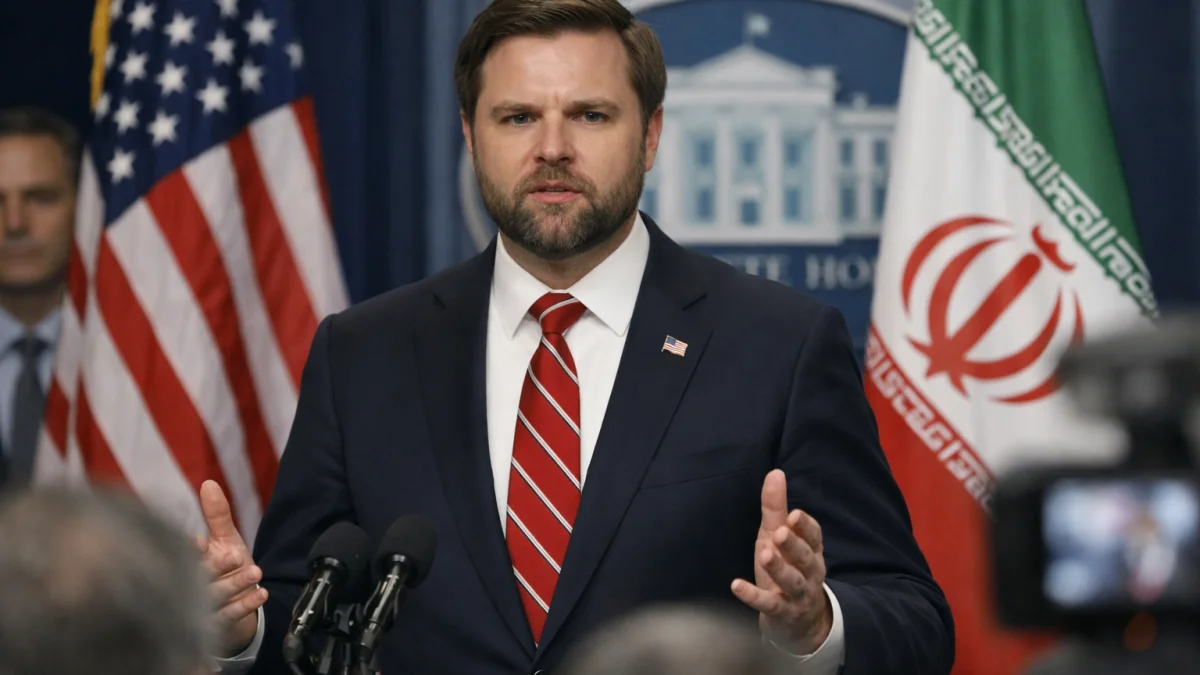


WASHINGTON — U.S. Vice President JD Vance is facing increased scrutiny over his role in negotiations aimed at securing a longer-term agreement with Iran, following the postponement of planned U.S.-Iran talks in Switzerland and growing questions from lawmakers about the terms of a preliminary accord.
Vance has emerged as one of the Trump administration’s leading public defenders of a memorandum of understanding signed earlier this month that established a framework for future negotiations and a 60-day period for technical talks between Washington and Tehran.


The vice president had been expected to travel to Switzerland for talks intended to advance discussions on issues including Iran’s nuclear activities and the future of shipping through the Strait of Hormuz. However, the trip was postponed after Iranian officials did not proceed with the planned meetings, according to U.S. and international media reports.
The delay has intensified attention on Vance’s role in the negotiations and on the still-unreleased details of the agreement. Several Republican lawmakers have called for additional information about the framework, while some Democrats have also sought congressional briefings on its provisions.
Speaking in recent television interviews, Vance acknowledged that many specifics remain unresolved and would be addressed during a technical negotiation phase. “The MOU … is about a page,” Vance said in one interview, describing it as a broad framework rather than a finalized agreement.
Questions have centered on potential sanctions relief, access to frozen Iranian assets, nuclear verification measures and conditions attached to any future economic benefits for Tehran. Vance has rejected assertions that Iran would immediately receive significant financial concessions, saying any benefits would depend on Iranian compliance with future commitments.
Administration officials have said the agreement is intended to create a pathway toward a more comprehensive settlement after months of regional tensions and disruptions to shipping through the Strait of Hormuz. Vance has also stated that Iran must meet obligations related to its nuclear program and regional activities before any broader incentives could be implemented.
Criticism has come from some Republican foreign policy hawks who argue key elements of the framework remain unclear, while supporters of the administration have described the accord as an opportunity to reduce tensions and continue negotiations.
As of Friday, technical talks had not begun, and officials said scheduling and logistical issues remained unresolved. The White House has said the United States remains prepared to proceed with negotiations when arrangements are finalized, while details of a potential next round of talks remain unclear.