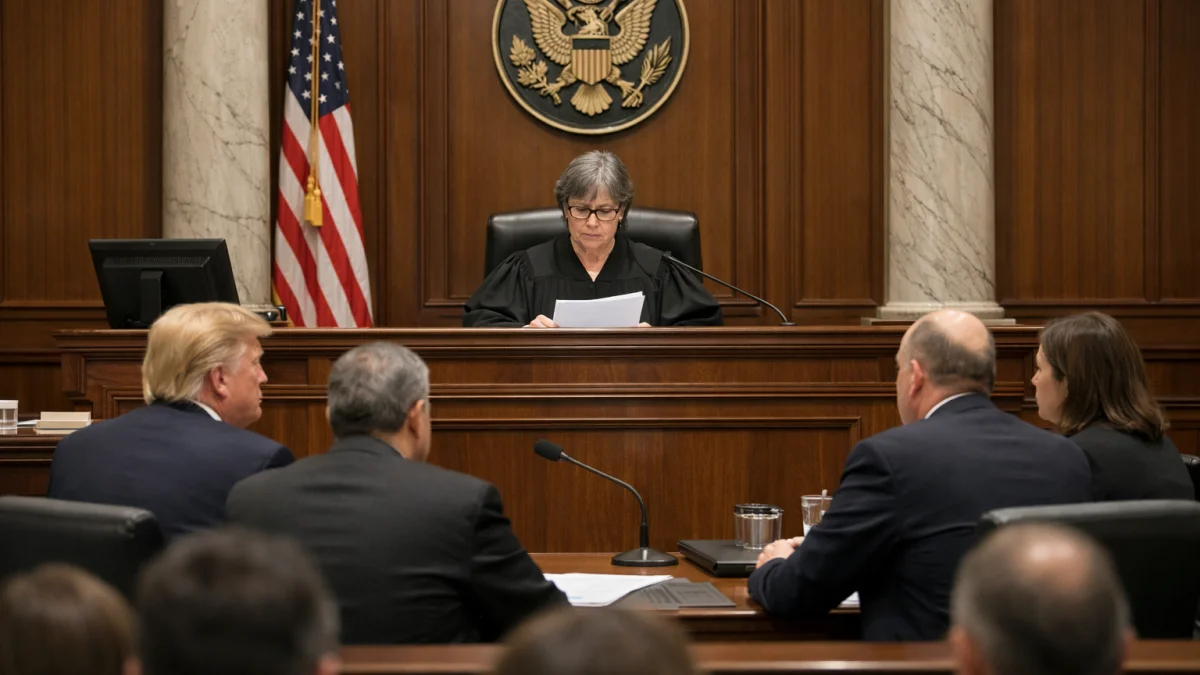


BOSTON — A federal judge has ordered the Trump administration to restore historical and scientific displays removed from U.S. national parks and monuments, ruling that the changes likely violated federal laws governing how the sites are managed. The decision, issued Friday by U.S. District Judge Angel Kelley in Massachusetts, also bars additional removals while the case proceeds.
The ruling stems from a lawsuit filed earlier this year by a coalition of historical, scientific and conservation organizations, including the National Parks Conservation Association and the American Association for State and Local History. The groups argued that the Department of the Interior had removed or altered exhibits addressing topics such as slavery, civil rights, Indigenous communities and climate change under directives tied to a Trump administration executive order issued in 2025.


In a preliminary injunction, Kelley said the plaintiffs had shown a likelihood of success in their claims that the removals conflicted with congressional mandates governing the National Park Service. According to court filings, dozens of exhibits and interpretive signs were affected at sites across the country.
“History cannot be faithfully told while excluding the experiences of communities whose contributions, struggles, and achievements form an important part of our Nation’s story,” Kelley wrote in the ruling.
The lawsuit challenged implementation of an executive order signed by President Donald Trump in March 2025. The order directed federal agencies to address what the administration described as a “revisionist movement” in public history and to remove content that officials said portrayed the United States in an unfairly negative light.
Among the examples cited in court documents were changes at Philadelphia’s Independence National Historical Park, where exhibits discussing enslaved people connected to the site were removed, and alterations to materials concerning climate-related impacts at other National Park Service locations.
Attorneys representing the plaintiff organizations said the removals amounted to censorship and deprived visitors of accurate historical and scientific information. The administration disputed those claims and defended the policy as an effort to promote what it viewed as a balanced presentation of American history.
The Interior Department said after the ruling that it was reviewing its legal options and could appeal. Under the court order, the administration must restore affected materials within 21 days and provide regular status reports detailing its compliance.