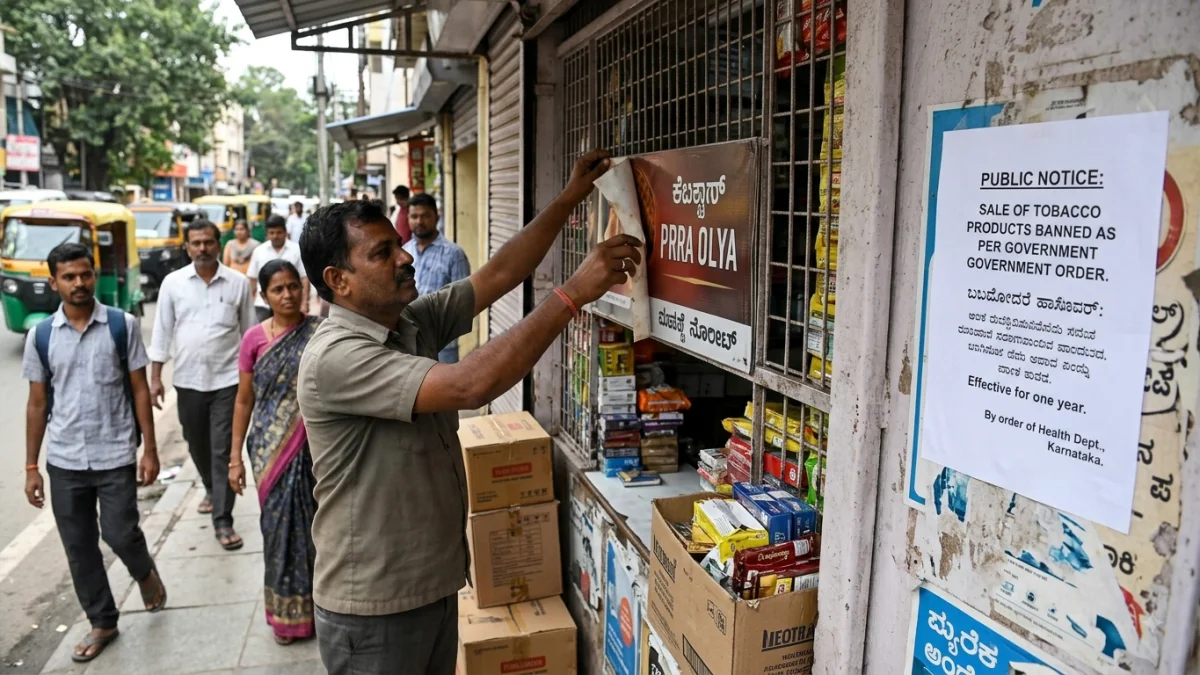


BENGALURU — Karnataka has imposed a one-year statewide ban on the manufacture, storage, transportation, distribution and sale of gutkha, pan masala and other food products containing tobacco or nicotine, the state’s Food Safety Department said, in a move aimed at protecting public health.
The prohibition was issued by the Commissioner of Food Safety on Aug. 10 and took effect immediately, according to reports citing the department’s notification. The order will remain in force for one year from the date of issuance.


The restrictions cover products containing tobacco and/or nicotine, including gutkha and pan masala, and extend across the supply chain, prohibiting their manufacture, storage, transportation, distribution and sale within Karnataka.
The Food Safety Department has intensified inspections to enforce the order and has urged members of the public to report violations, according to the department’s statement cited by the Press Trust of India.
The ban is based on powers available to state food safety authorities under India’s Food Safety and Standards Act, 2006. Section 30(2)(a) permits a state Food Safety Commissioner to prohibit, in the interest of public health, the manufacture, storage, distribution or sale of an article of food across a state or part of it for a period not exceeding one year.
India’s national tobacco-control programme also notes that Food Safety and Standards regulations prohibit the use of tobacco and nicotine as ingredients in food products. The programme distinguishes those restrictions from the country’s broader tobacco-control law, which regulates tobacco products rather than imposing a blanket national ban on them.
Karnataka’s latest order therefore specifically targets tobacco- and nicotine-containing food products rather than all tobacco products sold in the state. The notification also goes beyond retail sales by covering manufacturing, storage, transportation and distribution.
The state government has said the measure is intended to address public-health concerns associated with consumption of the prohibited products. Enforcement agencies are expected to continue inspections and action against violations during the one-year period.