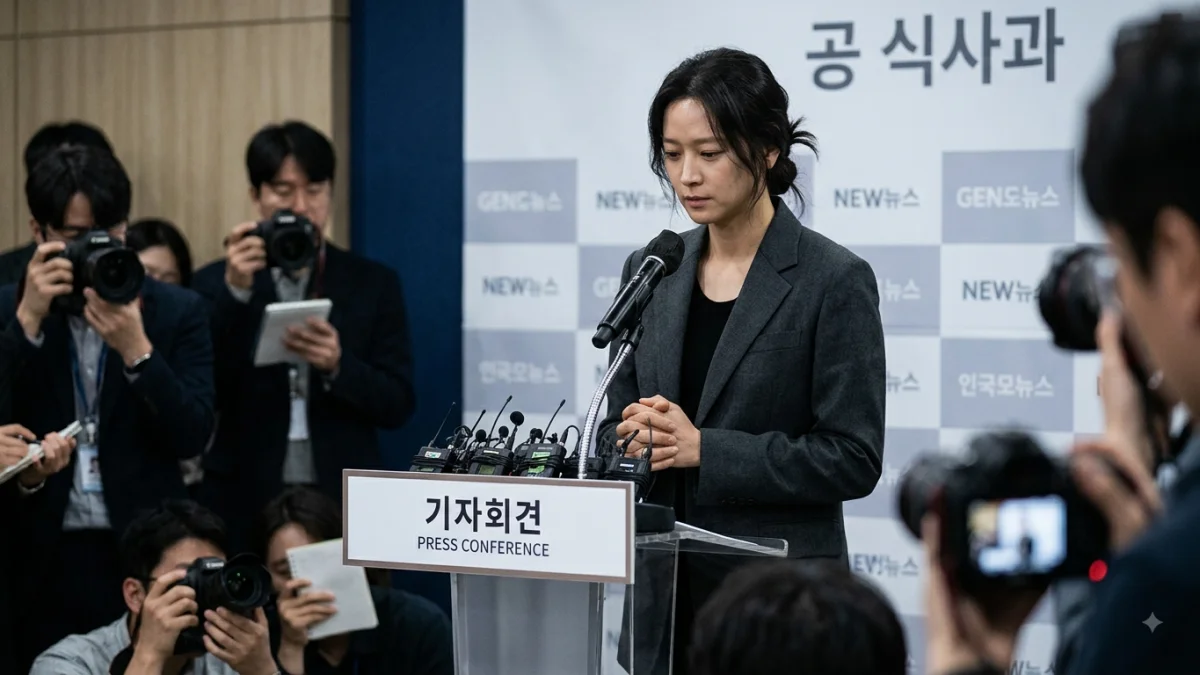


SEOUL — South Korean actress Ha Young has apologised after records surfaced showing her great-grandfather, doctor Ahn Sang Ho, was listed as a council member of the Daejeong Chinmokhoe, an organisation associated with pro-Japanese activities during Japan’s colonial rule of Korea.
Ha, whose real name is Ahn Ha-young, issued a personal apology on Wednesday after the controversy emerged over comments she made about her family’s medical background. She said she had previously known her great-grandfather’s life only through family accounts and had spoken about him without fully understanding his historical record.


“I have come to know about my great-grandfather’s pro-Japanese activities,” Ha said in the handwritten statement posted on her social media, according to copies of the statement published online. She said her lack of knowledge was not an excuse and pledged to study her family history and the period of Japanese colonial rule more closely.
The controversy followed Ha’s appearance on a KBS programme in which she discussed a four-generation family tradition in medicine. She described her great-grandfather as a doctor who had studied medicine in Japan and later operated a Western-style clinic in Hanyang, the former name for Seoul. Her agency, BISTUS Entertainment, subsequently confirmed that the great-grandfather she referred to was Ahn Sang Ho.
Online reports then pointed to historical records listing Ahn as a council member of the Daejeong Chinmokhoe in 1916. The group has been described in reports as a pro-Japanese organisation involved in promoting closer assimilation between Korea and Japan during the colonial period.
BISTUS initially said the allegations concerning Ahn's activities were “groundless,” but later reversed that position after further verification. The agency apologised for responding before sufficiently checking the historical records and acknowledged the existence of the 1916 listing.
Ha also apologised for having spoken of her great-grandfather's history as a source of family pride without adequately understanding the period. She said she regretted the comments and the confusion caused by the agency's initial response.
The controversy comes shortly before South Korea's National Liberation Day on Aug. 15, which commemorates the country's liberation from Japanese colonial rule in 1945. The issue has also emerged as Ha promotes her first leading role in the Netflix romantic comedy “Our Sticky Love.”
Ha said she would continue studying the history of the colonial period and seek to reflect that understanding in her actions.