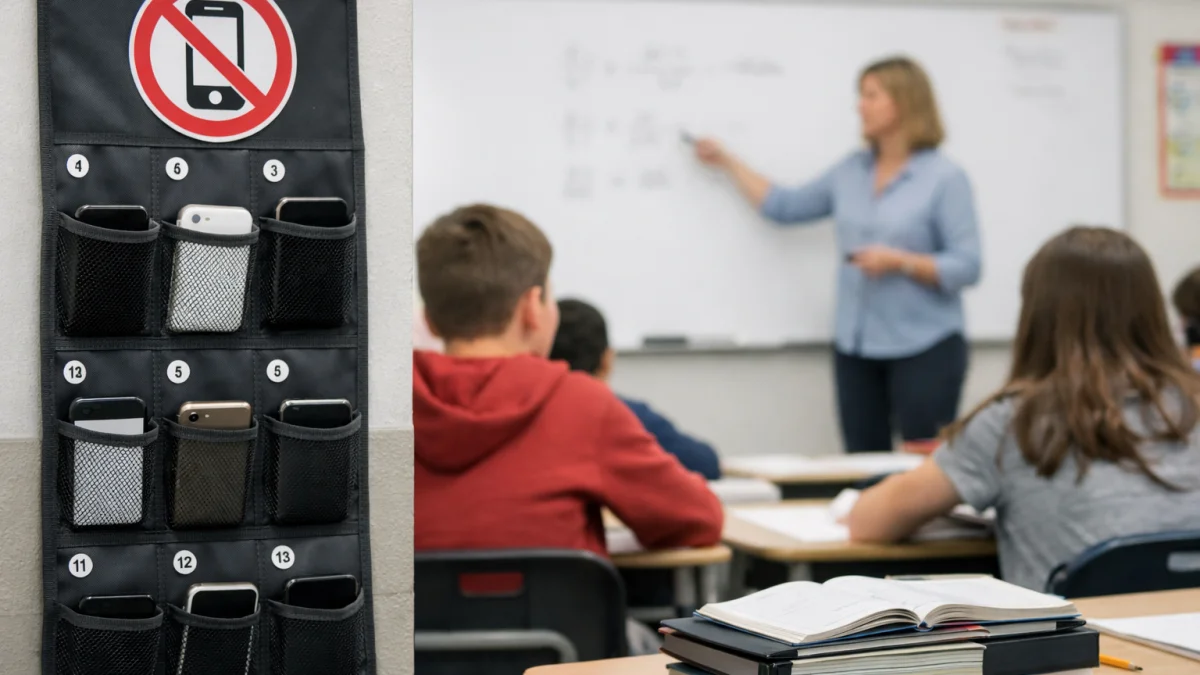


WASHINGTON — The largest study to date examining school cellphone bans has found mixed results, showing that strict restrictions substantially reduced student phone use but produced limited overall gains in academic performance, according to research published in 2026 by the National Bureau of Economic Research.
The study, conducted by researchers from Stanford University, Duke University, the University of Michigan and the University of Pennsylvania, analyzed data from thousands of U.S. schools that required students to place mobile phones in lockable pouches during the school day. Researchers said the policy significantly reduced phone use in classrooms, but average effects on standardized test scores remained close to zero.


According to the researchers, the study drew on nationwide survey data, school administrative records, standardized test results and phone-usage information collected over several years. The findings come as a growing number of U.S. states and school districts have adopted or considered stricter limits on student cellphone use, citing concerns about distraction, mental health and classroom behavior.
The research found differences between age groups. High schools recorded modest improvements in some academic measures, particularly mathematics, while middle schools experienced small declines in overall test scores. Researchers reported little evidence that the bans significantly affected attendance, self-reported classroom attention or perceptions of online bullying.
The study also found that disciplinary incidents initially increased after the restrictions were introduced and student well-being declined in the first year. However, those effects diminished over time, and measures of student well-being later improved, according to the researchers.
“There is clearly justifiable enthusiasm for school phone bans, but it’s important to recognize that building effective, phone-free learning environments does not appear to be a simple or quick fix,” Thomas Dee, a Stanford education economist and one of the study’s authors, said in comments released by Stanford.
Supporters of cellphone restrictions said the findings confirmed that bans can reduce distractions and help teachers manage classrooms more effectively. Teachers surveyed in the study reported fewer instances of non-academic phone use during lessons.
At the same time, the limited impact on academic achievement has prompted continued debate among educators and policymakers about how schools should address student technology use. Details on whether additional long-term academic effects may emerge remain unclear, researchers said.
As of June, school districts across the United States continued to review and expand cellphone policies, while researchers said further evidence would be needed to assess the longer-term consequences of the restrictions.