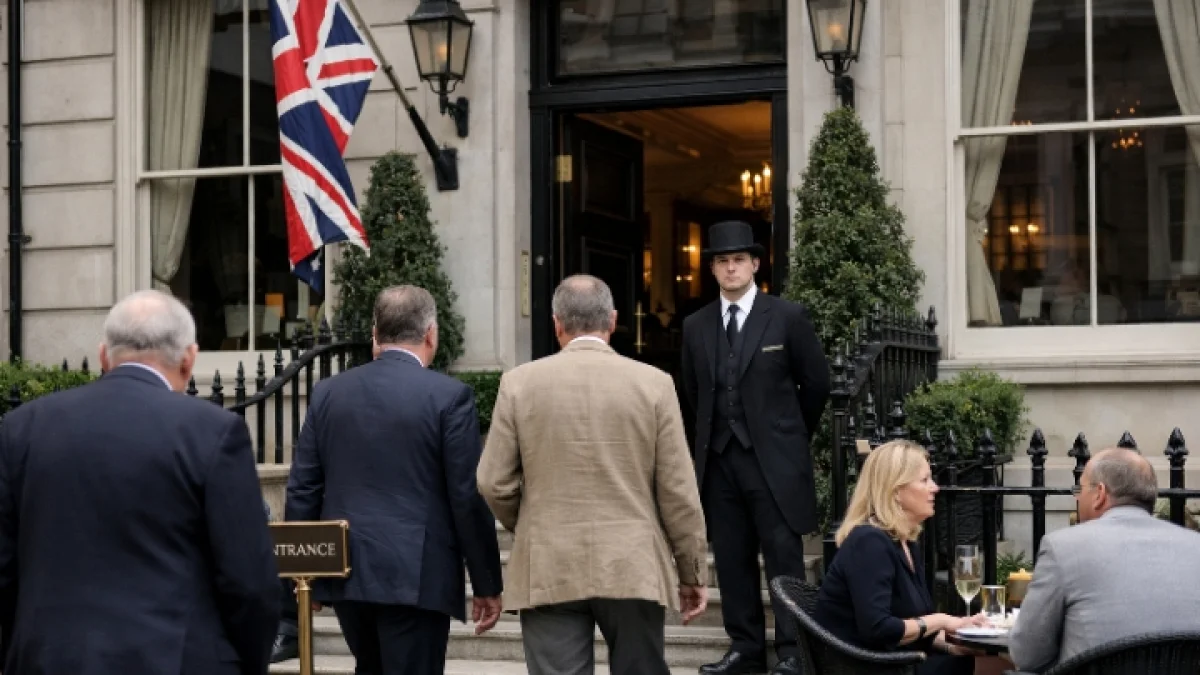


LONDON—Private members’ clubs in London are facing mounting economic pressures as rising operating costs, changing consumer spending patterns and a broader slowdown in business confidence challenge a sector that has expanded rapidly in recent years, according to industry groups and market analysts.
Operators of the capital’s exclusive clubs, which range from longstanding institutions to newer venues focused on hospitality, wellness and networking, are confronting higher energy bills, labour costs and commercial rents while seeking to maintain premium services for members. The pressures come despite continued interest in membership-based social spaces and several recent openings across the city.


Business surveys published this month by the London Chamber of Commerce and Industry found that many firms across the capital expect economic conditions to weaken over the coming year, citing persistent inflationary pressures, subdued investment and policy uncertainty. Those broader trends are affecting hospitality and lifestyle businesses that depend on discretionary consumer spending.
Separate economic data released by City Hall showed London business activity remained resilient earlier in the year, but highlighted continuing differences between the capital and the rest of Britain in service-sector inflation, with housing, rents and other locally driven costs remaining elevated.
The challenges extend across London's wider night-time economy. A report by the London Nightlife Taskforce said venue operators identified business rates, value-added tax, energy costs, rents and wages among their biggest financial concerns, while younger consumers reported reducing participation in nightlife because of economic conditions.
Industry observers say many private clubs have responded by broadening their appeal beyond traditional dining and networking. Newer venues increasingly incorporate wellness facilities, cultural programming and flexible workspaces in an effort to attract younger professionals and diversify revenue streams.
Analysts also note that London's private club market continues to attract investment despite the tougher operating environment, although competition has intensified as more concepts enter the sector. Some operators have pursued overseas expansion while others have focused on retaining existing members through expanded services and curated programming.
There has been no indication from major operators that planned openings or existing memberships will be significantly reduced. However, industry surveys suggest businesses across London's hospitality sector will continue monitoring costs and consumer demand as they navigate an uncertain economic outlook during the remainder of 2026.