

THE HAGUE — A Dutch museum has expanded accessibility measures for blind and visually impaired visitors ahead of a major anniversary-related cultural programme, offering tactile exhibits, guided tours and specially designed educational materials intended to make historical and artistic collections more accessible.
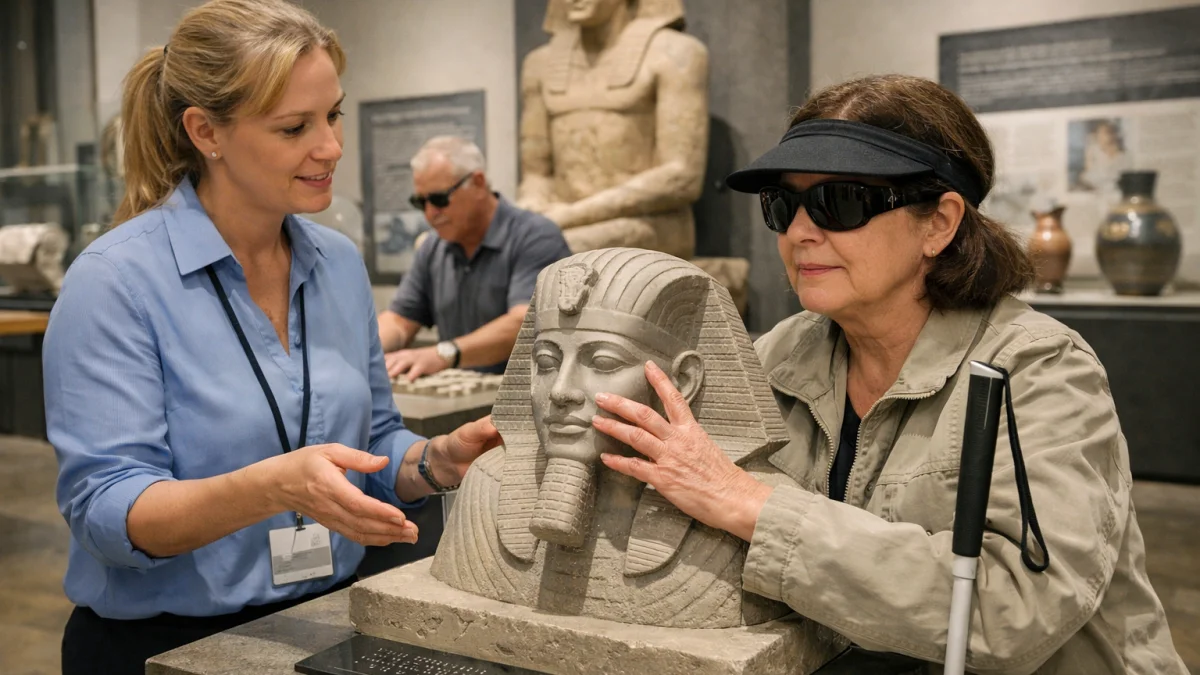
Officials at the museum said the initiative forms part of broader efforts to widen public access to cultural heritage as institutions across Europe prepare exhibitions and commemorative events tied to significant historical milestones in 2026. The programme includes tactile reproductions of artworks, relief models, audio descriptions and guided experiences designed specifically for visitors who are blind or have low vision. According to museum organizers, the measures are intended to allow visitors to engage with collections through touch, sound and verbal interpretation.


At the museum, trained guides lead small-group tours before regular opening hours, introducing visitors to key works and historical themes. Organizers said specially developed tactile objects and relief reproductions help participants form impressions of artworks that would otherwise be inaccessible through conventional viewing. “Visitors get to know the artworks in an interactive way and form an image based on feeling, hearing and imagining,” the museum said in information released for the programme.
Museums and cultural institutions have increasingly adopted similar approaches in recent years. Accessibility initiatives include tactile floor plans, Braille materials, audio-described tours, smartphone navigation tools and three-dimensional replicas of fragile historical objects. Several museums in Europe and North America have introduced programmes allowing visitors to explore exhibits through touch and guided narration, while some institutions have developed digital systems that provide location-based audio descriptions.
Advocates for accessibility have welcomed such efforts, arguing that cultural participation should be available to all visitors regardless of visual ability. Museum officials involved in recent accessibility projects have said tactile and multisensory experiences can improve understanding of history and art while supporting independent exploration.
The accessibility programme also has an educational focus. Organizers said school groups, families and visitors with visual impairments are encouraged to participate in workshops and guided sessions that combine historical interpretation with tactile learning tools. Details regarding expected attendance have not been released.
The initiative comes as museums worldwide prepare anniversary events and seek to broaden engagement with audiences that have historically faced barriers to accessing exhibitions. Cultural organizations have increasingly incorporated accessibility planning into exhibition design rather than adding accommodations after installations are completed.
As of Thursday, museum officials said the accessibility measures would remain in place throughout the anniversary programme. Additional guided tours and educational sessions for blind and visually impaired visitors are scheduled in the coming months, according to organizers.