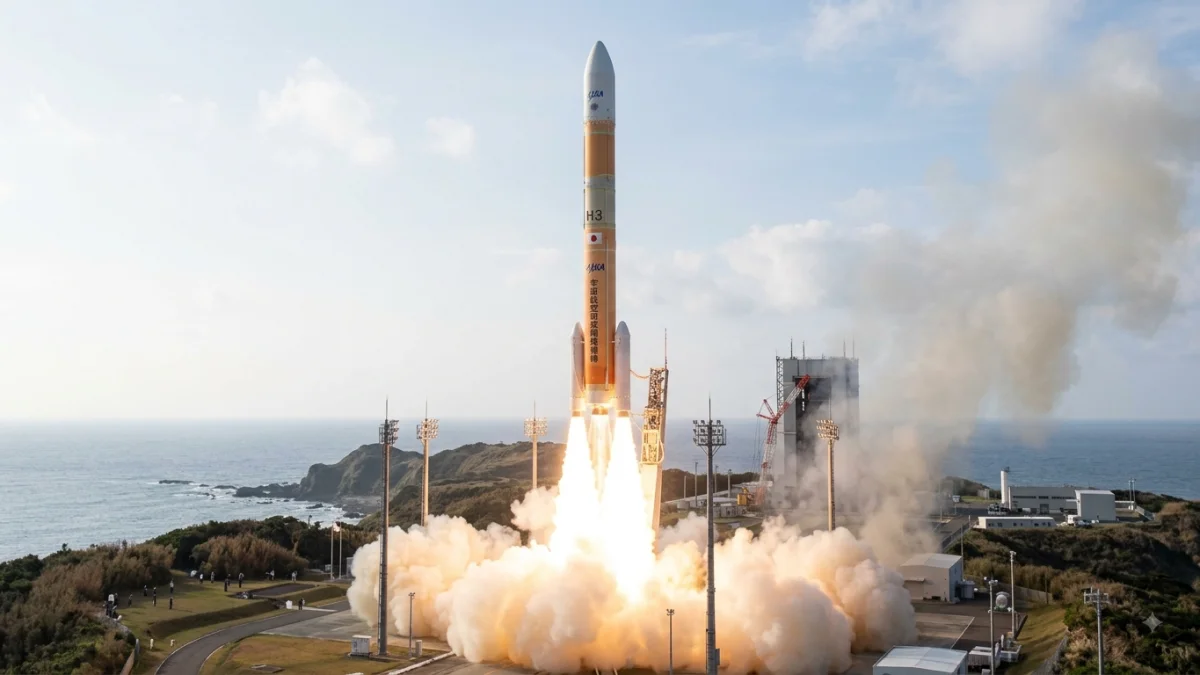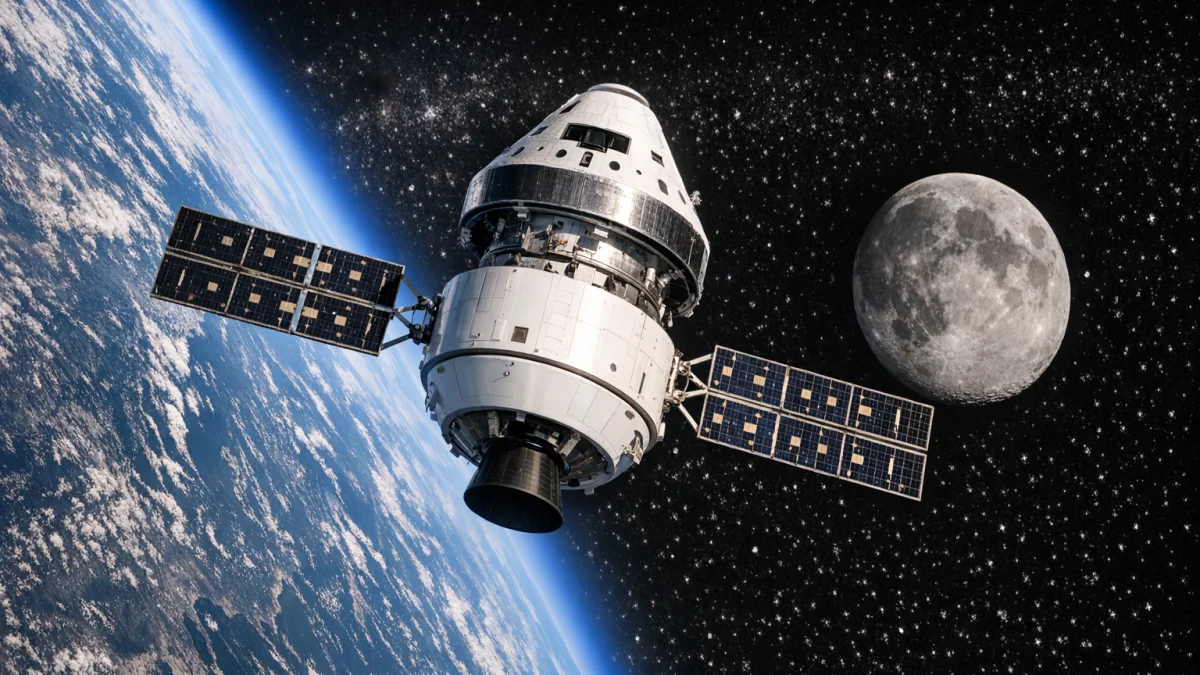


HOUSTON — The four astronauts aboard NASA’s Artemis II mission successfully completed a critical translunar injection burn on Thursday, sending their Orion spacecraft out of Earth orbit and onto a trajectory toward the Moon.
NASA astronauts Reid Wiseman, Victor Glover and Christina Koch, along with Canadian Space Agency astronaut Jeremy Hansen, executed the maneuver at 7:49 p.m. EDT on April 2, approximately 24 hours after the mission’s launch from Kennedy Space Center in Florida on April 1. The burn lasted about five minutes and 52 seconds.


The Orion spacecraft, named Integrity by the crew, performed the engine firing using its service module main engine, increasing velocity to escape Earth’s gravitational pull and commit the vehicle to a free-return trajectory around the Moon. Officials described the burn as flawless.
“From this point forward, the laws of orbital mechanics are going to carry our crew to the moon, around the far side, and back to Earth,” Lori Glaze, acting associate administrator for NASA’s Exploration Systems Development Mission Directorate, said during a mission briefing.
The Artemis II mission, launched aboard the Space Launch System rocket at 6:35 p.m. EDT on April 1, marks the first crewed flight beyond low Earth orbit since Apollo 17 in 1972. It serves as a test flight for the Orion spacecraft and SLS system ahead of future lunar landing missions under NASA’s Artemis program.
Prior to the translunar injection, the crew conducted an initial perigee raise burn to place the spacecraft into a high elliptical Earth orbit. The Thursday burn jettisoned the interim cryogenic propulsion stage and relied on Orion’s own propulsion for the journey.
Mission managers reviewed spacecraft systems performance before approving the burn. The crew spent their first full day in space activating life support systems, communicating with mission control in Houston, and familiarizing themselves with the vehicle.
Artemis II is an approximately 10-day mission that will send the crew on a flyby of the Moon without entering lunar orbit or landing. The spacecraft is expected to reach the vicinity of the Moon in about four days, looping around its far side before returning to Earth on a path guided by lunar gravity.
Splashdown is targeted for April 10 in the Pacific Ocean off the coast of California. No landing on the lunar surface is planned; the mission focuses on testing Orion’s capabilities in deep space, including life support, navigation, and re-entry systems.
As of Friday, the spacecraft continued its coast toward the Moon with all systems performing as expected, according to NASA updates. Daily mission status briefings are ongoing from Johnson Space Center, with the next major milestone being the lunar flyby activities. Details on any minor anomalies, if present, remain under review by the mission management team.