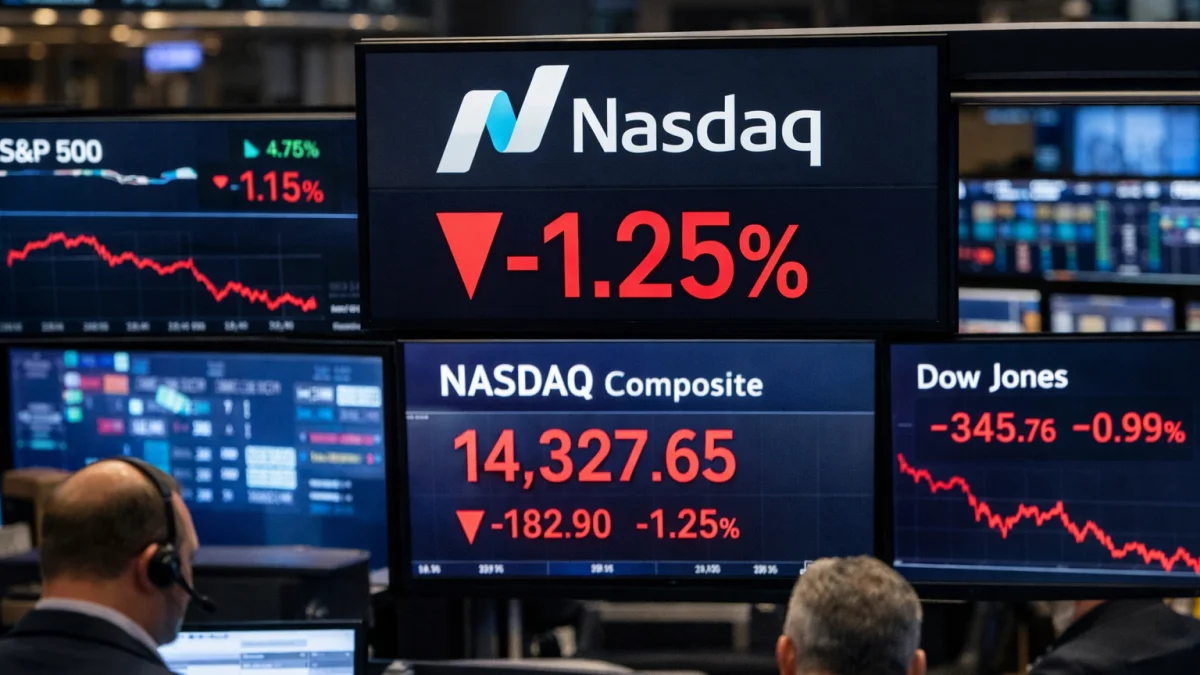


NEW YORK — U.S. stocks fell Friday, with the Nasdaq Composite dropping more than 1% as higher oil prices fueled inflation concerns and pushed Treasury yields higher, contributing to global market volatility.
The tech-heavy Nasdaq Composite fell 410.08 points, or 1.54%, to close at 26,225.15, according to market data. The S&P 500 declined about 1.2%, while the Dow Jones Industrial Average dropped roughly 1.1%, pulling back from recent record levels.


The declines came amid broader selling in global markets, driven largely by rising crude oil prices linked to ongoing geopolitical tensions in the Middle East, particularly disruptions affecting the Strait of Hormuz. Higher energy costs raised investor worries about persistent inflation, sending benchmark Treasury yields higher. The 10-year U.S. Treasury yield climbed to around 4.57%-4.59%, its highest level in months.
"Investors are reassessing risk as energy prices climb and yields rise," one market participant noted, though specific attribution for quotes follows standard reporting.
Technology shares, which have powered much of the year's gains amid artificial intelligence enthusiasm, led the retreat. The pullback reflected a broader rotation away from high-valuation growth stocks as borrowing costs increased.
The moves extended a period of heightened volatility tied to developments in the U.S.-Iran conflict and related supply concerns. Oil prices have fluctuated sharply in recent months, with recent spikes pressuring equities despite earlier resilience in major indexes.
European and Asian markets also showed weakness in the session, reflecting the interconnected nature of the sell-off. Details on the full extent of international declines were still being assessed late Friday.
Trading volume was elevated as participants adjusted positions ahead of the weekend. Some sectors, including energy, showed relative strength amid the higher commodity prices, though broad indexes finished lower.
As of Friday's close, major U.S. indexes remained up for the year despite the session's losses, supported by earlier gains driven by corporate earnings and AI-related optimism. However, the latest trading underscored sensitivity to macroeconomic and geopolitical factors.
Market participants will monitor upcoming economic data and any further developments in energy markets and central bank policy outlooks for direction in the coming week.