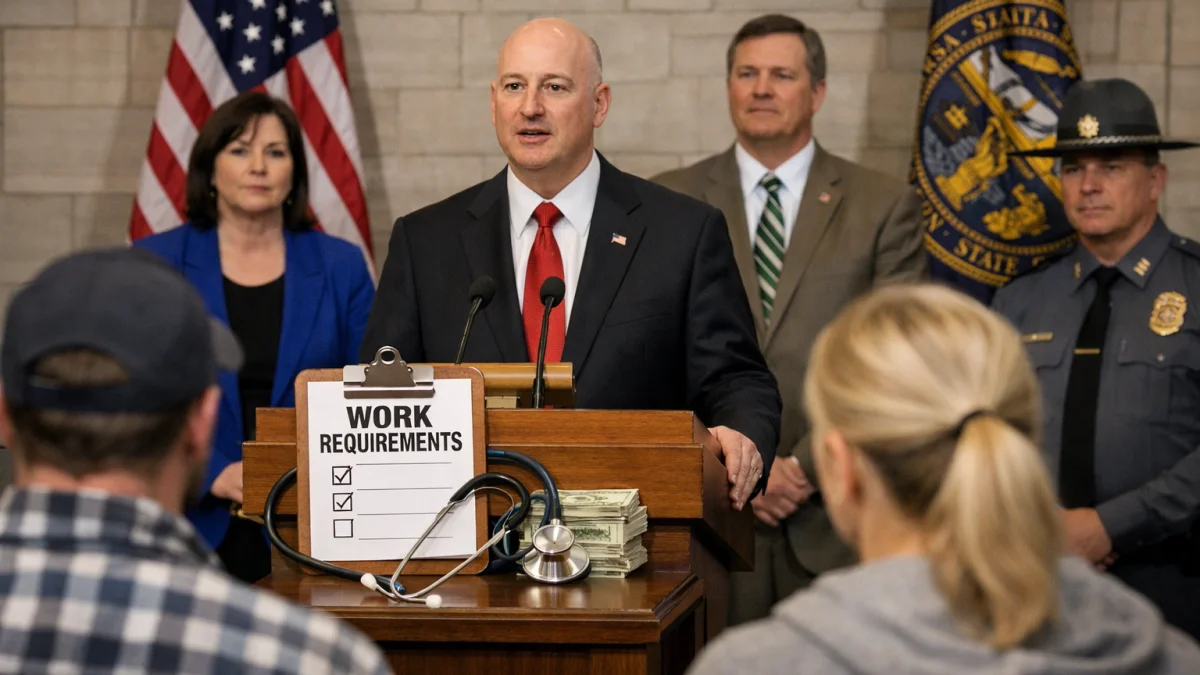


LINCOLN, Nebraska — Nebraska has become the first U.S. state to enforce new federal Medicaid work requirements, implementing the policy months ahead of a nationwide deadline established under federal law, state and federal officials said.
The Nebraska Department of Health and Human Services (DHHS) began enforcing the requirements on May 1 for adults covered through the state's Medicaid expansion program, known as Heritage Health Adult. State officials said Nebraska moved ahead of the Jan. 1, 2027, federal implementation deadline after receiving approval to proceed earlier through a state plan amendment.


The policy applies primarily to certain adults ages 19 to 64 enrolled through Medicaid expansion who are not pregnant, are not enrolled in Medicare, and do not qualify for disability-based coverage. Under the rules, beneficiaries generally must work, attend school, participate in approved training or work programs, volunteer, or otherwise meet qualifying activity requirements unless they qualify for an exemption, according to DHHS.
“This Friday, the Department of Health and Human Services will implement Medicaid work requirements, making Nebraska the first state in the country to do so,” the agency said in an April 30 news release announcing the rollout.
State officials said the changes stem from federal legislation enacted in 2025 that requires states to adopt work requirements for certain Medicaid expansion beneficiaries. Nebraska Governor Jim Pillen and federal health officials announced plans for early implementation in late 2025, describing the state as a testing ground for the new federal framework.
According to DHHS, not all beneficiaries are affected immediately. Existing Medicaid expansion members will be evaluated during their regular renewal periods, with the first reviews applying to some members whose eligibility periods end after July 31, 2026. New applicants determined eligible under Medicaid expansion are subject to the requirements upon enrollment.
The Centers for Medicare & Medicaid Services issued additional guidance to states on June 1 outlining how work requirements should be implemented nationwide. CMS Administrator Mehmet Oz said the policy is intended to encourage employment and preserve Medicaid resources for vulnerable populations. Critics, including some Democratic lawmakers and advocacy organizations, have argued that administrative requirements could cause eligible individuals to lose coverage.
Health policy researchers have closely monitored Nebraska's rollout because it is the first state to implement the federal requirements ahead of the national deadline. The Kaiser Family Foundation said other states, including Montana and Iowa, are planning earlier implementation schedules before the federal mandate takes effect in 2027.
As of June, Nebraska officials said the work requirement program remains in effect, while outreach and compliance reviews continue across the state's Medicaid expansion population.