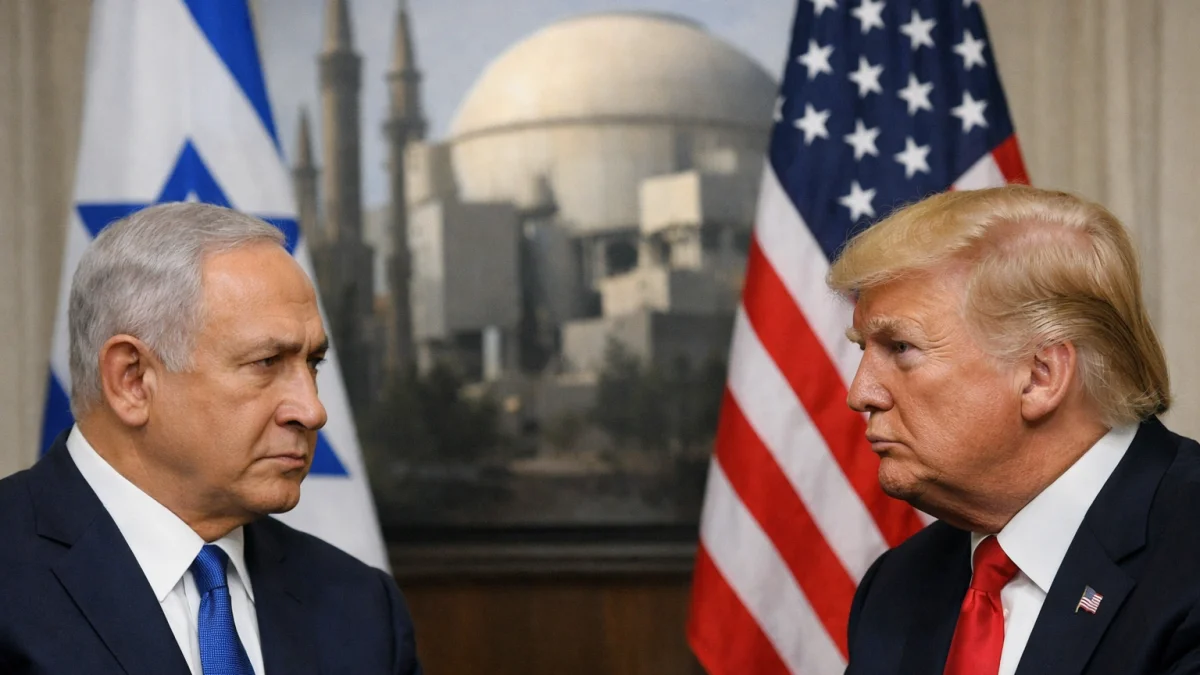


JERUSALEM — Israeli Prime Minister Benjamin Netanyahu is facing tensions with the Trump administration following a U.S.-Iran agreement to halt hostilities, officials said on Monday.
President Donald Trump announced the preliminary deal with Iran on Sunday, which includes an immediate ceasefire, reopening of the Strait of Hormuz and other measures to de-escalate the conflict. The agreement leaves key issues, including Iran's nuclear program, for further negotiations over the next 60 days.


Netanyahu has not issued a detailed public response, but Israeli officials have expressed concerns about the terms, which fall short of Israel's objectives in the conflict. Defense Minister Israel Katz stated that Israeli forces would not withdraw from southern Lebanon and warned of potential responses to any Iranian actions.
Trump has publicly criticized Netanyahu, describing him as "a very difficult guy" in interviews and stating that the Israeli leader should be "very thankful" for the U.S. efforts. According to reports, Trump told Netanyahu in a recent call that "this is the deal. It's a great deal, and it's time to end this war."
The tensions stem from Israeli military actions in Lebanon that U.S. officials said nearly derailed the negotiations. Trump reportedly used strong language in private communications with Netanyahu over strikes in Beirut.
Details of the full agreement remain unclear, including specific provisions on Iran's nuclear capabilities and sanctions relief. Israeli officials have voiced alarm that the deal could ease pressure on Tehran without sufficiently addressing security threats.
The U.S.-Iran pact follows months of conflict that began earlier in 2026. Netanyahu had aligned closely with Trump in operations against Iran, but the two leaders' goals diverged as the U.S. sought an exit from the fighting.
In Israel, the deal has drawn criticism from across the political spectrum, with some calling it a "bad deal" that provides a lifeline to Iran. Supporters of a tougher stance against Tehran have urged continued operations against Iranian-backed groups like Hezbollah.
Trump has defended the agreement as beneficial for Israel, arguing it prevents Iran from acquiring a nuclear weapon. Further talks on a permanent resolution are expected in the coming weeks, with a formal signing anticipated soon.
As of Monday, Netanyahu was reportedly seeking further discussions with Trump to address Israeli concerns. Israeli operations in Lebanon continue amid the fragile ceasefire framework.