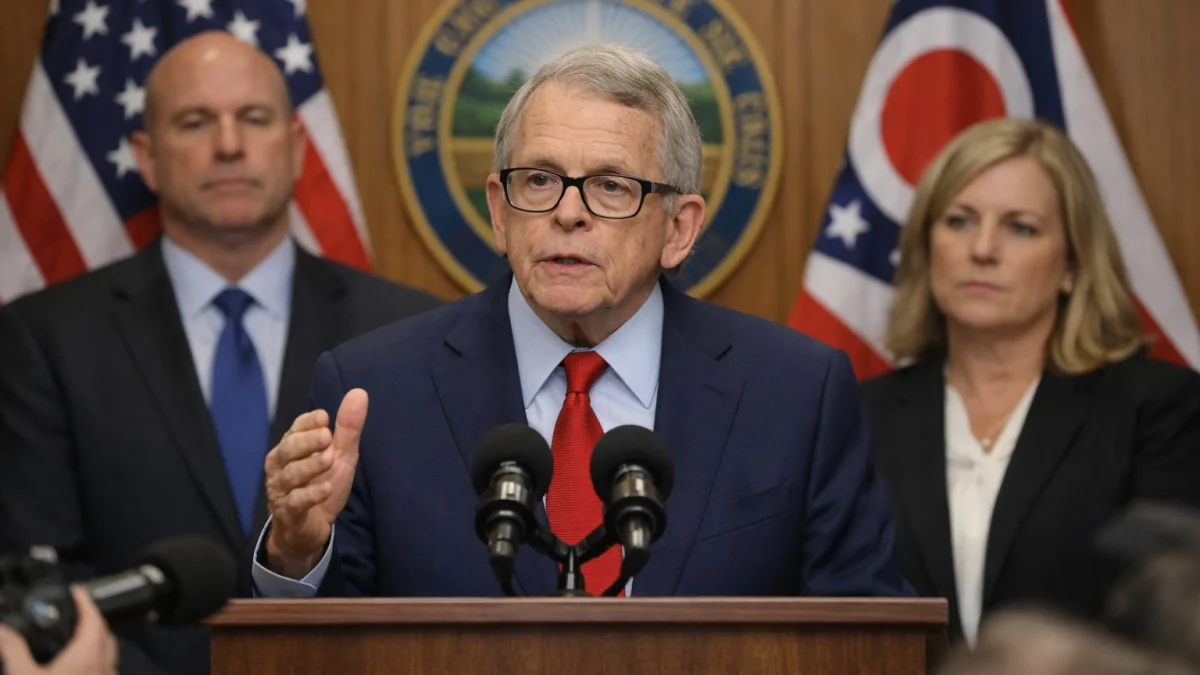


COLUMBUS, Ohio — Republican Governor Mike DeWine called for Ohio to abolish the death penalty this week, breaking with a longstanding position held by many in his party and marking a significant shift for a politician who helped write the state’s modern capital punishment law more than four decades ago.
Speaking at a news conference on Tuesday, DeWine said he no longer believes the death penalty serves as an effective deterrent to violent crime and urged state lawmakers to repeal it. The governor’s remarks were reported by the Associated Press and other U.S. media outlets.


“I believe Ohio should abolish the death penalty,” DeWine said. “I do not believe that argument today can be successfully made,” he added, referring to the claim that executions deter murder.
The 79-year-old governor has a lengthy history with Ohio’s death penalty system. As a state senator in the early 1980s, he helped craft legislation that reinstated capital punishment after previous laws had been ruled unconstitutional. During later roles as a prosecutor, member of Congress, U.S. senator and Ohio attorney general, DeWine generally supported the use of the death penalty, according to Associated Press reports.
Since becoming governor in 2019, however, DeWine has repeatedly postponed scheduled executions, citing the state’s inability to obtain drugs used in lethal injections. Ohio has not carried out an execution since 2018, creating what critics and supporters alike have described as an effective moratorium.
DeWine said available federal and state data no longer support the argument that executions reduce violent crime. He also pointed to lengthy delays between sentencing and execution, which he said weaken any potential deterrent effect.
His position drew support from some current and former Republican officials. State Representative Jean Schmidt, a former supporter of capital punishment, said concerns about wrongful convictions, costs and the sanctity of life had changed her views. Former Ohio Attorney General Jim Petro and former Governor Bob Taft also backed DeWine’s call, according to statements cited by the Associated Press.
Opposition remains strong among some Republican leaders. Former Ohio Attorney General Dave Yost has argued that the prolonged halt in executions undermines the justice system and fails victims’ families. Ohio House Speaker Matt Huffman has also indicated he would oppose efforts to abolish capital punishment.
The death penalty remains legal in Ohio, and any repeal would require action by the state legislature or another legal mechanism. As of Thursday, lawmakers had not moved to abolish capital punishment, and no executions are expected before DeWine leaves office at the end of his term, according to the governor’s remarks.