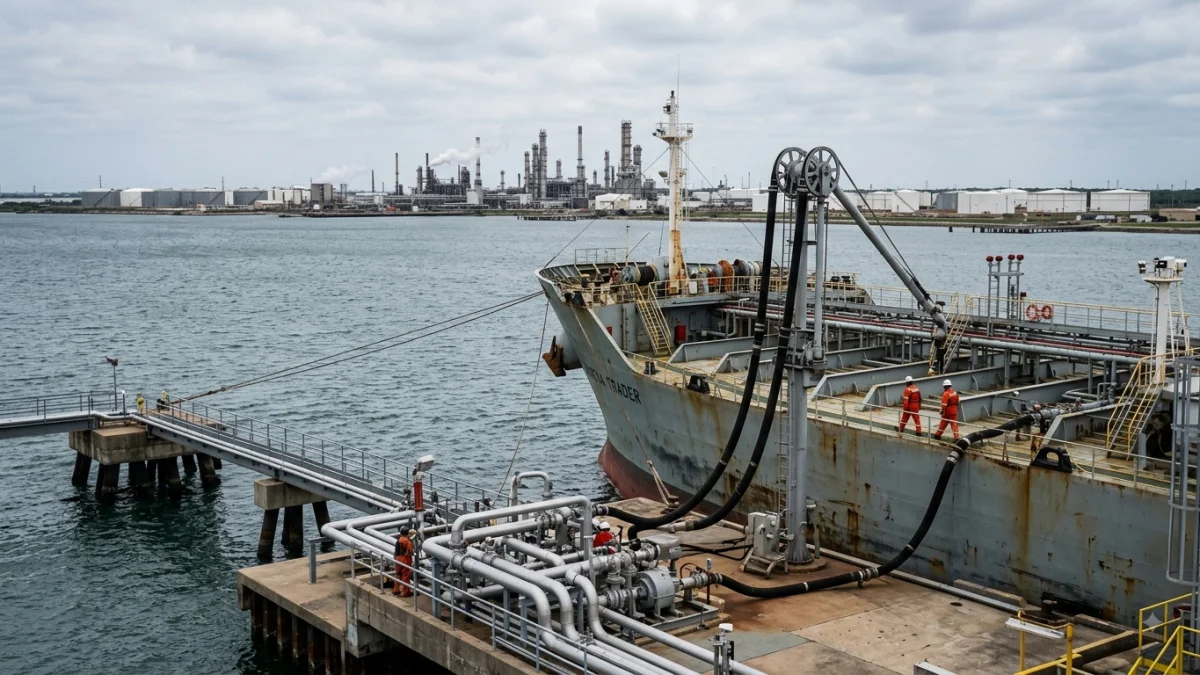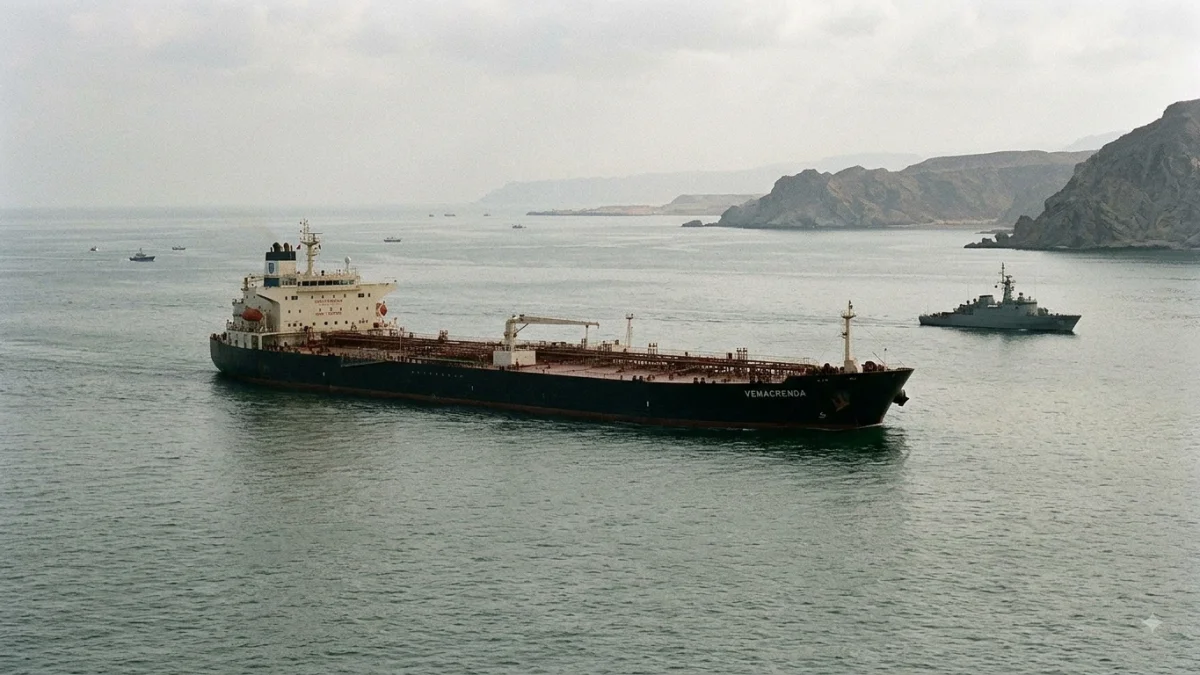


NEW YORK — Oil prices rose on Friday as renewed tensions around the Strait of Hormuz revived concerns about disruptions to Middle Eastern crude supplies, with U.S. threats to maintain an indefinite naval blockade of Iran pushing Brent and West Texas Intermediate toward weekly gains.
Brent crude futures were up $1.43, or 1.64%, at $88.50 a barrel by 0810 GMT, while U.S. West Texas Intermediate futures gained $1.56, or 1.92%, to $82.81, according to Reuters market data. Both benchmarks were on track for weekly gains.


The price move followed a warning from Washington that its naval blockade of Iran could continue indefinitely as ceasefire talks remain stalled. U.S. Defense Secretary Pete Hegseth said the U.S. military could maintain its presence in the region by rotating ships, while Treasury Secretary Scott Bessent said Washington planned additional economic measures against Tehran.
Shipping through the Strait, a critical route for global energy supplies, remained severely constrained. Kpler data cited by Reuters showed nine vessels passed through the waterway on Thursday, below an August daily average of 12. On Friday, two vessels were recorded passing through, while no crude oil shipments were visible in the tracking data. Some vessels may have gone undetected after switching off transponders.
The United Arab Emirates said two vessels operated by Abu Dhabi National Oil Company were attacked while transiting the strait on Thursday. The UAE blamed Iran, which did not immediately comment on the accusation.
The Strait of Hormuz handled about one-fifth of global daily oil and liquefied natural gas supplies before the conflict began, making prolonged disruption a significant concern for energy markets. The International Energy Agency said this week that global oil supply could fall by 4.3 million barrels per day in 2026 as Middle Eastern disruptions deepen an expected market deficit.
Still, weaker demand expectations and rising inventories have limited the price response. The IEA expects global oil demand to contract by 1.6 million barrels per day this year, while OPEC continues to forecast growth, albeit at a reduced rate. U.S. crude inventories also recorded their largest weekly increase in more than three and a half years.
Oil markets remained focused on developments affecting shipping through the Strait and on the prospects for renewed diplomatic efforts to restore normal commercial flows.