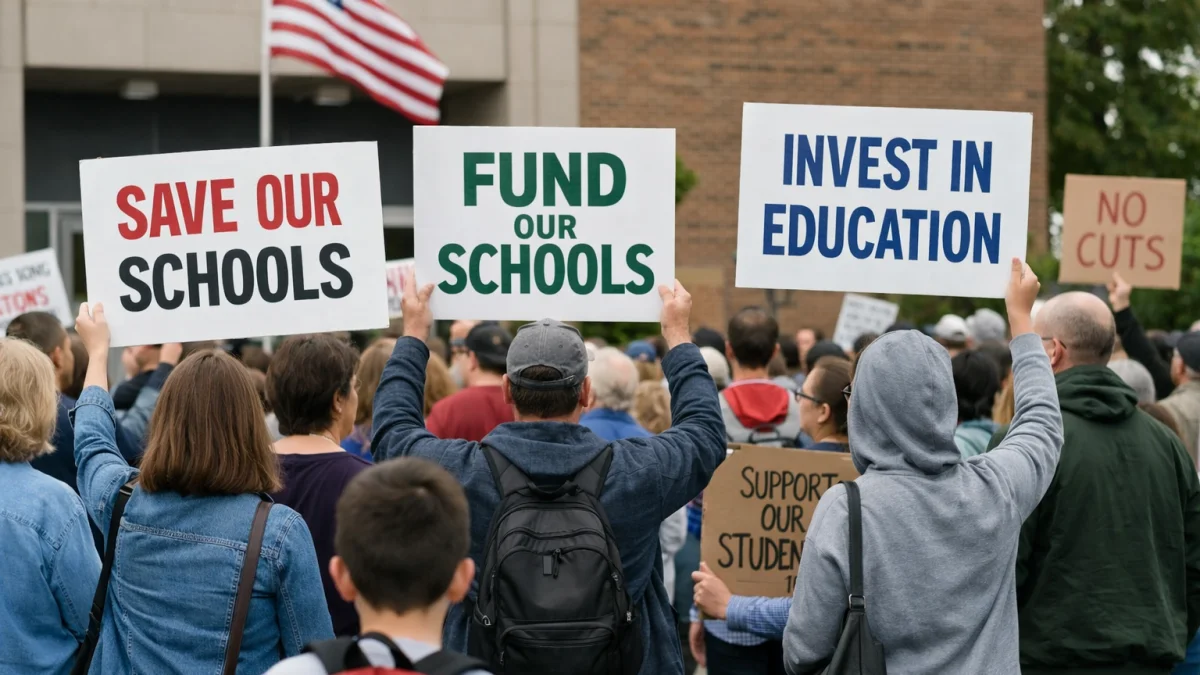


WASHINGTON — Protests erupted in multiple U.S. cities this week over proposed federal changes to school funding that could reduce support for public education programs, education unions and local officials said.
Demonstrations took place in California, Vermont and other states in recent days as concerns grew about the Trump administration’s fiscal year 2026 budget proposals, which include significant cuts to K-12 education funding. Organizers cited potential impacts on school meals, special education and other services.


In California, thousands of educators, parents and students participated in rallies on May 17 and subsequent actions, organized by the California Teachers Association as part of a “Fight for Schools” campaign. The union highlighted risks to about $16 billion in federal funding for the state’s public schools.
Protesters gathered outside schools and government buildings, voicing opposition to proposed consolidations of grant programs and overall reductions estimated at around $12 billion nationally. Similar actions occurred in Vermont, where demonstrators protested during a visit by Education Secretary Linda McMahon.
The administration has proposed returning more education authority to states through waivers and block grants, arguing it would reduce bureaucracy. Officials have approved waivers for states including Iowa and Louisiana to redirect certain funds.
“We will not be quiet,” National Education Association President Becky Pringle said during related May Day events, according to the union. “We demand fully funded schools.”
Critics, including teachers’ unions, warned that the changes could affect millions of students, particularly in low-income and rural districts. The Department of Education has emphasized empowering state and local leaders.
The proposals are part of broader budget discussions in Congress. Federal funding accounts for a relatively small portion of overall K-12 spending, but targeted programs support specific needs. Details on final appropriations remained subject to negotiations.
As of June 10, protests continued in scattered locations, with unions planning further advocacy. No comprehensive national tally of participants or incidents was immediately available. Authorities reported no major disruptions in most areas.
School districts across the country were assessing potential impacts while awaiting congressional action on the budget. Further demonstrations were anticipated as debates over federal education policy intensified.