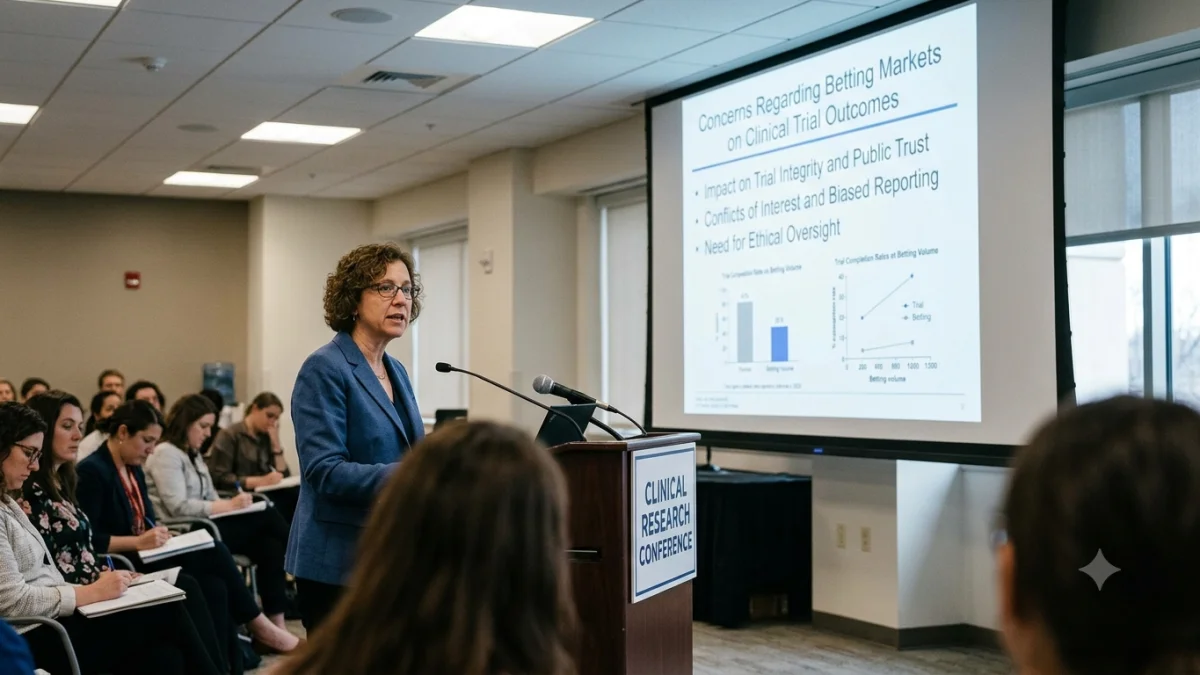


BOSTON — Researchers and bioethics experts have criticized the expansion of betting markets into clinical trial outcomes, warning that financial speculation tied to medical research could create ethical concerns and undermine trust in the drug development process. The criticism follows moves by prediction-market platforms to allow contracts related to whether experimental medicines succeed or receive regulatory approval.
Prediction markets have traditionally been promoted as tools for aggregating information by allowing participants to trade contracts based on future events. Supporters argue that prices can reflect collective assessments of available evidence, while critics say markets involving scientific and medical outcomes carry risks that differ from political or economic forecasting.


Researchers objecting to clinical trial betting have raised concerns about potential conflicts of interest, market manipulation and the possibility that financial incentives could affect behavior around studies involving patients. They argue that clinical trials are designed to protect participants and generate reliable evidence, not serve as financial instruments.
The debate intensified after Kalshi announced a biotech prediction market pilot that would allow users to trade contracts linked to late-stage clinical trials and regulatory decisions. The company said the markets would rely on publicly available information, including trial records and regulatory documents, and said safeguards would be used to reduce risks from nonpublic information.
Supporters of the initiative argue that prediction markets could provide an additional source of information about drug-development prospects and help investors evaluate uncertainty in biotechnology. They say market prices represent probabilities rather than guarantees of success or failure.
Some researchers remain unconvinced. A 2026 article in the journal Nature examined skepticism among scientists about applying prediction-market models to scientific questions, while other academic work has found that prediction markets do not consistently outperform established forecasting approaches in some health-related areas, including infectious disease forecasting.
Concerns about prediction markets have also extended beyond clinical trials. A policy analysis published in Science argued that commercial prediction markets raise broader questions about gambling-like design, regulation and public health risks.
Regulators and market operators have not announced a broad prohibition on clinical trial prediction contracts, and platforms offering such markets have said they intend to use rules designed to protect market integrity. Researchers and ethics specialists continue to debate whether financial forecasting tools can be used appropriately in areas where outcomes directly involve patients and medical care.