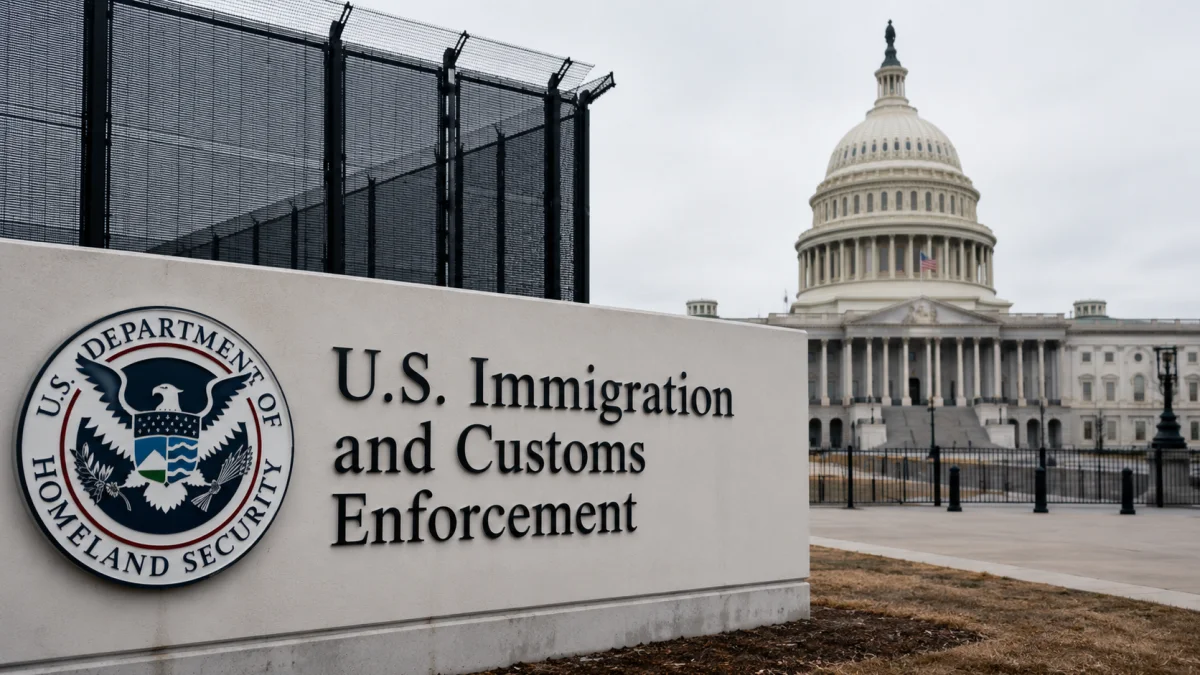


WASHINGTON — The U.S. Senate passed legislation early Friday providing about $70 billion in additional funding for Immigration and Customs Enforcement and Border Patrol operations.
The bill cleared the Senate on a 52-47 vote, largely along party lines, with one Republican senator, Lisa Murkowski of Alaska, joining Democrats in opposition. It now heads to the House of Representatives for consideration.


The measure would fund the Department of Homeland Security’s immigration enforcement agencies for three years, through the end of President Donald Trump’s current term, according to congressional sources. It includes roughly $38.6 billion for ICE and $22.6 billion for Customs and Border Protection, along with additional funds for other DHS priorities.
Republicans described the funding as essential to support the administration’s immigration enforcement priorities. Senate Republican leaders said the package would strengthen border security and deportation efforts amid ongoing challenges at the southern border.
Democrats opposed the bill, arguing it lacked sufficient oversight and accountability measures for the agencies. They had sought policy changes and greater transparency regarding enforcement practices.
The vote followed weeks of negotiations and delays, including disputes over a separate proposed “anti-weaponization” fund at the Department of Justice that was ultimately not included in the final package.
“Today’s passage marks an important step in delivering the resources needed to secure our borders and enforce our immigration laws,” a Republican Senate aide said, speaking on condition of anonymity to discuss internal deliberations.
The funding comes through the reconciliation process, bypassing the typical 60-vote threshold in the Senate. It supplements prior appropriations provided to the agencies in recent years.
Details on exact allocation breakdowns and implementation timelines remained subject to final House action and any potential amendments. The bill does not include new policy changes to immigration law beyond the funding provisions.
As of Friday morning, House leadership had not announced a specific timeline for considering the legislation. Congressional staff said negotiations could continue as the measure advances.