

WASHINGTON — Senate Republicans passed a second budget reconciliation package on a narrow party-line vote, advancing legislation that provides billions of dollars for immigration enforcement agencies.
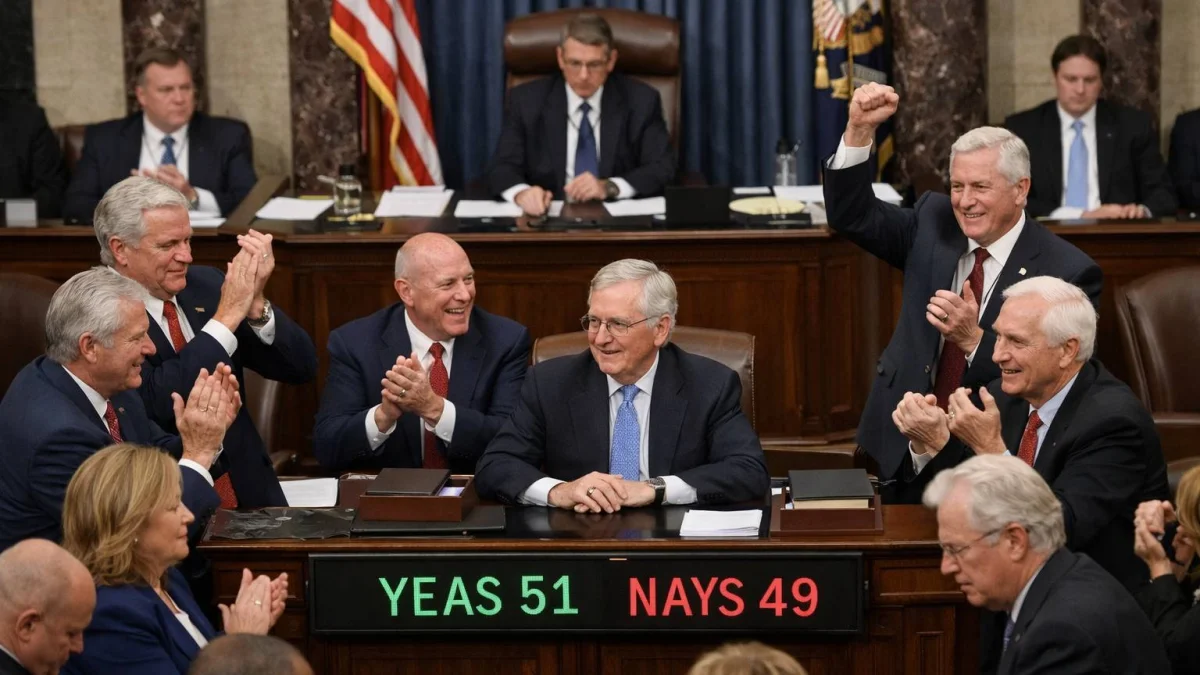
The Senate approved the measure, known as Reconciliation 2.0 or the Secure America Act, by a vote of 52-47 in the early morning hours of June 5 after a lengthy “vote-a-rama” session involving multiple amendments, Senate records show.


The bill allocates more than $70 billion over several years primarily for Immigration and Customs Enforcement and Customs and Border Protection. It aims to bolster border security operations through fiscal year 2029, according to details from congressional sources and committee texts.
Senate Majority Leader John Thune, R-S.D., helped steer the package through the chamber following earlier delays caused by internal Republican disagreements, including over a proposed “anti-weaponization” compensation fund that was ultimately adjusted or dropped in final negotiations.
The House of Representatives later cleared the legislation by a 214-212 vote on June 9, and President Donald Trump signed it into law shortly afterward, congressional records indicate.
Republicans have described the package as a key step in fulfilling priorities on immigration enforcement. “This legislation provides critical resources to secure our borders and enforce our laws,” a Republican leadership aide said, speaking on condition of anonymity to discuss internal strategy.
Democrats opposed the measure, arguing it bypasses regular order and prioritizes enforcement without sufficient accompanying measures. Senate Democrats, joined by at least one Republican, Sen. Lisa Murkowski of Alaska, voted against final passage.
The reconciliation process allows certain budget-related legislation to pass the Senate with a simple majority, avoiding the 60-vote filibuster threshold. This marks the second such package advanced by the Republican majority in the 119th Congress, following an earlier reconciliation effort in 2025.
Negotiations on the bill faced hurdles in May, including disagreements within the GOP conference over specific spending provisions and an administration-backed fund. Leaders postponed an initial vote before the Memorial Day recess but resumed efforts after the break, ultimately advancing the measure with modifications.
Details on the precise allocation of funds within the package include substantial amounts for ICE operations and CBP technology and personnel, though exact breakdowns for all line items continue to be reviewed in implementation phases.
With the bill now enacted, attention has shifted to potential next steps. Some Republicans have discussed the possibility of a third reconciliation package later in the year, though prospects remain subject to ongoing negotiations and internal party dynamics.
The legislation takes effect following its signing, with agencies expected to begin drawing on the authorized funds according to congressional appropriations guidelines.