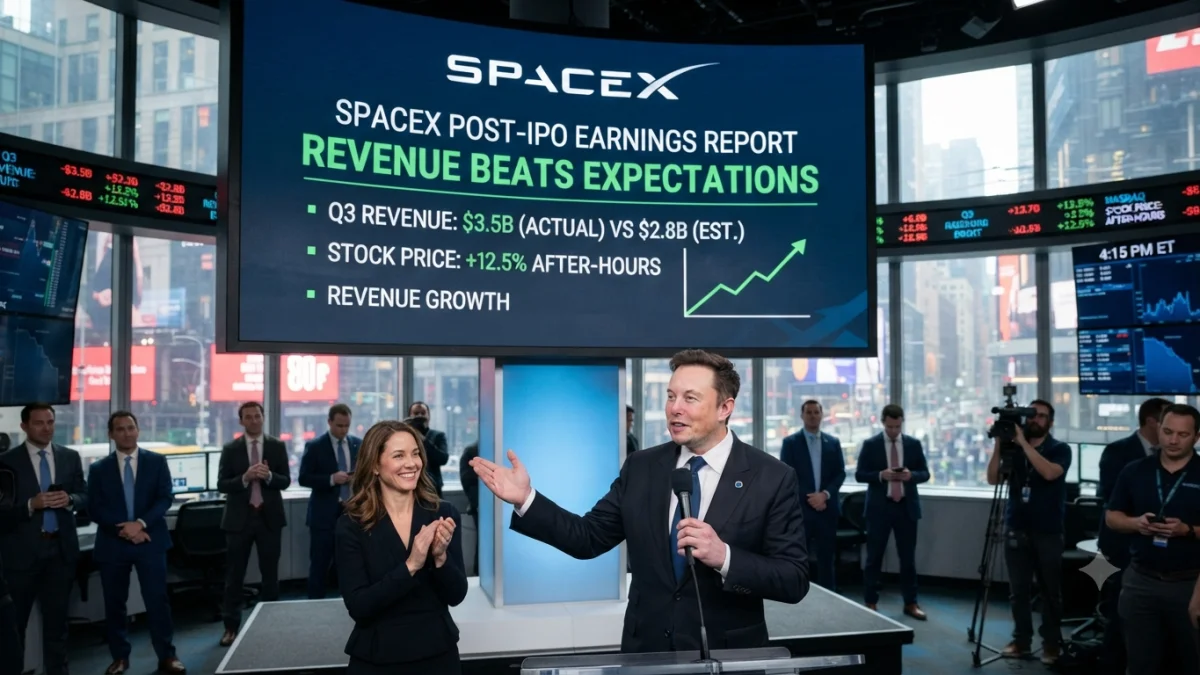


STARBASE, Texas — SpaceX beat Wall Street revenue expectations in its first quarterly earnings report since going public, as strong growth in its Starlink satellite business and artificial intelligence operations helped nearly double revenue, while heavy investment in AI infrastructure continued to weigh on the company.
The Elon Musk-led company reported April-June revenue of about $7.8 billion, up from $4.1 billion a year earlier and above analysts' expectations, according to LSEG data. Operating losses narrowed to $143 million from $970 million a year earlier.


SpaceX reported a net loss of $541 million, or 9 cents per share, for the quarter, according to the company's results. The loss was smaller than analysts had expected, although the company's first public-quarter reporting makes comparisons with earlier estimates less straightforward.
Starlink remained the company's main financial engine. Revenue from the connectivity business rose 66% from a year earlier to about $4.3 billion, with subscriber numbers doubling to roughly 12 million. SpaceX said the growth reflected continued momentum in its consumer, enterprise and government businesses.
The company's AI operations also expanded rapidly. Revenue from the business increased by roughly 250% year over year, driven in part by computing agreements with companies including Anthropic, Alphabet's Google and Reflection AI.
That expansion came with a sharp increase in spending. SpaceX's AI capital expenditures reached $15.83 billion in the quarter, compared with $749 million a year earlier, according to the company's reported figures. The scale of the spending has become a central issue for investors assessing whether Starlink's cash generation can support the company's expansion into AI computing and next-generation spacecraft.
Musk said on the post-earnings call that SpaceX was building AI computing capacity at scale and improving its AI models. The company expects to have more than two gigawatts of computing capacity by the end of 2026 and close to 10 gigawatts by the end of 2027, Musk said.
SpaceX went public in June, selling 638.9 million Class A shares after underwriters exercised an overallotment option, raising about $85.7 billion. Its shares began trading on Nasdaq on June 12 under the ticker SPCX.
Despite the revenue beat, SpaceX shares fell 7.5% in after-hours trading on Aug. 4 after rising 9.4% during the regular session, reflecting investor concerns over the scale of AI spending.
SpaceX has forecast a $100 billion annualized revenue run rate by December and said it plans to launch at least 1,000 next-generation V3 Starlink satellites within a year.