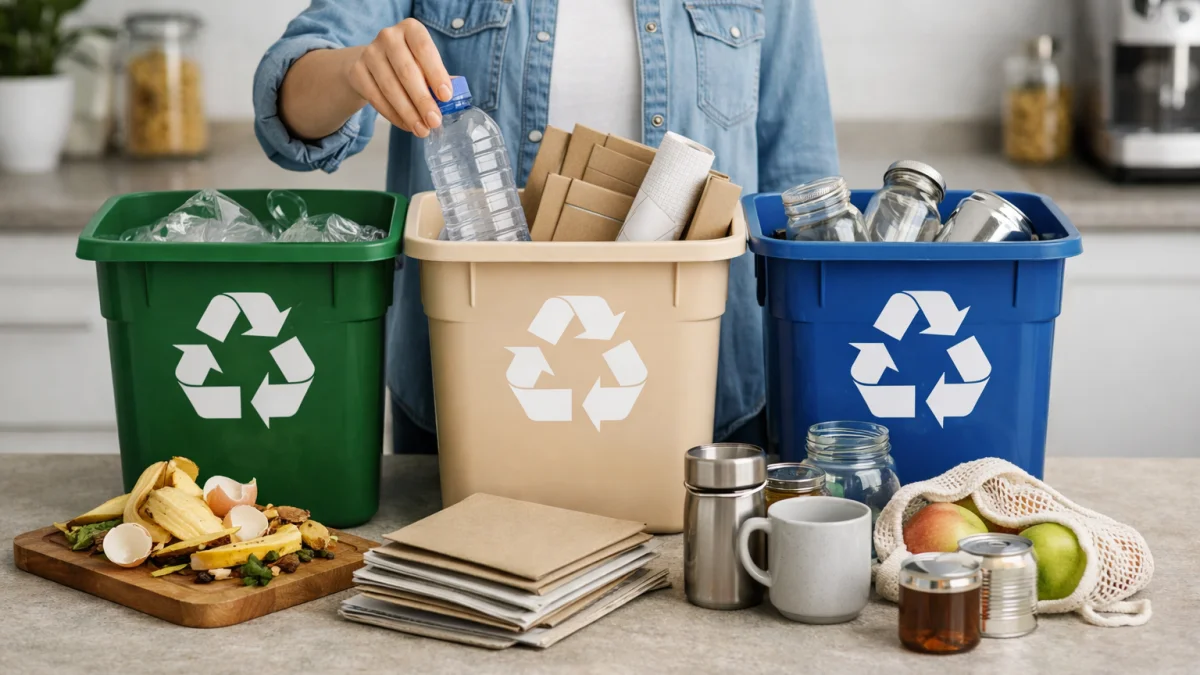


Household waste is produced through everyday activities such as shopping, cooking, cleaning, and packaging disposal. While completely eliminating waste may not be practical for most households, small daily adjustments can help reduce the amount of material thrown away. Smarter consumption habits may also improve organization, reduce unnecessary spending, and support more efficient use of household resources over time.
1. Plan purchases before shopping


Unplanned shopping can lead to excess packaging, duplicate items, and unused products that eventually become waste. Creating a shopping list before visiting stores may help households buy only what is necessary.
Practical planning habits may include:
• Checking existing supplies before shopping
• Buying quantities that can realistically be used
• Planning meals in advance
• Avoiding unnecessary impulse purchases
Careful planning may help reduce both household waste and food spoilage.
2. Reduce single-use products where possible
Disposable items are commonly used for convenience but may contribute significantly to daily waste. Replacing some frequently used disposable products with reusable alternatives may help lower overall trash output.
Examples may include:
• Reusable shopping bags
• Refillable water bottles
• Reusable food containers
• Cloth towels instead of disposable paper products
• Rechargeable batteries for household devices
Not every disposable item can be replaced easily, but reducing frequent single-use consumption may still have a measurable effect over time.
3. Store food properly to prevent spoilage
Food waste is one of the most common forms of household waste. Improper storage, forgotten leftovers, or overbuying may result in edible food being discarded unnecessarily.
Simple food management habits may include:
• Storing perishable items correctly
• Labeling leftovers with dates
• Freezing excess food before spoilage
• Using older ingredients before opening new products
Meal planning may also help households purchase more realistic quantities of food.
4. Separate recyclable materials carefully
Recycling systems vary between locations, but sorting recyclable materials properly may improve the likelihood that items are processed correctly.
Common recyclable materials may include:
• Paper and cardboard
• Glass containers
• Aluminum or metal cans
• Certain plastic packaging accepted locally
Contaminated materials, such as food-covered containers, may not always qualify for recycling. Reviewing local recycling guidelines may help households sort waste more accurately.
5. Repair or reuse items when practical
Replacing damaged items immediately may increase unnecessary waste. In some situations, repairing or repurposing products may extend their useful life and reduce disposal.
Examples may include:
• Repairing clothing or small appliances
• Reusing containers for storage
• Donating usable household goods
• Repurposing older materials for organization or cleaning
Repair may not always be practical or affordable, but reuse can sometimes reduce unnecessary purchasing.
6. Reduce packaging waste
Packaging materials from food delivery, online shopping, and individually wrapped products can accumulate quickly in households.
Possible ways to reduce packaging waste may include:
• Buying products in refill sizes when appropriate
• Choosing items with minimal packaging
• Combining deliveries when possible
• Bringing reusable bags or containers where permitted
Availability of lower-packaging options may depend on local stores and services.
7. Dispose of hazardous materials responsibly
Certain household items may require special disposal because they contain chemicals or electronic components that should not enter regular waste systems.
These items may include:
• Batteries
• Electronics
• Paint products
• Cleaning chemicals
• Fluorescent light bulbs
Many communities provide designated collection programs or recycling centers for hazardous household waste.
Reducing household waste often depends on manageable daily habits rather than major lifestyle changes. Consistent choices related to shopping, food storage, recycling, and product reuse may help households reduce unnecessary waste while improving overall resource efficiency over time.