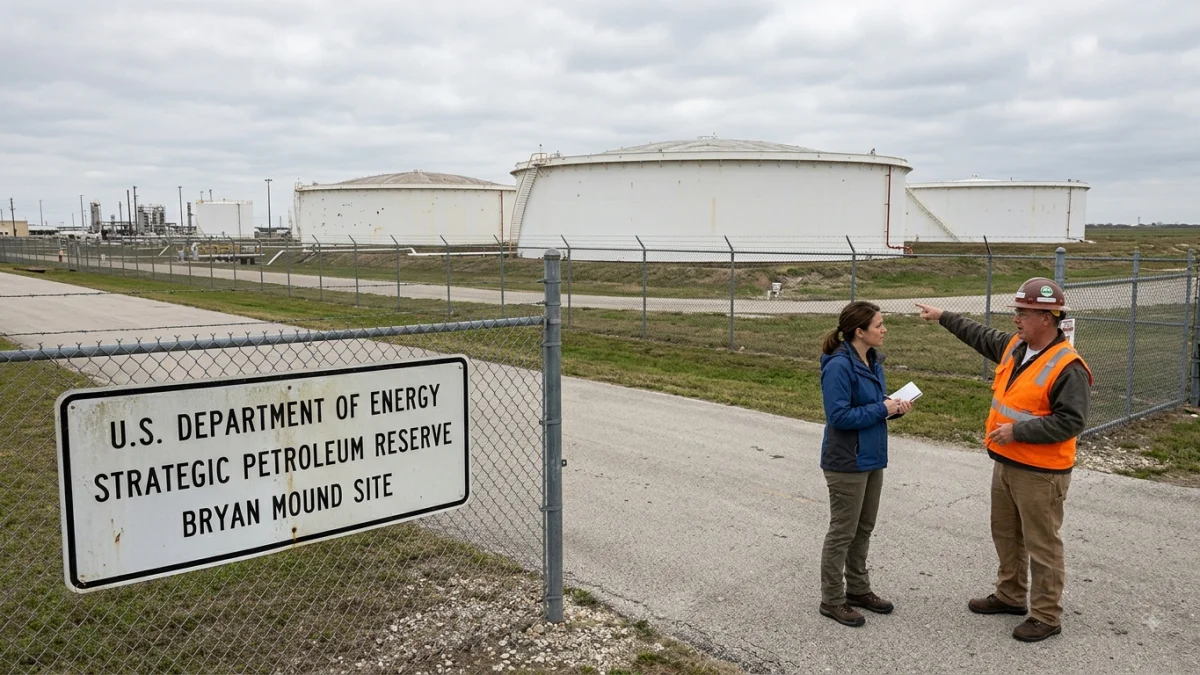


WASHINGTON — The U.S. Strategic Petroleum Reserve (SPR) fell below 300 million barrels last week, reaching its lowest level since 1983 as the United States continued an emergency drawdown aimed at supporting global oil markets amid disruptions linked to the war in Iran.
SPR inventories declined by about 6.1 million barrels to 298.7 million barrels in the week ended Aug. 7, according to U.S. Energy Information Administration data reported this week. The decline pushed the emergency stockpile below the 300-million-barrel threshold for the first time in more than four decades.


The reserve held 415.4 million barrels at the end of February, according to the U.S. Department of Energy, meaning inventories have fallen by more than 116 million barrels since then. The SPR is the U.S. government's principal emergency crude oil stockpile and is intended to provide a buffer against major supply disruptions.
The latest decline is part of a 172-million-barrel emergency release authorized by the Trump administration in March as part of a coordinated International Energy Agency effort. Energy Secretary Chris Wright said at the time that the U.S. release would take about 120 days and that the government had arranged to replace the oil with approximately 200 million barrels within a year.
The Government Accountability Office said in a May report that the SPR had faced increasingly frequent and large drawdowns and that its operational capability to meet future demands was at risk. The report said the Department of Energy and Congress had not completed a long-term analysis establishing an appropriate target size for the reserve.
The decline in the SPR has occurred even as commercial U.S. crude inventories rose sharply. EIA data showed commercial crude stocks increased by 17.4 million barrels in the week ended Aug. 7 to 424.4 million barrels, the largest weekly increase since January 2023, according to Reuters. The build was driven partly by higher imports and lower exports.
The SPR's falling inventories therefore represent a reduction in the government's emergency oil buffer rather than a direct measure of total crude available in the United States. Commercial inventories remain substantially larger and are held separately from the federal reserve.
The Energy Department has said it intends to replenish the SPR under its emergency exchange arrangements. The latest available data show the reserve at 298.7 million barrels as of Aug. 7, with further inventory changes dependent on ongoing deliveries and exchanges.