

NEW YORK — Schools and universities are facing growing challenges in detecting academic cheating as students gain wider access to generative artificial intelligence tools, education researchers and institutions said in 2026, with concerns focused on whether existing methods can reliably identify AI-assisted work. The issue has prompted educators to review assessment policies and reconsider how academic integrity is monitored.
Generative AI systems that can produce essays, solve problems and assist with research have changed the way students complete assignments, according to researchers studying academic integrity. A study published in the International Journal for Educational Integrity in 2026 examined AI content detection tools in academic settings and reported ongoing concerns about their accuracy and reliability.


Education authorities and institutions have responded by introducing new guidance on acceptable AI use. UNESCO said its guidance on generative AI in education calls for a human-centered approach, including policies that help institutions manage the technology while protecting educational goals and student rights.
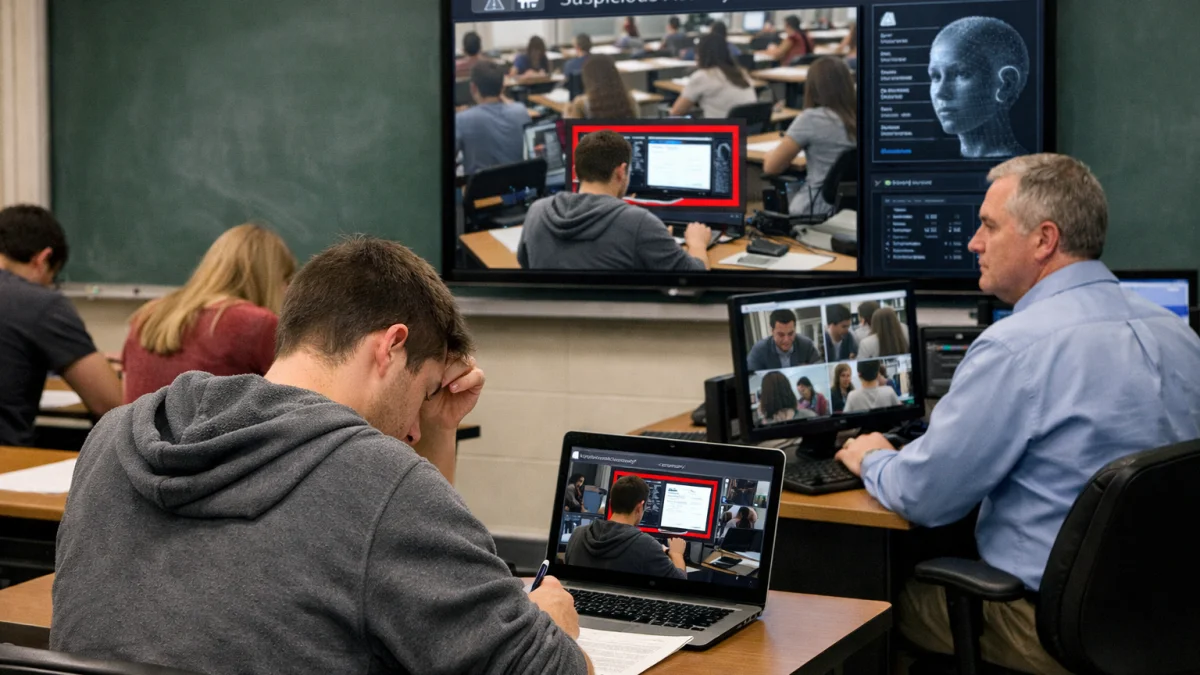
Some universities have adopted AI detection software and other monitoring systems to identify possible misuse. Researchers have found, however, that detection tools can face limitations when analyzing student work, particularly as AI systems improve and students can modify generated content. A 2026 review of AI detection research said institutions should be cautious about relying on automated tools alone for high-stakes academic decisions.
Educators are also changing assessment methods. Some schools are increasing the use of oral presentations, supervised assignments, draft reviews and other approaches designed to show a student’s learning process rather than only evaluating a final written product. The University of California, Berkeley, reported in May that a large survey of undergraduate AI use found students were using generative AI in different ways, with some reporting uses that violated academic policies.
Teachers and administrators have raised concerns about both academic misconduct and the possibility of incorrectly accusing students. Researchers have noted that AI detection results should be treated as indicators rather than definitive proof, as the reliability of such systems remains under examination.
“We need to ensure that students understand what responsible use of these tools means,” UNESCO said in its guidance on generative AI in education, emphasizing the need for policies, training and safeguards as technology develops.
On Monday, education officials and institutions continued reviewing policies on AI use, with approaches varying between countries and schools. Details remain unclear on whether a single standard for detecting AI-assisted cheating will emerge, as educators continue to balance technology adoption with academic integrity requirements.