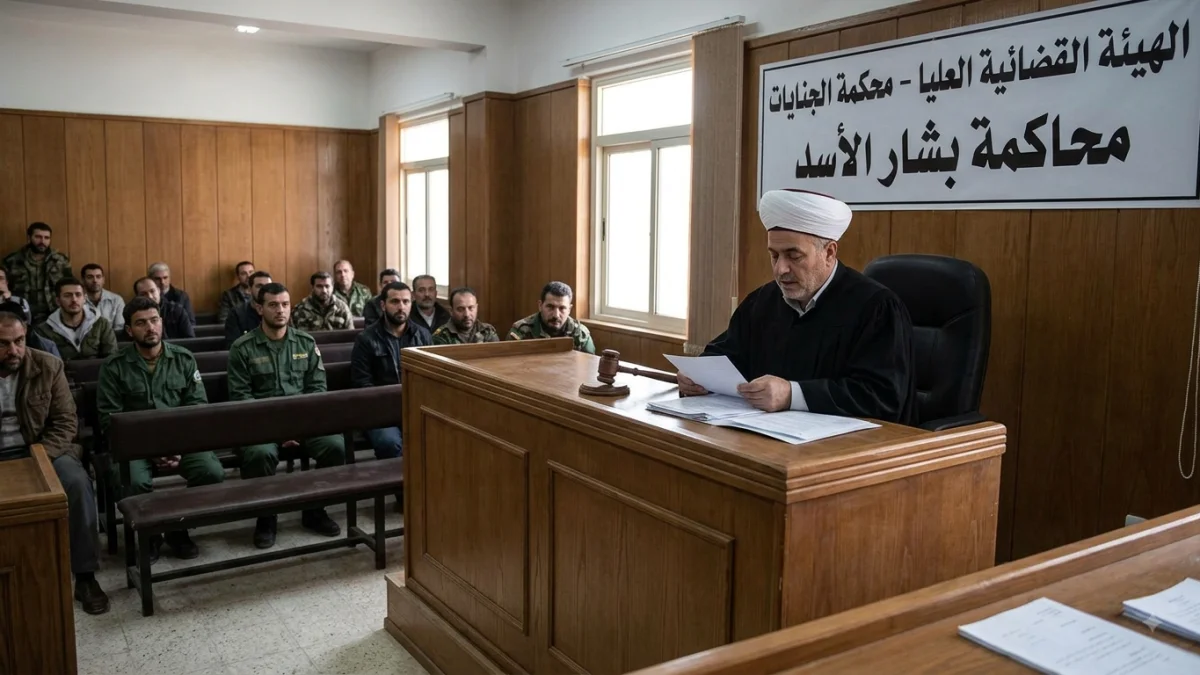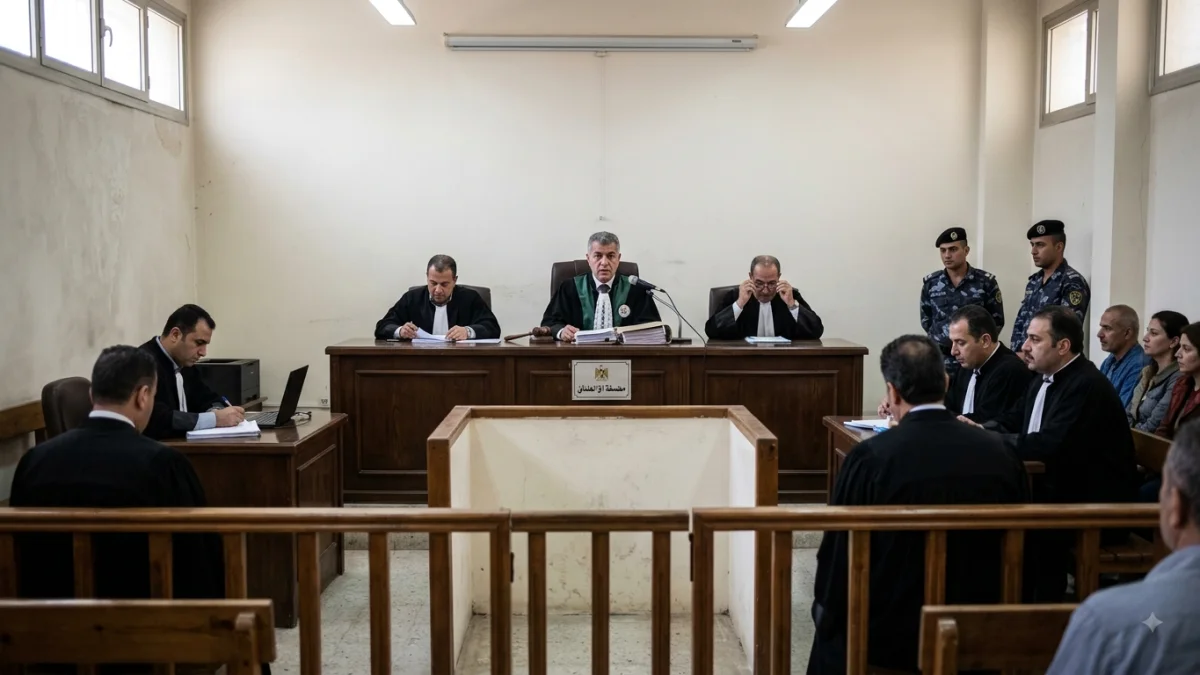


A Syrian court’s decision to sentence former President Bashar al-Assad to death in absentia marks the most consequential domestic judicial action yet against the leadership of the government that ruled Syria for decades. The Fourth Criminal Court in Damascus issued the sentence on Tuesday in a case arising from abuses committed during the country’s 14-year conflict, while Assad remains outside Syria in Russia. His younger brother Maher al-Assad and their cousin Atef Najib were also sentenced to death, according to the Associated Press.
The immediate significance is therefore less the prospect of Assad’s execution than the establishment of a formal criminal judgment against a former head of state who escaped prosecution when his government collapsed. Assad fled to Russia after rebels overthrew his government in December 2024, ending the Assad family’s roughly five-decade rule. Russia subsequently granted asylum to Assad and Maher, and Syria’s new authorities have asked Moscow to surrender them.


The ruling also represents a transition from political change to judicial accountability. Until this year, the new Syrian authorities had largely been confronting the legacy of Assad’s rule through arrests, investigations and efforts to recover evidence. Proceedings before the Fourth Criminal Court began in April against Najib, the former head of Political Security in Daraa, while Assad, Maher and other senior officials were prosecuted in absentia. By May, the court had formally established their absence, declared them fugitives from justice and placed their assets under state administration under Article 322 of Syria’s Criminal Procedure Code, according to the Syrian Network for Human Rights.
The case has particular historical significance because Najib’s role links the proceedings to the beginning of the 2011 uprising. He was the senior political-security official in Daraa when authorities arrested and tortured teenagers accused of writing anti-government graffiti. The incident became one of the catalysts for protests that spread across Syria and were met with a violent government response, eventually developing into a civil war that killed roughly half a million people, according to AP.
For Syria’s new judicial system, however, the verdict also exposes unresolved legal questions. The proceedings have been conducted through the existing criminal judiciary rather than a fully established specialized tribunal for international crimes. Legal and human-rights analysts have noted that Syria’s existing penal framework does not independently codify crimes against humanity and war crimes in the way international criminal law does. The Syrian Network for Human Rights has argued that prosecutions under ordinary criminal provisions can address acts such as murder, torture and unlawful detention but may not fully capture the systematic nature of abuses attributed to the former government.
That distinction matters beyond legal terminology. Transitional justice is intended not only to punish individuals but also to establish an authoritative record of what happened, identify chains of responsibility and provide a basis for reparations and institutional reform. A criminal process that is viewed as procedurally credible could strengthen those objectives. Conversely, questions about the legal framework, evidentiary standards and defendants’ ability to challenge the proceedings could affect how the judgments are regarded domestically and internationally.
The in-absentia nature of Assad’s sentence is the clearest practical limitation. A death sentence cannot be carried out while the former president remains beyond the jurisdiction of the Syrian authorities. Russia’s position is therefore central to the immediate consequences of the judgment. At the same time, the sentence establishes a formal Syrian judicial claim over Assad and creates a record that could become relevant to future extradition or international legal cooperation. Earlier proceedings had already placed Assad and Maher among the fugitives formally sought by the Syrian judiciary.
The development also comes as Damascus and Moscow are recalibrating their relationship. Syria and Russia reached an agreement this month on the future of Russian military facilities at Hmeimim and Tartus, under which Syrian authorities are to assume greater control while military installations are converted into joint training facilities. The agreement illustrates that the new Syrian government is maintaining relations with Moscow even as it seeks accountability for the former Russian-backed leadership.
The verdict therefore leaves two separate questions. Legally, Syria has moved from investigating senior Assad-era figures to imposing its first death sentences on the former ruling establishment. Practically, the sentence against Assad remains unenforceable unless his status in Russia changes. The authorities will now be expected to clarify the legal basis and implementation of the judgments, while continuing proceedings against other former officials and addressing broader questions over evidence, due process, transitional-justice legislation and cooperation with foreign governments.