

Thailand’s deadliest school shooting in years has intensified a national debate over firearms access, youth violence and the ability of institutions to identify and respond to warning signs before a violent act occurs. The August 7 attack near Bangkok, in which a 14-year-old student killed multiple people before dying by suicide, has prompted the government to consider tougher gun restrictions and renewed scrutiny of how a young person obtained access to a firearm.
The incident is significant because it brings together several long-running concerns in Thailand: widespread civilian firearm ownership, gaps in oversight of legally registered weapons, questions about mental health support for young people, and challenges in preventing rare but highly destructive acts of violence. While investigators have not established a final motive, authorities and experts say the case highlights the difficulty of addressing youth violence through a single measure such as firearm regulation alone.


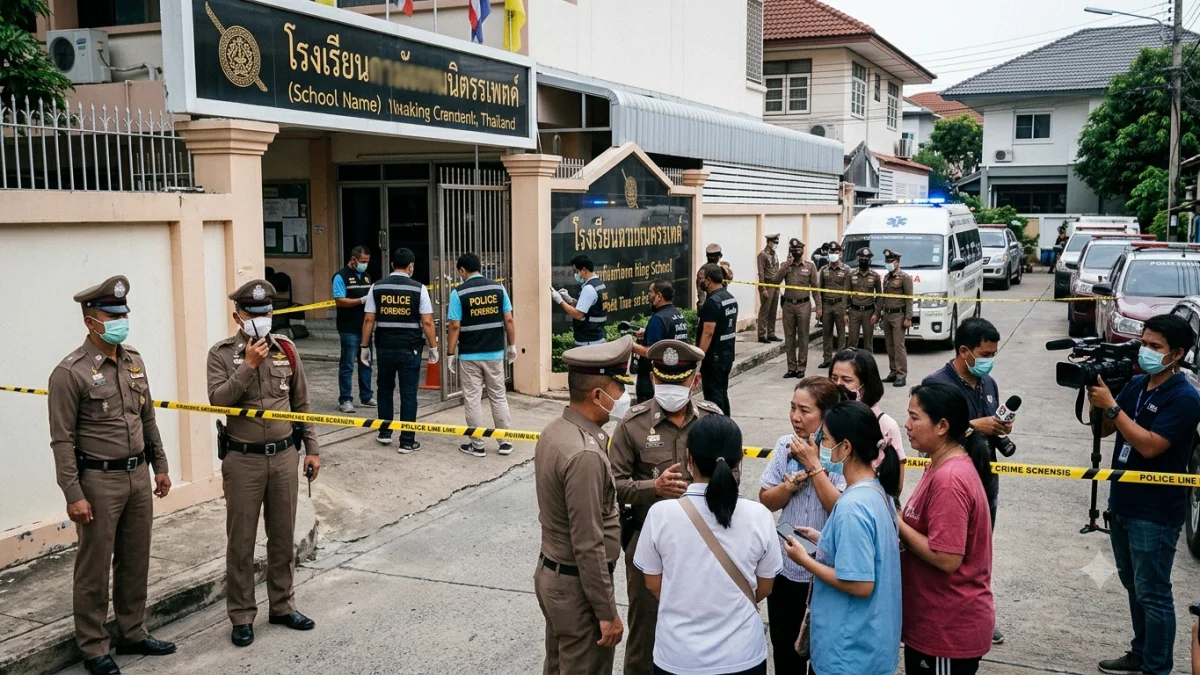
According to officials and media reports, the attack began at a school in Nonthaburi province, northwest of Bangkok, after the student had earlier killed his grandparents at their home. Authorities said the weapon used was registered to the student’s grandfather. The investigation into the motive remains ongoing, with officials examining factors including the student’s personal circumstances and possible school-related stress.
Prime Minister Anutin Charnvirakul said the government would introduce measures to strengthen firearms controls, including restrictions on carrying guns in public. The proposed response reflects growing political pressure after several high-profile shootings in Thailand in recent years, although officials have not yet detailed the full scope or timeline of any legislative changes.
Thailand already has a significant civilian gun ownership rate compared with many countries in the region. Estimates cited in previous research place civilian-held firearms at around 10 million, including both registered and unregistered weapons. Analysts have argued that the challenge is not only the number of firearms but also the systems governing ownership, storage, licensing and enforcement.
The latest shooting has renewed attention on legally owned firearms. In previous mass shootings, including the 2022 attack at a childcare centre in northeastern Thailand that killed more than 30 people, authorities faced questions about firearm access and the monitoring of individuals who may pose risks. The government introduced some restrictions after earlier incidents, but critics have argued that reforms have not fully addressed issues such as background checks, secure storage and ongoing assessments of gun owners.
Experts studying firearm violence generally emphasize that prevention requires multiple layers of intervention. Gun access controls can reduce opportunities for impulsive or unauthorized use, while mental health services, early identification of individuals showing signs of severe distress, and stronger support systems in schools are often cited as complementary measures. Thai education authorities have previously promoted school safety programs focused on preventing violence, monitoring student wellbeing and responding to warning signs.
The debate also reflects a broader regional issue. Thailand has experienced several high-profile attacks involving young perpetrators, including a 2023 shooting at a Bangkok shopping centre carried out by a teenager. That incident also triggered discussion about firearm regulation, youth behaviour and access to illegal or improperly controlled weapons.
However, analysts caution against drawing immediate conclusions about the causes of individual attacks. Research on violence prevention has found that mass shootings typically involve a combination of personal, social and situational factors, and investigations often take time to determine whether warning signs were present and whether institutions had opportunities to intervene.
For the Thai government, the current challenge is balancing public safety measures with effective enforcement. Stricter laws may address some risks, but authorities will also face questions over implementation, including how firearms are stored, how ownership records are maintained and how schools can improve support for students experiencing serious difficulties.
The confirmed investigation into the Nonthaburi school shooting remains ongoing. Authorities are monitoring the attacker’s background, the circumstances surrounding access to the firearm, the effectiveness of existing school safety procedures and possible legislative responses. The incident has renewed public attention on gun access and youth violence, but officials have not yet announced a final determination of the causes behind the attack.