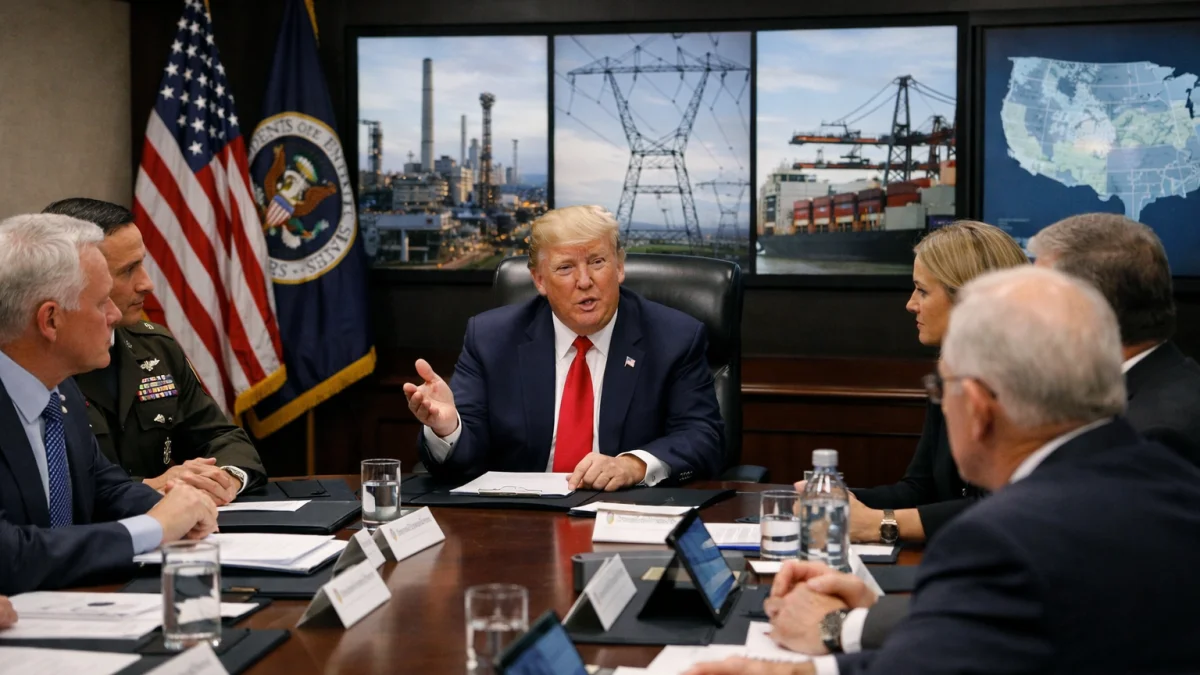
WASHINGTON — The White House on Wednesday advanced implementation measures tied to President Donald Trump’s “America First Resilience Strategy,” a broad national security and economic framework released earlier this week that seeks to integrate risk management, infrastructure protection and supply chain security across federal and state systems.
According to a White House fact sheet and accompanying strategy documents, the initiative directs federal agencies to prioritize what officials describe as “risk-informed decision-making,” expand resilience planning across critical infrastructure sectors, and strengthen coordination with state, local and private-sector actors. The administration said the approach is intended to reduce exposure to disruptions from natural disasters, cyberattacks and foreign adversaries.
The strategy, unveiled on June 23, outlines what it calls a “National Resilience Goal” aimed at ensuring no adversary or hazard can significantly disrupt U.S. core interests. It also calls for a National Risk Register to identify and rank systemic vulnerabilities across sectors including national security, energy, public health and transportation.
Officials said the framework builds on earlier Trump administration actions focused on domestic industrial capacity, cybersecurity modernization and supply chain security. Treasury Secretary Scott Bessent, speaking at the Economic Club of New York earlier this month, said U.S. policy must ensure supply chains can withstand shocks and coercion, while avoiding “dangerous foreign dependencies,” according to prepared remarks released by the Treasury Department.
The White House said the resilience strategy is structured around four “core domains” and four implementation principles, including modernization of systems and a shift in risk responsibility between federal, state and local governments. It also emphasizes technological upgrades in infrastructure and expanded public-private coordination, according to the published document.
The administration has paired the resilience agenda with related cybersecurity and defense initiatives in recent weeks, including executive actions aimed at accelerating post-quantum cryptography adoption across federal systems and critical infrastructure operators, according to White House releases.
The policy rollout comes amid broader debate in Washington over the scope of executive authority in national security and foreign policy. On June 23, the Senate passed a war powers resolution seeking to limit presidential authority regarding potential military action against Iran, underscoring bipartisan concerns about escalation risks.
Critics and supporters in Congress have not yet issued unified responses specifically addressing the resilience strategy as a whole. The White House has described the framework as a long-term modernization effort intended to guide federal planning across multiple administrations.
The administration said implementation guidance to agencies and additional sector-specific directives will continue to be issued in phases over the coming months, with no additional policy milestones formally announced as of Wednesday.