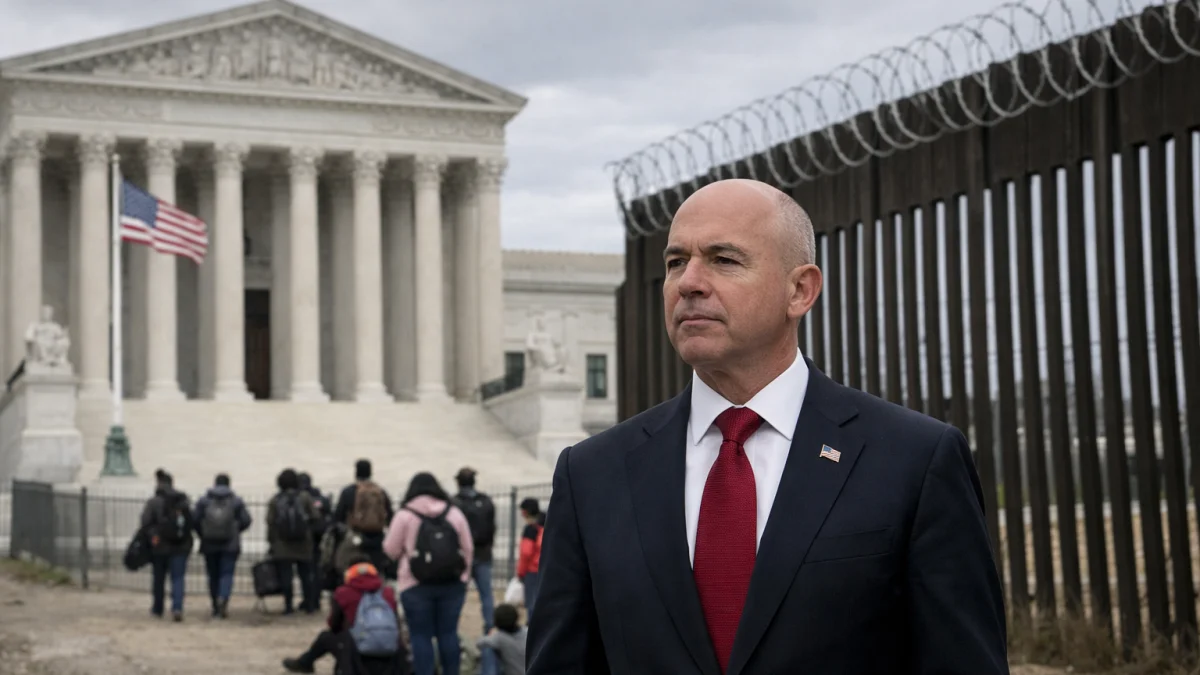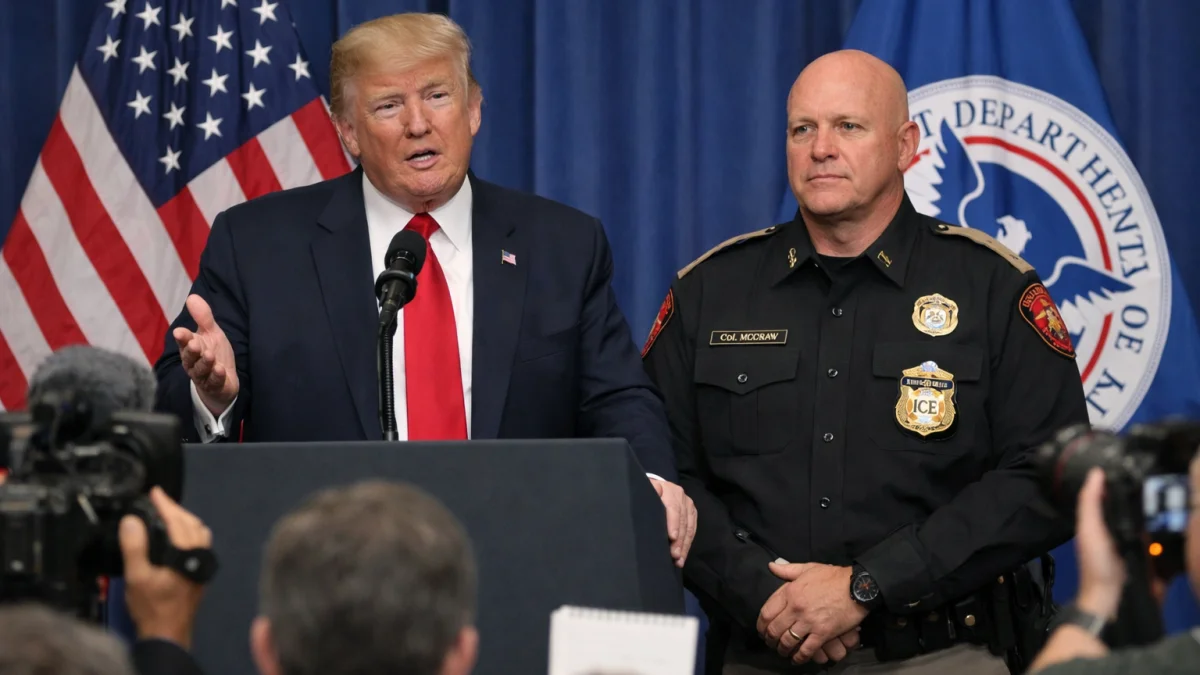
President Donald Trump has nominated Lance Schroyer, a former Oklahoma state trooper and U.S. Marine with nearly three decades of law enforcement experience, to serve as director of U.S. Immigration and Customs Enforcement (ICE).
The selection signals the administration’s continued emphasis on operational experience in street-level policing and tactical operations as it pursues an expanded interior enforcement strategy aimed at large-scale deportations. Schroyer, who has been serving as a senior advisor to Homeland Security Secretary Markwayne Mullin, would lead the agency responsible for detaining and removing individuals who are in the United States unlawfully if confirmed by the Senate.
ICE has operated without a Senate-confirmed director since 2017, relying on acting leadership through much of the first Trump administration and the Biden years. The nomination comes amid a broader recalibration of U.S. immigration enforcement that has seen the agency, along with other federal resources, redirected toward interior removals following initial border-focused measures.
Schroyer’s background stands in contrast to many previous ICE directors and acting leaders who came from federal law enforcement or immigration policy backgrounds. A 29-year veteran of the Oklahoma Highway Patrol, including time as a major overseeing the Emergency Services Unit, he has experience in special weapons and tactics, incident management, de-escalation, and dignitary protection, according to the Department of Homeland Security. Trump described him on Truth Social as “a PATRIOT with real operational experience, and proven leader with DECADES of experience locking up the worst of the worst.”
The choice aligns with the administration’s stated priority of targeting individuals with criminal records or recent border crossers for removal. Secretary Mullin praised the nomination, saying Schroyer would help deliver on the president’s mandate to arrest and deport “the worst of the worst illegal aliens.” Oklahoma Sen. Markwayne Mullin, a Republican, has also endorsed the pick.
The nomination occurs as the second Trump administration has significantly expanded immigration enforcement capacity. Congress has appropriated substantial funding—around $170 billion over four years—for enforcement initiatives, supporting increased detention, deportation operations, and interagency coordination. Deportation efforts have involved not only ICE but also assistance from other federal agencies, with reports of National Guard and military support in some operations.
This approach marks a shift from prior administrations, which often prioritized border security while maintaining more limited interior enforcement focused on recent arrivals or those with serious criminal convictions. The current strategy broadens potential targets, though officials have stressed prioritization of public safety threats. Enforcement actions have included workplace raids, targeted arrests in major cities, and expanded use of detention, contributing to measurable increases in removals compared to recent years.
Critics, including immigrant advocacy groups, have raised concerns about due process, resource strain on local communities, and the humanitarian impact of large-scale operations. Supporters argue that stronger interior enforcement is necessary to deter illegal immigration and restore the integrity of the legal immigration system. The administration has pointed to declines in border encounters in 2025 as evidence that its overall approach is working.
Confirmation of Schroyer would place a career state and local law enforcement veteran atop a federal agency with a national mandate, potentially influencing training, tactics, and priorities for field officers. It could also strengthen coordination between federal immigration authorities and state and local police departments, many of which have expressed willingness to assist under current policies.
The Senate, which must confirm the nominee, has not yet scheduled hearings. ICE continues to operate under acting leadership, with ongoing enforcement actions. Uncertainties remain regarding the precise pace and scale of future deportations, the handling of long-term undocumented residents without criminal records, and potential legal challenges to expanded enforcement tactics. Officials continue to monitor border metrics, court rulings on immigration procedures, and operational capacity within detention facilities as the nomination proceeds.