

WASHINGTON — The Trump administration is facing questions from lawmakers on Capitol Hill about provisions related to Iran’s nuclear program as part of a tentative agreement aimed at ending recent hostilities between the United States and Iran.
Congressional committees have pressed administration officials for details on how any final accord would address Tehran’s uranium enrichment activities and potential sanctions relief, officials said. The scrutiny follows the announcement of a memorandum of understanding between the U.S. and Iran that includes a ceasefire extension and reopening of the Strait of Hormuz.


Lawmakers from both parties have signaled that any nuclear-related agreement must undergo congressional review under the Iran Nuclear Agreement Review Act of 2015. Senate Republicans, including Sen. Lindsey Graham, have emphasized the need for the deal to be submitted to Congress.
“Under our law, any nuclear deal with Iran will be sent to Congress for review and a vote,” Graham said, according to reports on recent statements. He added that Vice President JD Vance and negotiating partners should participate in presenting the final deal to lawmakers.
The tentative framework, announced in mid-June 2026, calls for an initial 60-day period of further negotiations on Iran’s nuclear program, sanctions and regional security issues. U.S. officials have stated that sanctions relief would be tied to verifiable steps by Iran to curb its nuclear ambitions. Details on specific limits for uranium enrichment or stockpile disposal remain under discussion.
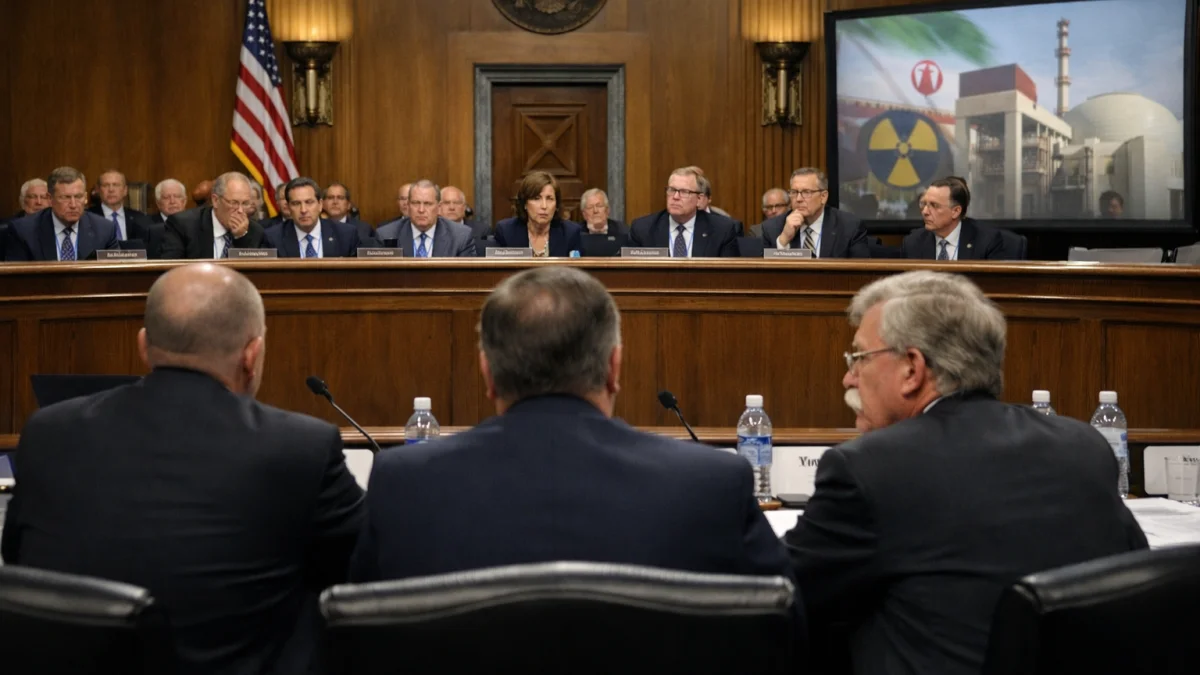
The questions come amid broader oversight of the Trump administration’s approach following U.S.-Israeli strikes on Iranian targets earlier in 2026 and subsequent conflict. Secretary of State Marco Rubio told a Senate hearing in early June that any sanctions relief would be condition-based and linked to Iran’s nuclear activities.
Administration officials have maintained that the goal is to prevent Iran from obtaining a nuclear weapon. President Donald Trump has publicly stated that Iran has agreed not to pursue a nuclear weapon as part of ongoing talks.
Democrats and some Republicans have sought assurances on verification mechanisms and the durability of any commitments. House Foreign Affairs Committee members have raised concerns about oversight and the balance of risks. Details on the precise timeline for a final agreement or the scope of congressional input remain unclear.
Iranian officials have described the current phase as focused on ending hostilities, with nuclear matters deferred to subsequent talks. U.S. intelligence assessments earlier in the year indicated that Iran was not actively building a nuclear weapon prior to the escalation, though enrichment activities continued.
As of Tuesday, no final nuclear accord had been reached, and lawmakers continued to press for briefings and hearings on the administration’s negotiating positions. The next steps in the process are expected to unfold over the coming weeks.