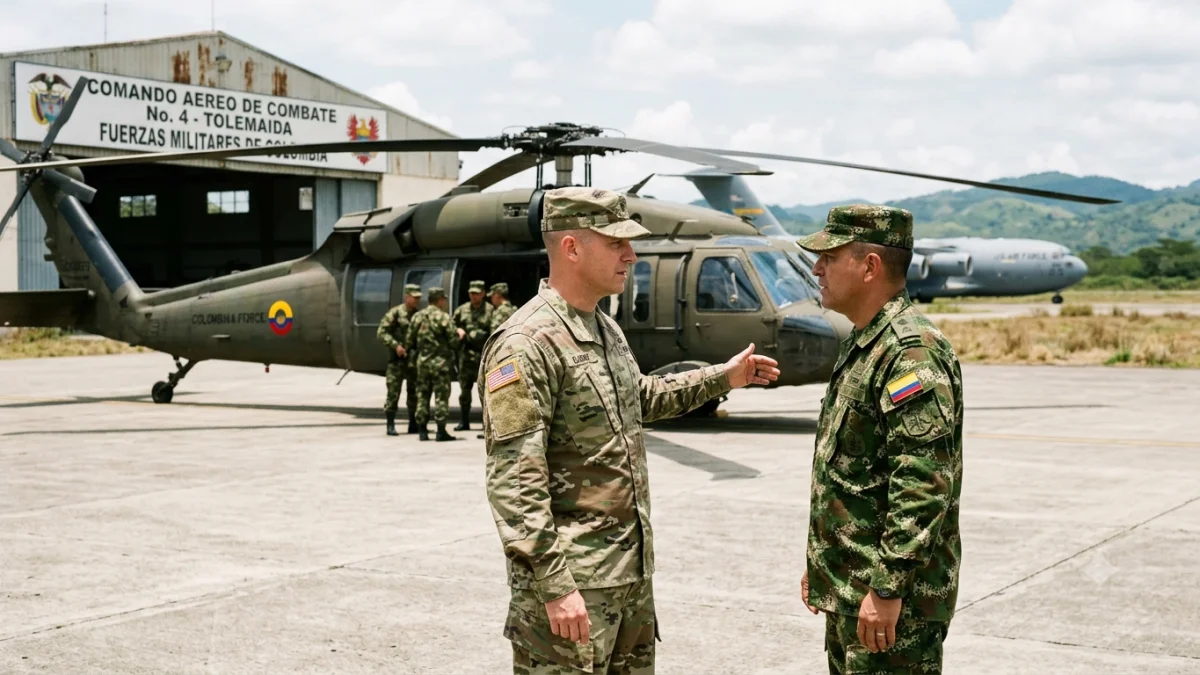


WASHINGTON — The Trump administration is accelerating military cooperation with Colombia's incoming government, seeking to deepen joint operations against drug trafficking organizations as President-elect Abelardo De La Espriella prepares to take office, according to U.S. officials and statements from both governments.
The renewed security partnership follows weeks of high-level meetings in Washington between senior U.S. officials and representatives of Colombia's incoming administration, who agreed to expand cooperation on counternarcotics, regional security and intelligence sharing. The initiative marks a sharp shift after a period of strained relations between Washington and outgoing Colombian President Gustavo Petro over drug policy and broader bilateral issues.


A senior U.S. defense official said last month that the new framework would take the long-standing U.S.-Colombia defense relationship "to new levels," while Colombian officials described the effort as the beginning of a new phase of joint security cooperation. Colombia's incoming defense leadership has referred to the initiative as "Plan Patriot 2.0," saying it is intended to strengthen military capabilities and improve operational coordination against criminal organizations.
According to officials from the incoming Colombian administration, discussions have included expanded intelligence support, closer military coordination and measures aimed at disrupting cocaine production and trafficking networks. U.S. officials have also indicated that Colombia is expected to play a central role in the administration's broader regional counternarcotics strategy, although neither government has announced a timetable for any expanded joint operations.
The Trump administration has made combating transnational drug trafficking organizations a central national security priority, arguing that cartels contribute to drug overdoses, organized crime and illegal migration affecting the United States. Over the past year, Washington has sought stronger security cooperation with governments across Latin America while pressing partners to intensify action against trafficking groups.
De La Espriella, who won Colombia's presidential election in June, campaigned on restoring security through an aggressive crackdown on armed criminal groups and expanding cooperation with the United States. His inauguration on Friday comes amid heightened security following reports by Colombian authorities that they disrupted an alleged plot targeting military and police facilities ahead of the ceremony.
The closer partnership represents a significant change from the relationship under Petro, whose government frequently disagreed with Washington over counternarcotics strategy and aspects of U.S. regional security policy. Although the two governments took steps earlier this year to ease diplomatic tensions, the incoming Colombian administration has pledged substantially closer alignment with Washington on security matters.
Both governments have said additional details of the expanded cooperation will be announced after Colombia's new administration formally assumes office.