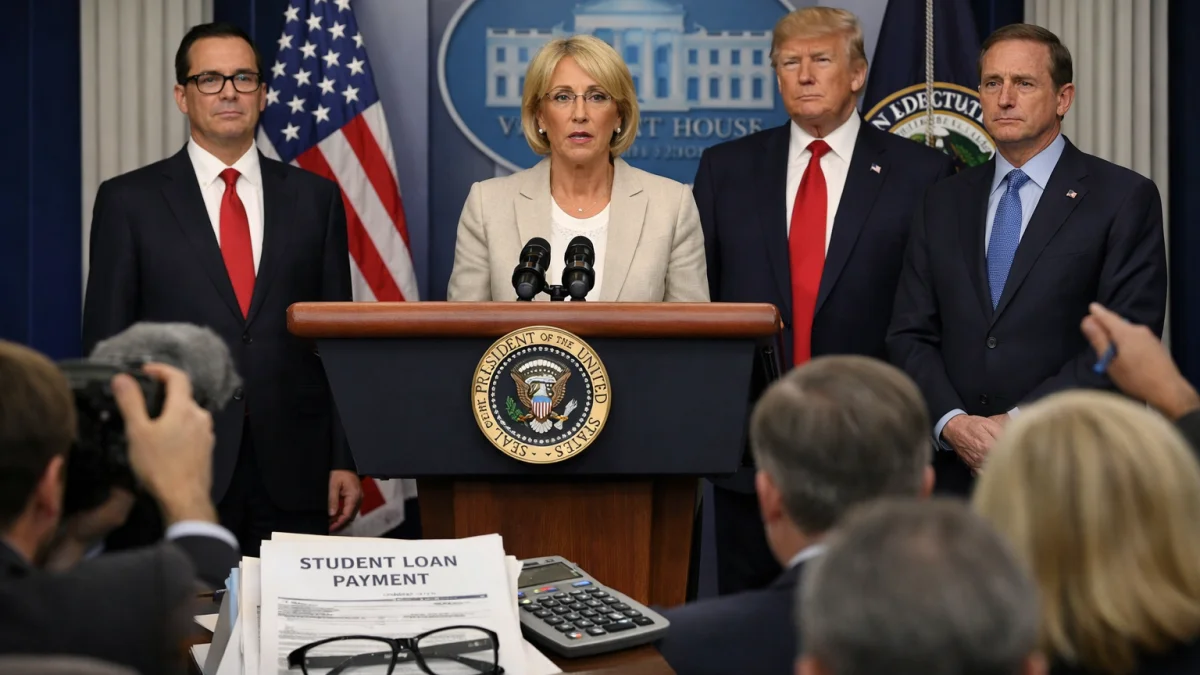


WASHINGTON — The Trump administration is moving ahead with a broad overhaul of the federal student loan system, with new repayment options scheduled to take effect on July 1 as officials seek to transition millions of borrowers into updated repayment plans, according to the U.S. Department of Education.
The changes, announced by the Education Department and outlined in federal regulations and agency guidance, are part of legislation enacted during President Donald Trump’s administration that restructures how federal student loans are repaid. The department said the new framework is intended to simplify a system that currently includes numerous repayment and discharge programs.


In a fact sheet released this month, the department said borrowers taking out new federal student loans after July 1 will have access to two primary repayment options: a new income-driven program known as the Repayment Assistance Plan, or RAP, and a revised tiered standard repayment plan. Existing borrowers in certain plans will be given a transition period to select among available repayment options.
“Starting on July 1, borrowers with new student loans will have immediate access to these new plans,” the Education Department said in its June 9 fact sheet.
The overhaul follows years of changes to federal student loan policy under successive administrations. The Biden-era Saving on a Valuable Education (SAVE) repayment plan faced legal challenges and is being phased out following court rulings and subsequent policy changes, according to the Education Department and borrower guidance issued ahead of the transition. Borrowers currently enrolled in SAVE are expected to receive notices outlining their repayment options.
Education Department officials have said the new structure will reduce complexity for borrowers. In January, the department announced a temporary delay in certain involuntary collection efforts on defaulted federal student loans, saying the pause would allow time to implement repayment reforms and provide borrowers additional opportunities to return loans to good standing.
The administration has also announced a temporary interest-rate reduction for some borrowers who enroll in automatic payments, a measure officials said is designed to encourage on-time repayment and reduce delinquency.
Borrower advocates and consumer groups have expressed concerns that some borrowers could face higher monthly payments or longer repayment periods under the new system. Administration officials have said the revised plans provide clearer and more predictable repayment pathways.
As of late June, the Education Department said preparations for the July 1 rollout were continuing. Borrowers are being directed to StudentAid.gov and their loan servicers for information on available repayment options and transition deadlines.