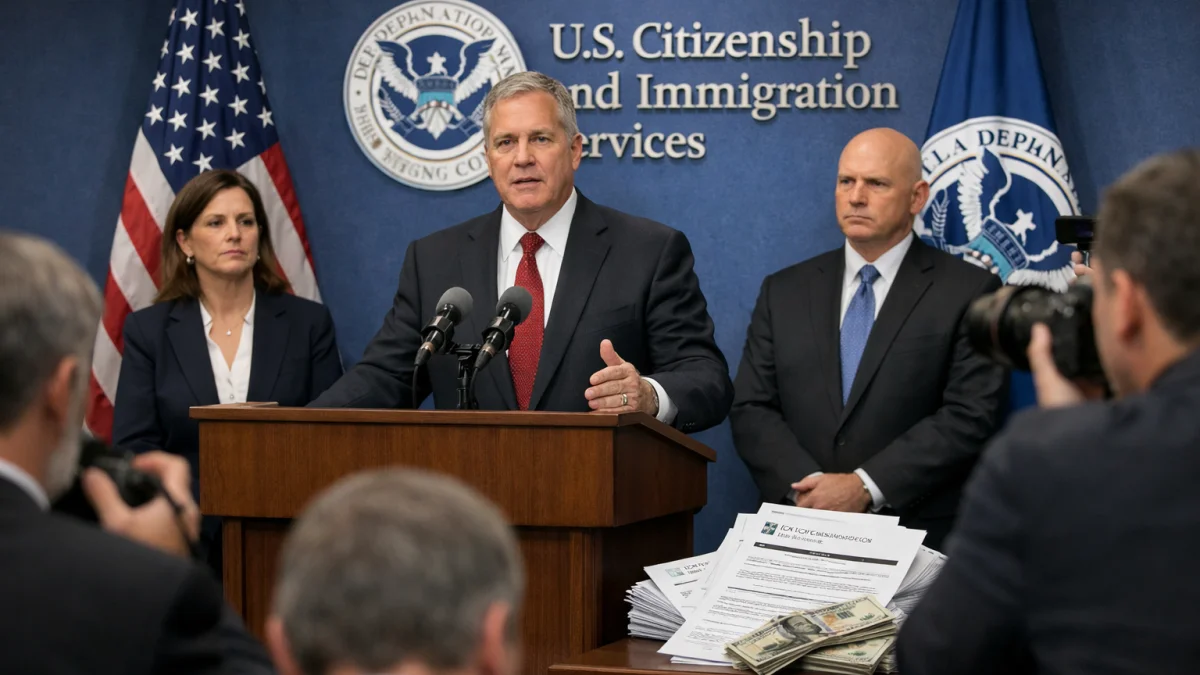


WASHINGTON — The Trump administration has unveiled a proposal that would significantly increase the cost of applying for U.S. citizenship, raising filing fees for naturalization applications and eliminating most fee waivers and reduced-fee options, according to a rule proposed by the U.S. Department of Homeland Security (DHS) and U.S. Citizenship and Immigration Services (USCIS) this week.
Under the proposal announced on Monday, the fee for a paper-filed Form N-400, the application used by lawful permanent residents seeking U.S. citizenship, would rise from $760 to $1,330. Online filings would increase from $710 to $1,280. The administration also proposed increasing fees for applicants seeking review of denied naturalization requests.


DHS said the changes are intended to ensure that applicants cover the full cost of adjudication and related screening procedures. In the proposed rule, the department said current fees do not fully cover processing expenses and that additional vetting measures have increased costs.
“The proposed fees reflect the full costs associated with processing these requests,” DHS said in its notice, according to the published proposal.
The proposal would also end most fee waivers and discounted rates available to lower-income applicants. According to USCIS, exemptions would remain for active-duty military personnel and certain service members seeking citizenship through military service.
The fee changes come as the administration has placed greater emphasis on immigration enforcement, fraud detection, and expanded screening of immigration benefits applicants. Administration officials have said recent executive actions require more extensive vetting procedures, increasing agency costs.
Immigrant advocacy organizations and legal groups have previously argued that higher naturalization costs could make citizenship less accessible for lower-income permanent residents. Supporters of the proposal, meanwhile, have argued that USCIS relies heavily on user fees rather than congressional appropriations and should recover the full cost of processing applications.
USCIS processes hundreds of thousands of naturalization applications annually, according to agency data. The naturalization process allows eligible lawful permanent residents to become U.S. citizens after meeting residency, language, civics, and other legal requirements.
The proposal has been published for public review and comment. Federal officials said a public comment period of about 60 days will precede any final decision on the rule, and the changes would not take effect immediately. Details on the final implementation timeline remain unclear.