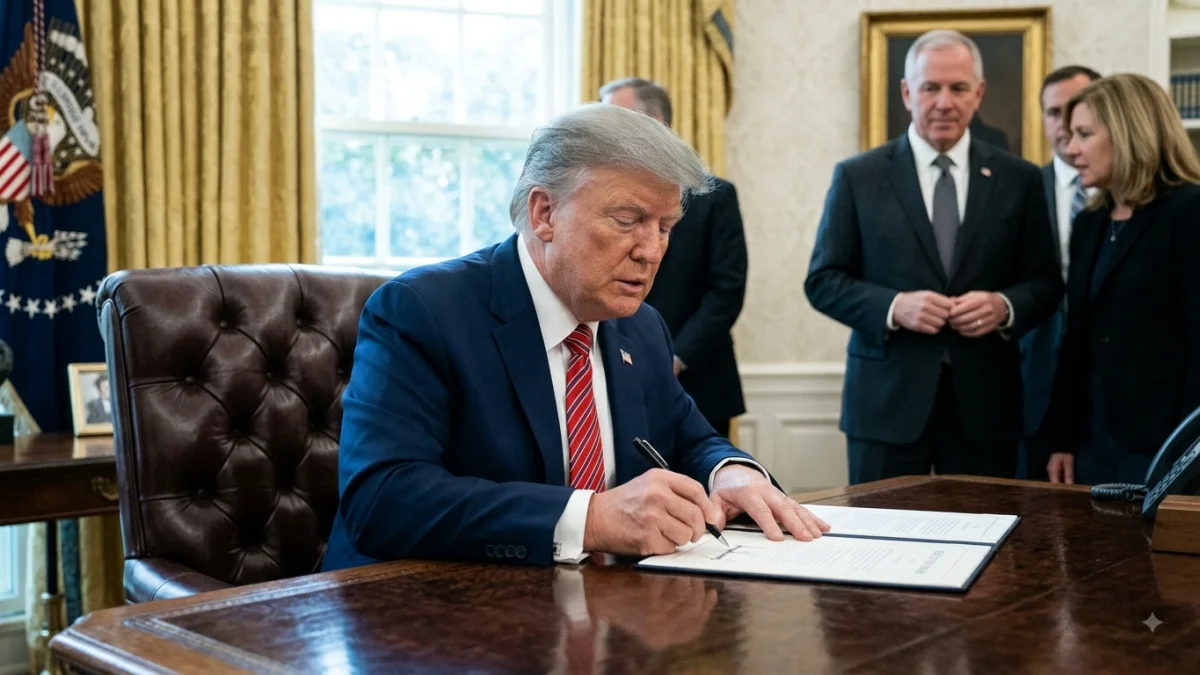


WASHINGTON — U.S. President Donald Trump signed an executive order on Monday calling for a reduction in the number of childhood vaccinations recommended as part of the routine U.S. immunization schedule, while directing officials to pursue separate measles, mumps and rubella shots.
The order calls for a schedule centered on 11 core vaccinations against what the administration describes as the most serious childhood diseases. Trump said the changes would provide children with “gold-standard” protection and bring U.S. recommendations closer to those of other developed countries that use fewer routine vaccines.


The order also calls for the MMR vaccine to be split into separate vaccinations administered at different visits and directs the Department of Health and Human Services to develop a plan for making individual measles, mumps and rubella vaccines available. Such separate vaccines are not currently routinely available in the United States, according to the Associated Press.
Trump’s action follows an earlier effort by Health Secretary Robert F. Kennedy Jr. to reduce the federal childhood immunization schedule. In January, Kennedy’s department removed recommendations covering six of the 17 diseases included in the previous schedule. A federal court subsequently halted implementation of those changes, leaving the older schedule in place pending litigation.
The executive order seeks to advance the administration’s broader effort despite that litigation. It also directs the Justice Department to challenge state vaccination requirements that the administration says conflict with parental authority, religious freedom, disability accommodations or equal protection. States retain authority over school vaccination requirements.
Medical groups have rejected the changes. Dr. Andrew Racine, president of the American Academy of Pediatrics, said the recommendations would create uncertainty and confusion, while the American Medical Association has said there is no credible scientific evidence supporting a change to the established childhood vaccine schedule.
The World Health Organization also defended existing immunization schedules, saying recommendations are based on decades of research and assessments of disease risks and immune-system development. WHO spokesperson Tarik Jašarević said national vaccination schedules are generally developed by multidisciplinary expert groups using evidence-based guidance.
The administration has said existing access to vaccines will continue, including through the federal Vaccines for Children program. The immediate effect of the order will depend in part on implementation by federal health agencies and the outcome of ongoing court proceedings.