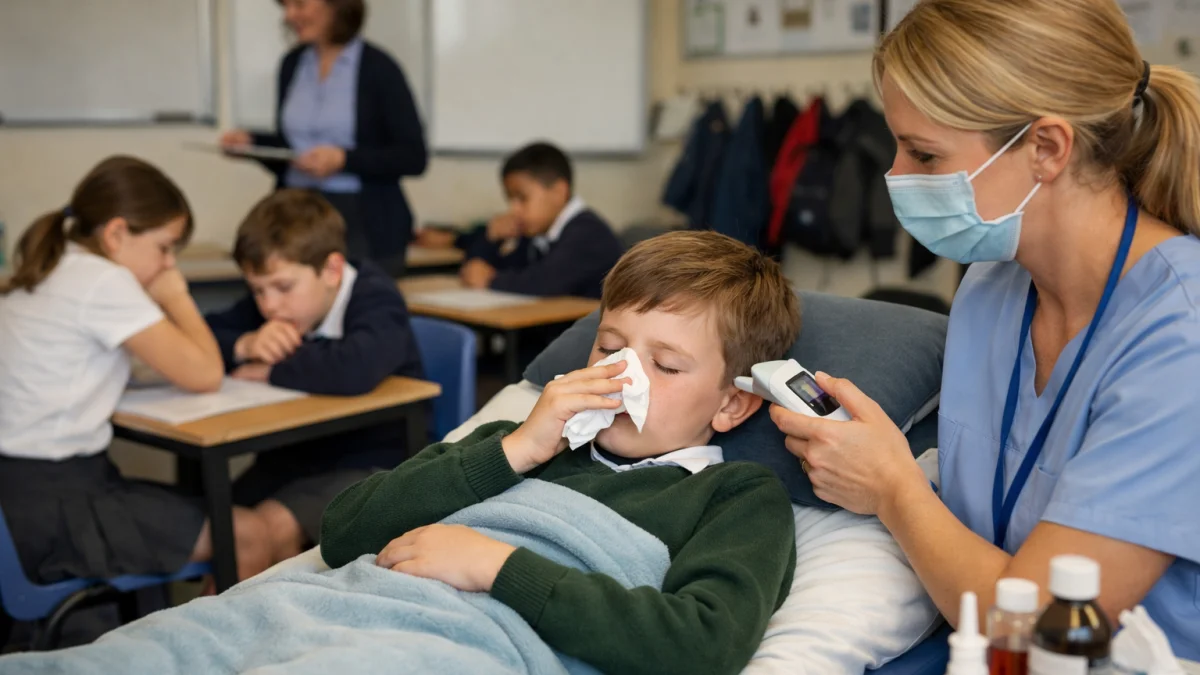


LONDON — Schools across parts of the United Kingdom have reported significant disruption from a wave of influenza cases described by some health officials and media outlets as “super flu,” with increased student and staff absences leading some institutions to suspend activities or temporarily shift to remote learning.
The outbreak, which intensified during the 2025–26 winter season, affected schools in England, Wales and Scotland, according to school leaders and public health authorities. Several schools reported unusually high absenteeism rates among pupils and teachers, while a small number temporarily closed classrooms or reduced in-person activities to limit transmission.


Health officials have linked the disruption to a sharp rise in influenza infections that also placed pressure on the National Health Service. NHS England reported a substantial increase in hospital admissions related to flu during the peak of the outbreak, while health authorities urged eligible residents to receive vaccinations and follow infection-control guidance.
Paul Whiteman, general secretary of the National Association of Head Teachers, said schools across the country had experienced staffing and attendance challenges as the virus spread. According to reports citing school leaders, closures remained a last resort but were implemented in isolated cases where staff shortages made normal operations difficult.
At least several schools introduced measures including cancelling assemblies, reducing large gatherings and encouraging remote learning for affected students. In Cornwall, one secondary school moved lessons online after reporting what administrators described as an unprecedented outbreak of illness among students and staff.
The flu surge coincided with broader winter pressures on the health service. NHS National Medical Director Professor Meghana Pandit said at the time that an “unprecedented wave of super flu” was creating severe challenges for hospitals. “The numbers of patients in hospital with flu is extremely high for this time of year,” she said in a statement released by NHS England.
The United Kingdom Health Security Agency continued to monitor influenza activity throughout the season. Subsequent surveillance reports published in spring 2026 indicated that flu activity had declined from winter peaks and had returned closer to baseline levels in many areas.
Education officials said schools generally remained open despite localized disruptions, while public health authorities emphasized vaccination, hand hygiene and staying home when ill as measures to reduce transmission. Details on the total number of schools affected nationwide remain unclear.
As of June 2026, health surveillance data indicated that respiratory virus activity had eased compared with winter levels, and schools across the UK were operating under normal schedules while authorities continued routine monitoring of seasonal influenza trends.