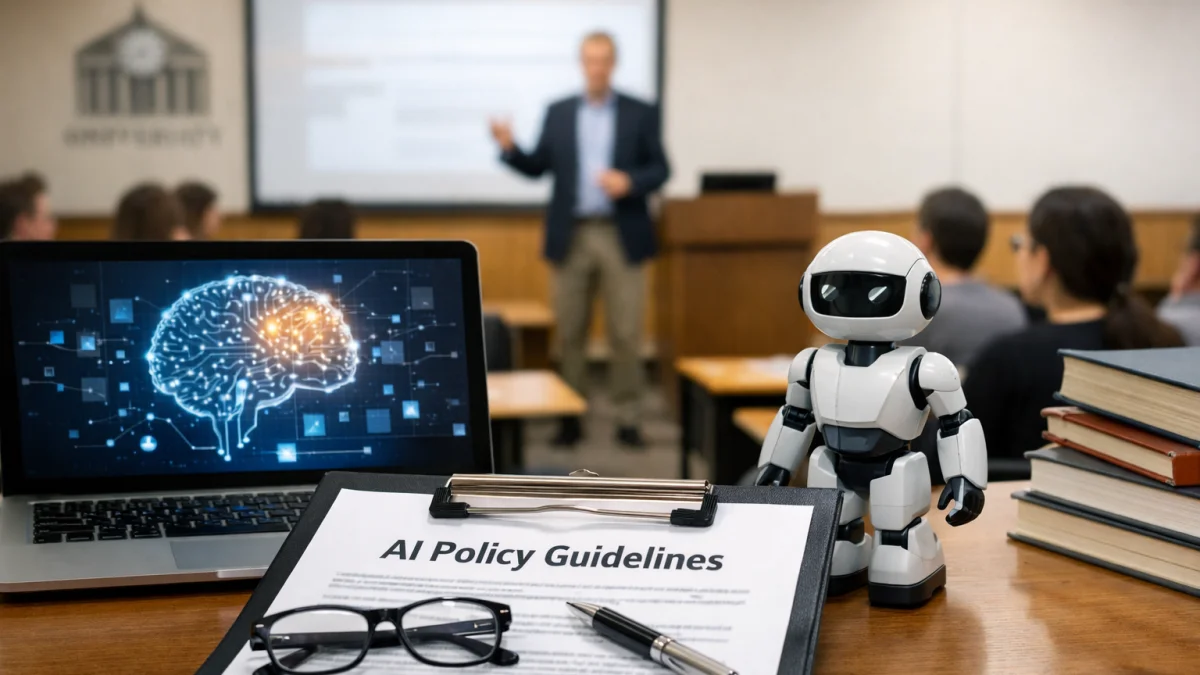


WASHINGTON — Universities across the United States and internationally are updating academic policies and guidelines to incorporate recent AI integration recommendations, focusing on responsible use in teaching, learning and research as institutions respond to evolving technology and regulatory developments in 2026.
Many higher education institutions have revised syllabus templates, academic integrity standards and faculty resources to address generative AI tools, following guidance from bodies such as EDUCAUSE and state-level initiatives. Updates emphasize transparency, attribution and the development of AI literacy while maintaining academic standards.


Institutions including Harvard, Cornell and others have issued or refreshed guidelines that require faculty to clearly state expectations for AI use in course syllabi. Approaches range from prohibiting unauthorized use to permitting it with proper documentation and critical engagement.
State legislatures have also advanced related measures. In Arizona, proposed legislation would require public universities to adopt policies on student AI use, including detection of unauthorized applications and guidelines for permitted cases. Similar efforts in Maryland and New Jersey focus on AI literacy and curriculum integration.
“Clear communication in syllabi and assignments remains essential for supporting both academic integrity and student learning in the age of AI,” an official from a university center for teaching and learning said in recent guidance.
Institutions are moving beyond initial acceptable-use policies toward broader strategies that include faculty training, ethical considerations and assessment redesign. Many have advised against relying solely on AI detection tools due to reliability concerns, favoring process-oriented evaluation instead.
Additional efforts include development of AI-focused certificate programs, workforce training partnerships and reviews of procurement policies for AI tools. Surveys indicate institution-wide AI adoption has increased, prompting more structured governance and support structures.
As of June 2026, policy implementation varies by institution, with some focusing on immediate syllabus requirements and others on longer-term curriculum integration. Details on the full scope of adjustments across all universities remain subject to ongoing institutional reporting. Officials said continued monitoring of technological and regulatory changes will inform further refinements.