

ORANGEBURG, South Carolina — Universities in several countries are introducing new campus safety measures following a series of security incidents that prompted reviews of emergency procedures, access controls and threat-response policies, according to university officials and government authorities.
The changes come as higher education institutions face increased scrutiny over their ability to protect students, faculty and staff after shootings, threats and other safety-related incidents on campuses during the past year.


At South Carolina State University, officials announced new policies in February after a campus shooting that left two people dead and another injured, according to university statements and public radio reports. The measures include stricter visitor requirements, expanded room inspections and additional security protocols. University President Alexander Conyers said safety had become the institution’s immediate priority.
“I fully understand that students cannot learn if they are in classrooms in fear,” Conyers said during a public meeting, according to university and media reports.
University leaders said visitors who are not students must present government-issued identification at designated entrances, while administrators also pledged reviews of campus procedures and enforcement standards.
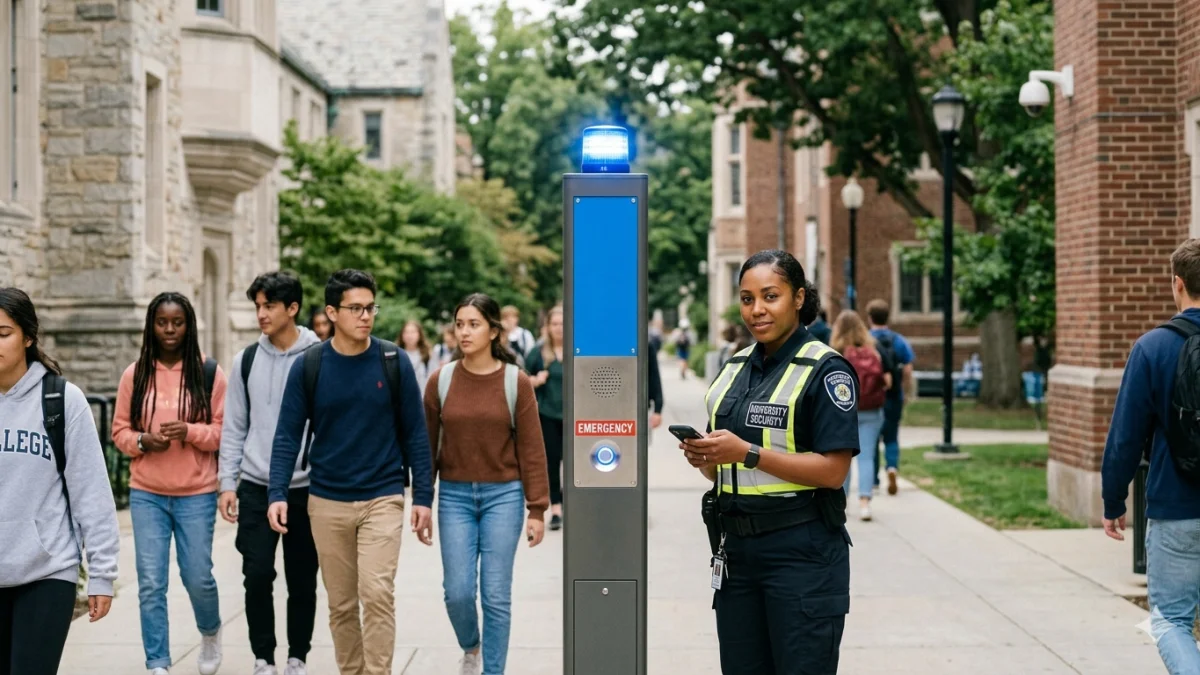
Elsewhere in the United States, Brown University announced a broad review of its security systems after a December 2025 campus shooting. University officials said the institution would increase public safety staffing, expand surveillance coverage, accelerate the use of card-access systems for buildings and install additional emergency alert equipment. Federal education authorities also launched a review related to campus safety requirements, according to the U.S. Department of Education.
In Florida, state officials in May approved legislation extending several school-safety measures to public colleges and universities. According to state authorities, the law requires institutions to develop active-assailant response plans, establish threat-management teams and create family reunification procedures for emergencies.
Governments outside the United States have also announced security initiatives. In Greece, education and public safety officials said plans were advancing to install surveillance cameras and controlled-access systems at major universities following assessments of recurring campus violence and vandalism. Authorities said implementation would follow existing legal and procurement procedures.
Student groups and civil liberties advocates have raised concerns in some cases about privacy, surveillance and the impact of stricter controls on campus life. University administrators, however, have said the measures are intended to strengthen preparedness and improve emergency response capabilities.
As of June 2026, many institutions said safety reviews remain ongoing, while additional measures are being evaluated. Details of some investigations and assessments remain unclear, according to university officials and government agencies.