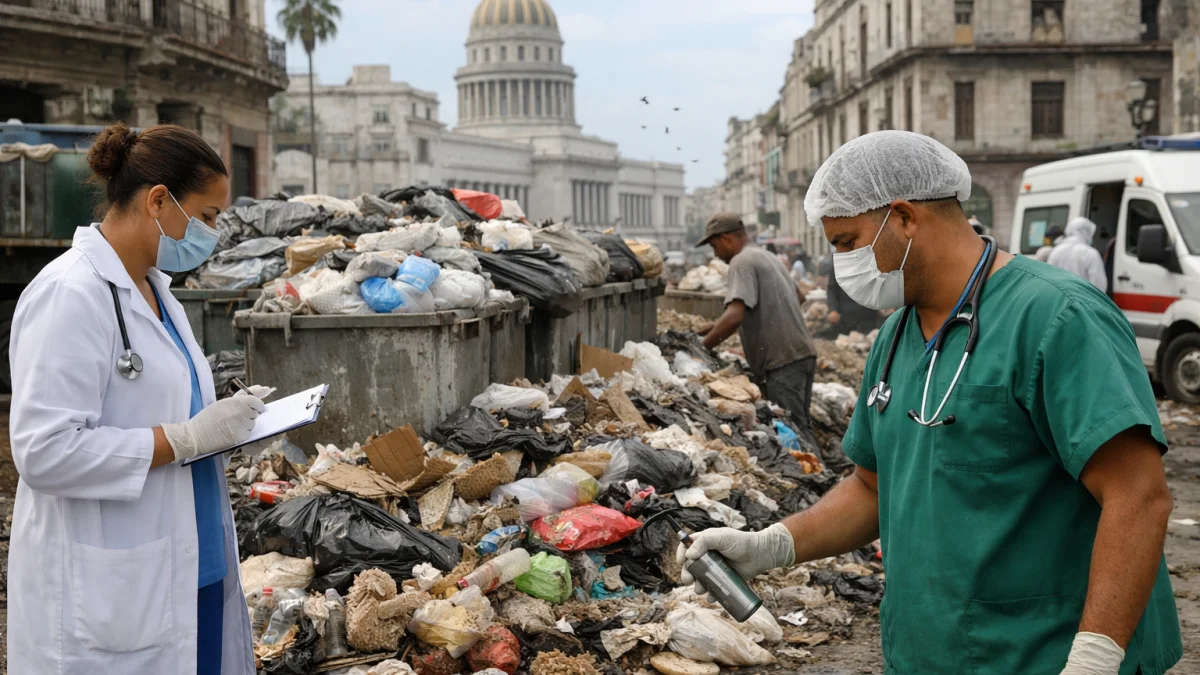


HAVANA — Cuba’s worsening garbage crisis is increasing public health concerns as fuel shortages linked by Cuban officials to U.S. sanctions and restrictions continue to disrupt waste collection services across the island, according to government officials, residents and international organizations.
Mounting piles of refuse have accumulated in Havana and other cities in recent months as shortages of fuel have sidelined garbage trucks and strained municipal services. Cuban authorities have said the situation has been aggravated by U.S. measures aimed at restricting oil shipments to the island, while Washington says its sanctions are intended to pressure the Cuban government over political and human rights concerns.


Residents in Havana described overflowing trash sites, foul odors, flies and rodents in neighborhoods across the capital. “The trash in this area, the flies, the rats, the filth — it’s completely unsanitary,” resident María Odalys Ramírez told the Associated Press during a recent visit to a neighborhood near a major hospital.
According to Cuban state media cited by Reuters, fewer than half of Havana’s garbage trucks remained operational earlier this year because of fuel shortages. Residents reported that waste collection in some areas had been delayed for days, while others resorted to burning trash in the streets, raising concerns about air pollution and exposure to potentially harmful smoke.
Health and environmental officials have warned that the combination of accumulated waste, rising temperatures and seasonal rains could create favorable conditions for disease-carrying insects. Cuban officials have identified inadequate urban waste management as a significant environmental challenge, while public health experts have expressed concern about mosquitoes, flies and other pests that can thrive in unmanaged garbage sites.
The United Nations has also voiced concern about the broader humanitarian impact of Cuba’s fuel shortages. A group of independent U.N. experts said in May that tightened U.S. measures had sharply worsened shortages and placed additional pressure on essential public services. U.N. Secretary-General António Guterres has previously expressed concern about the situation and called for dialogue.
U.S. officials have defended sanctions on Cuba, arguing that the measures are directed at the government and intended to encourage political change. The U.S. embargo on Cuba has been in place for decades, though restrictions affecting fuel supplies were tightened this year, according to Reuters.
Community groups and residents have launched local cleanup and recycling initiatives in some Havana neighborhoods to address the growing problem. However, officials and residents say waste collection remains inconsistent, and the full extent of the health risks associated with the accumulating garbage remains unclear.