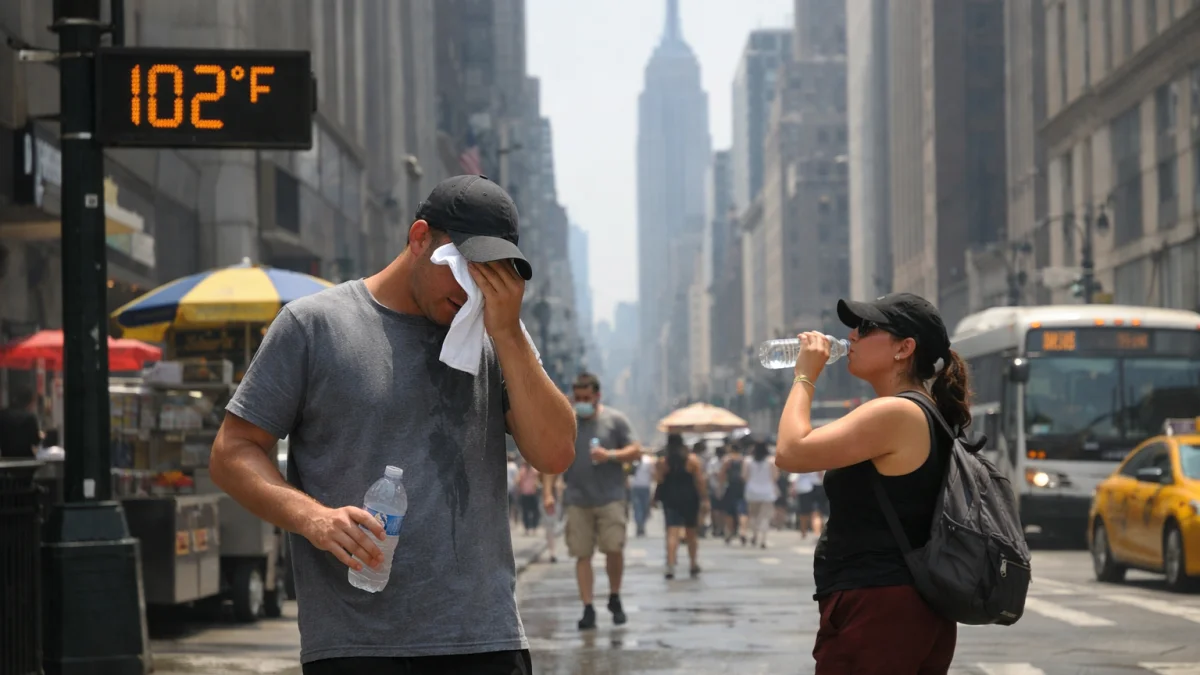


WASHINGTON — A dangerous and potentially record-breaking heat wave was forecast to spread across much of the eastern United States this week, prompting federal and state officials to warn residents about life-threatening temperatures, increased strain on power systems and heightened health risks ahead of the Independence Day holiday.
The U.S. National Weather Service said a strengthening high-pressure system, commonly referred to as a "heat dome," would drive widespread temperatures into the 90s and low 100s Fahrenheit across large parts of the Midwest, Mid-Atlantic and Northeast. Combined with high humidity, heat index values were expected to exceed 100 degrees in many areas, with some locations approaching or surpassing 110 degrees. Forecasters warned that several cities could challenge or break daily temperature records.


The Weather Prediction Center described the event as a significant and potentially historic heat wave, forecasting the greatest impacts from late this week through the July 4 holiday weekend. Overnight temperatures were also expected to remain unusually warm, limiting relief and increasing the risk of heat-related illness, particularly for older adults, young children, outdoor workers and people without reliable access to air conditioning.
The National Weather Service issued numerous heat watches, warnings and advisories covering broad areas of the eastern half of the country and urged residents to stay hydrated, avoid strenuous outdoor activities during peak afternoon hours and check on vulnerable neighbors. Officials also warned that prolonged exposure to extreme heat could affect transportation infrastructure and other critical services.
The extreme temperatures were also expected to place exceptional demand on the nation's electric grid. The U.S. Department of Energy issued an emergency order for the PJM Interconnection, the country's largest regional power grid, to help maintain reliable electricity supplies as power consumption surged with increased air-conditioning use. PJM forecast electricity demand nearing seasonal highs as temperatures climbed across its service territory.
Forecasters said the heat would coincide with heavy holiday travel and outdoor celebrations marking the United States' 250th Independence Day, increasing concerns over heat-related illnesses during parades, sporting events and fireworks displays. Some communities prepared cooling centers and extended access to public facilities to help residents cope with the extreme conditions.
Weather officials said the dangerous heat was expected to persist through at least the holiday weekend across much of the eastern United States, while advising the public to monitor local forecasts and follow updated warnings as conditions evolved.