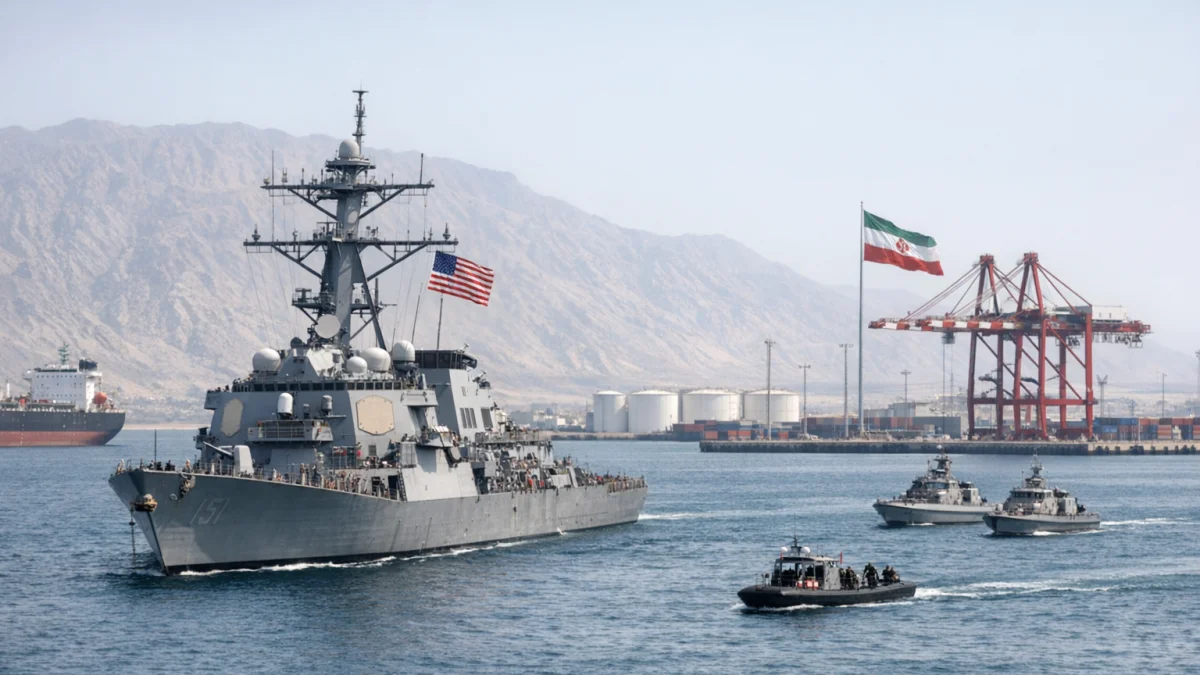


WASHINGTON — The United States is enforcing a naval blockade of Iranian ports in the Gulf of Oman and Arabian Gulf, turning back vessels attempting to enter or exit, U.S. Central Command said on Thursday.
CENTCOM announced the blockade would begin on April 13 and stated it would be enforced impartially against ships of all nations. The measure was implemented after high-level U.S.-Iran talks in Islamabad failed to produce an agreement, according to U.S. officials.


The blockade targets maritime traffic to and from Iranian ports and coastal areas but does not impede neutral transit passage through the Strait of Hormuz to or from non-Iranian destinations, CENTCOM said in a notice to seafarers. U.S. naval forces, including an aircraft carrier strike group and guided-missile destroyers, are conducting the operation with support from surveillance aircraft and other assets.
The action comes during a fragile two-week ceasefire between the U.S. and Iran that took effect on April 8 after the escalation of the conflict that began with U.S. and Israeli strikes on Iranian targets on Feb. 28. The truce included Iran reopening the Strait of Hormuz. The ceasefire is scheduled to expire next week.
Talks between U.S. and Iranian delegations in Islamabad over the weekend of April 11-12 lasted more than 20 hours but ended without a deal. Pakistan has continued mediation efforts, with a high-level delegation led by Army Chief Field Marshal Asim Munir meeting Iranian officials in Tehran on Wednesday.
President Donald Trump has expressed optimism that the conflict is nearing resolution. Defense Secretary Pete Hegseth and Joint Chiefs of Staff Chairman Gen. Dan Caine held a news conference on Thursday addressing the situation amid the ceasefire.
Iranian officials have criticized the blockade, with a military spokesperson describing restrictions on international shipping as “piracy” and warning of potential retaliation. No immediate violations of the ceasefire were reported on Thursday, according to officials familiar with the monitoring.
As of Thursday, CENTCOM reported that vessels had been turned back in the initial days of enforcement, with no ships successfully transiting in or out of Iranian ports in the first 24 hours. Discussions on a potential extension of the ceasefire or further negotiations were continuing through Pakistani channels, though details remained unclear. Pakistani authorities have described their role as that of a neutral facilitator.