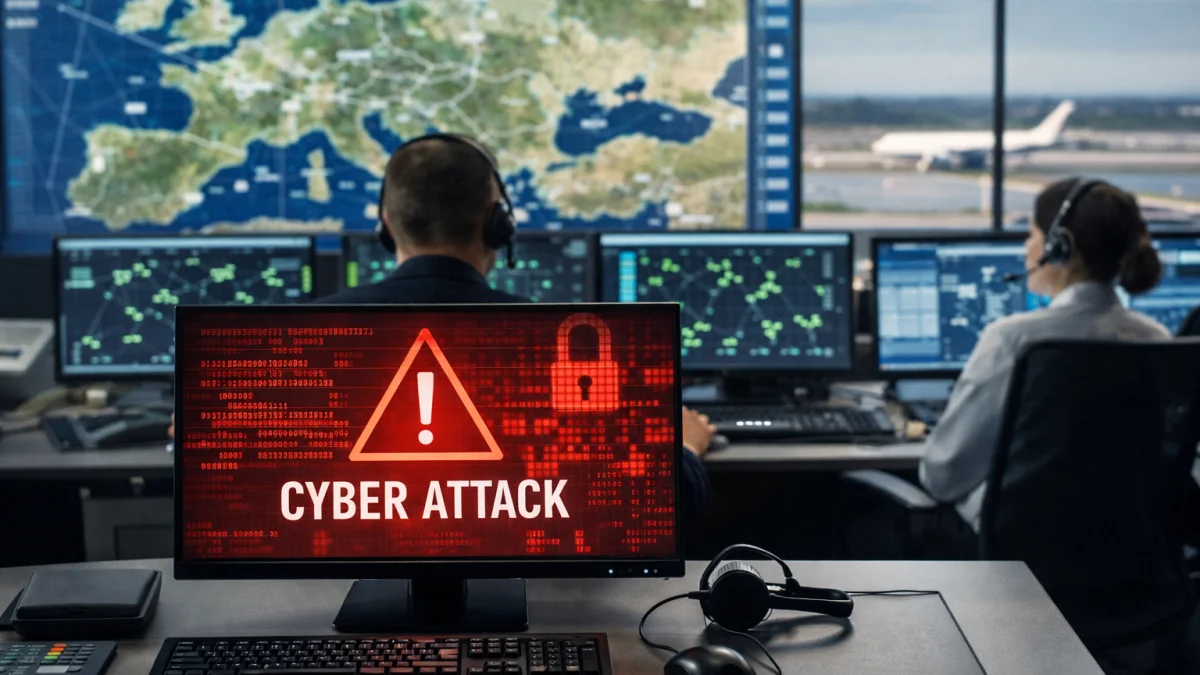


BRUSSELS — A cyber attack disrupted operations at several major European airports on Friday, affecting passenger check-in and boarding systems, officials said.
The incident impacted airports including London’s Heathrow, Brussels and Berlin Brandenburg, forcing staff to process passengers manually and causing delays and some cancellations. Details about the scale of the disruption and the perpetrators remained unclear early Saturday.


Authorities described the event as a cyber-related incident targeting software provided by Collins Aerospace, a subsidiary of RTX. Brussels Airport said in a statement that the attack occurred late Friday against the service provider for check-in and boarding systems. Similar issues were reported at Heathrow and Berlin Brandenburg airports.
Eurocontrol, which manages air traffic control across the continent, stated that core air traffic control operations were not affected. Flights continued to depart, though with delays at impacted airports.
RTX confirmed a “cyber-related disruption” in a statement and said it was working to restore full functionality. The company did not provide further details on the nature of the attack or any potential responsibility.
Passengers at affected airports faced long queues as airlines reverted to manual check-in procedures. Some flights were canceled or delayed by more than an hour.
A spokesperson for Heathrow Airport said operations were being managed with manual processes to minimize impact on travelers. “We are working closely with our partners to resolve this as quickly as possible,” the spokesperson added.
The disruptions followed a similar pattern to previous incidents involving third-party software providers in the aviation sector. Officials in multiple countries said they were investigating the matter.
As of early Saturday, some systems were being restored, but full recovery timelines were not immediately available. Travelers were advised to check with their airlines for the latest flight information.
No injuries or safety incidents related to air traffic control were reported. Investigations by national cybersecurity agencies and European authorities were ongoing.