

WASHINGTON — The United States is maintaining its naval blockade of Iranian ports despite Iran’s declaration that the Strait of Hormuz has reopened to commercial shipping, U.S. and Iranian officials said on Saturday.
Iran’s Foreign Minister Abbas Araghchi announced on Friday that the strait was “completely open” for commercial vessels in line with a ceasefire between Israel and Lebanon. President Donald Trump welcomed the move but stated that the U.S. blockade targeting Iranian shipping would remain in effect until a broader agreement with Iran is reached.


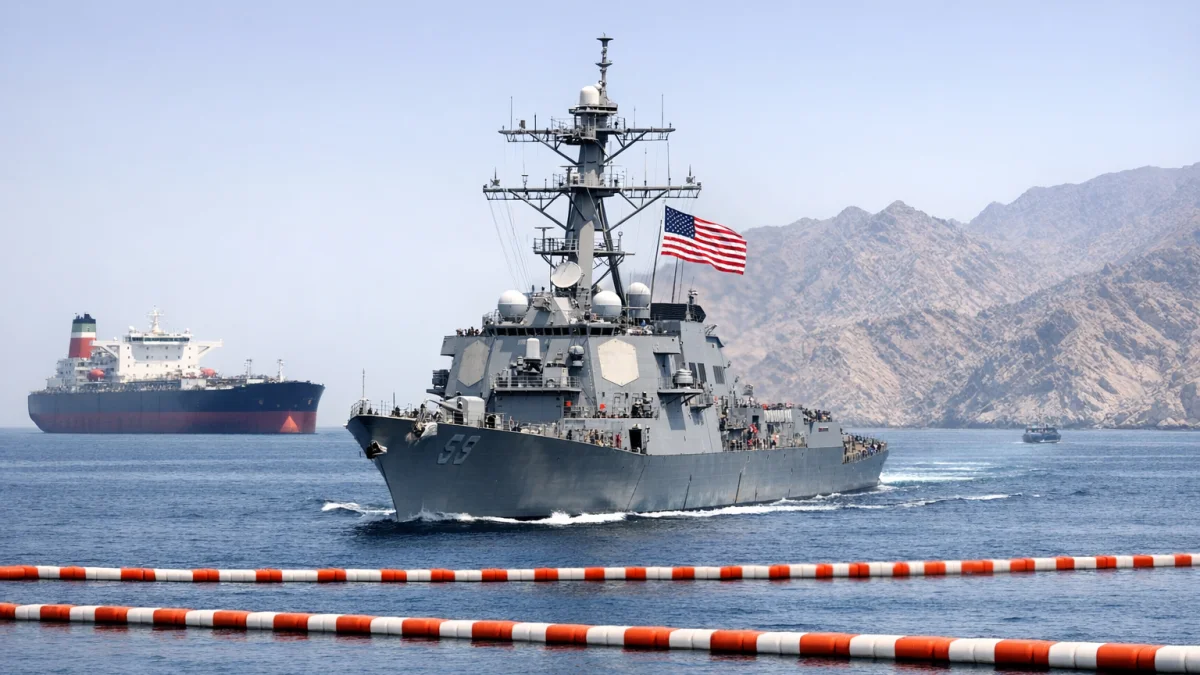
The U.S. Central Command implemented the blockade of vessels entering or leaving Iranian ports on April 13. U.S. officials have described the measure as applying only to Iranian ports and coastal areas, not to international transit through the strait itself. Unauthorized vessels face interception, diversion or capture, according to CENTCOM statements.
The development follows the breakdown of peace talks between U.S. and Iranian negotiators in Islamabad and comes amid a wider conflict in the Middle East involving the United States, Israel and Iran. Iran had effectively restricted passage through the strait earlier in the conflict, a waterway that carries about one-fifth of global oil supplies.
Trump, speaking after Iran’s announcement, said the strait was “COMPLETELY OPEN AND READY FOR BUSINESS” but added that the blockade on Iranian ports and vessels “will remain in full force and effect” until negotiations are “100 percent complete.” He indicated that most points in the potential deal had already been worked out.
Iranian officials have described the U.S. action as economic pressure and warned of possible responses. Details of any direct military confrontations during the blockade remained limited, though U.S. officials reported that multiple vessels turned back after warnings and that no ships had successfully departed Iranian ports in the initial days of enforcement.
U.S. military spokesmen have said the operation involves thousands of personnel and numerous naval assets in the region to enforce the restrictions impartially against vessels of all nations attempting to access Iranian ports.
The reopening of the strait followed a 10-day ceasefire in Lebanon, according to Iranian statements. Araghchi said passage would follow coordinated routes designated by Iran’s Ports and Maritime Organization and would apply for the remainder of that ceasefire period.
As of Saturday, vessel tracking data indicated limited commercial traffic in the strait despite the announcements, with questions remaining about the practical freedom of navigation. U.S. officials have clarified that freedom of navigation for non-Iranian vessels transiting the strait to other ports would not be impeded.
The situation in the region remains fluid, with both sides stating positions on the blockade and the strait. No immediate changes to the U.S. enforcement measures were announced.