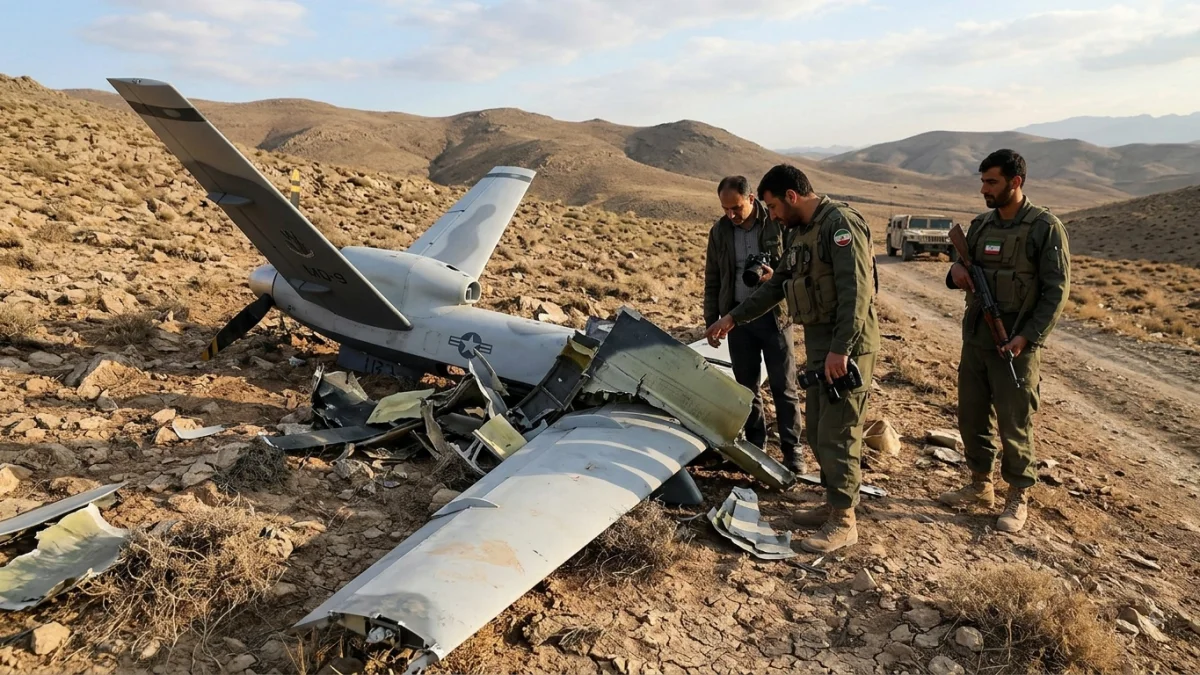


WASHINGTON — The United States has lost roughly 30 MQ-9 Reaper drones during its conflict with Iran, a U.S. official said in July, underscoring the financial and operational cost of relying on high-value unmanned aircraft in contested airspace.
The losses have prompted the Pentagon and U.S. Air Force to pursue cheaper, more expendable unmanned systems that could perform missions now assigned to the Reaper, including intelligence gathering and strikes.


A U.S. official told ABC News on July 8 that Iran had downed about 30 U.S. Reapers since the war began. Earlier reporting and a Congressional Research Service analysis had put the number at 24 by April, indicating that additional losses occurred during the campaign. The CRS report said the 24 aircraft were among at least 42 U.S. military aircraft reported lost or damaged during the operation.
The MQ-9, produced by General Atomics, is designed for long-endurance surveillance and can carry weapons. Its loss rate has raised concerns about the economics of employing aircraft that can cost tens of millions of dollars each against relatively inexpensive air defenses. A May report citing people familiar with the matter estimated more than two dozen Reaper losses at nearly $1 billion, while noting that some aircraft were destroyed on the ground or lost in accidents rather than shot down.
The Air Force said in July that the experience was shaping requirements for the next generation of uncrewed aircraft. The service is working with the Pentagon's Defense Innovation Unit on systems emphasizing affordability, rapid production and the ability to absorb operational losses.
The Defense Innovation Unit has separately sought industry proposals for a Massed Modular Aircraft designed to carry out some Reaper missions while being produced in sufficient numbers to tolerate combat attrition. The solicitation described reliance on aircraft costing more than $30 million as unsustainable against adversaries using layered air defenses.
The Air Force had about 135 MQ-9s after the reported combat losses, according to testimony by Lt. Gen. David Tabor in May. He said the service could still meet its worldwide requirement for 56 continuous combat intelligence, surveillance and reconnaissance orbits while seeking to replenish the fleet.
As of late July, the Air Force and Defense Innovation Unit were preparing to select companies for further development of the Reaper successor, with concept-refinement contracts expected in the first quarter of fiscal 2027.