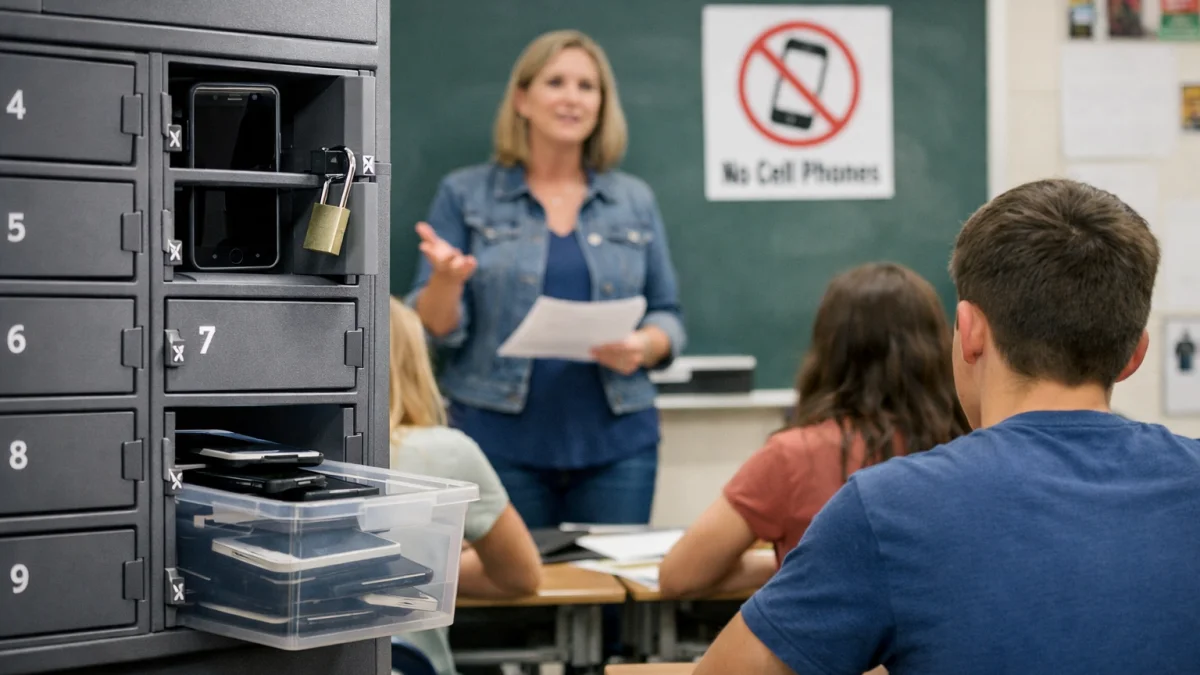


WASHINGTON — Schools across the United States are reviewing and refining cellphone policies following the release of a major national study that found student phone restrictions reduced device use but produced mixed results on academic performance and student behavior, according to researchers and education officials.
The study, published last month by researchers from Stanford University, Duke University, the University of Michigan and the University of Pennsylvania, examined the effects of strict cellphone restrictions in more than 43,000 middle and high schools over a three-year period. Researchers found that policies requiring students to store phones in locked pouches significantly reduced cellphone use during the school day, but did not produce major immediate improvements in test scores, attendance or reported cyberbullying. Initial increases in disciplinary incidents and declines in student well-being were reported before conditions improved in later years.


“There is clearly justifiable enthusiasm for school phone bans, but it’s important to recognize that building effective, phone-free learning environments does not appear to be a simple or quick fix,” Stanford economist Thomas Dee, one of the study’s authors, said in a statement released with the research.
The findings arrive as states and school districts continue to expand restrictions on student cellphone use. Education researchers and policy groups report that more than 20 states have enacted statewide limits or bans, while additional jurisdictions are considering similar measures.
Several large districts have adopted new rules during the current school year. In Seattle, a districtwide policy took effect in May requiring younger students to keep phones turned off and stored throughout the school day, while older students face restrictions during instructional periods. Other districts have adopted varying approaches, ranging from classroom-only restrictions to full-day prohibitions.
Some educators say the policies have improved classroom environments even when measurable academic gains have been limited. A national survey of teachers released earlier this year found many educators reported reduced classroom distractions and increased face-to-face interaction among students following the adoption of stricter cellphone rules.
At the same time, some researchers and policymakers caution that evidence remains mixed. The Stanford-led study found little short-term effect on academic achievement, while noting that some indicators of student well-being improved after schools had time to adjust to the new policies.
The debate has also produced differing policy responses. While some states have moved toward stricter “bell-to-bell” bans covering the entire school day, others continue to leave decisions to local districts.
As schools prepare for the 2026–27 academic year, education officials across several states are continuing to review cellphone policies, with additional legislation and district-level decisions expected in the coming months.