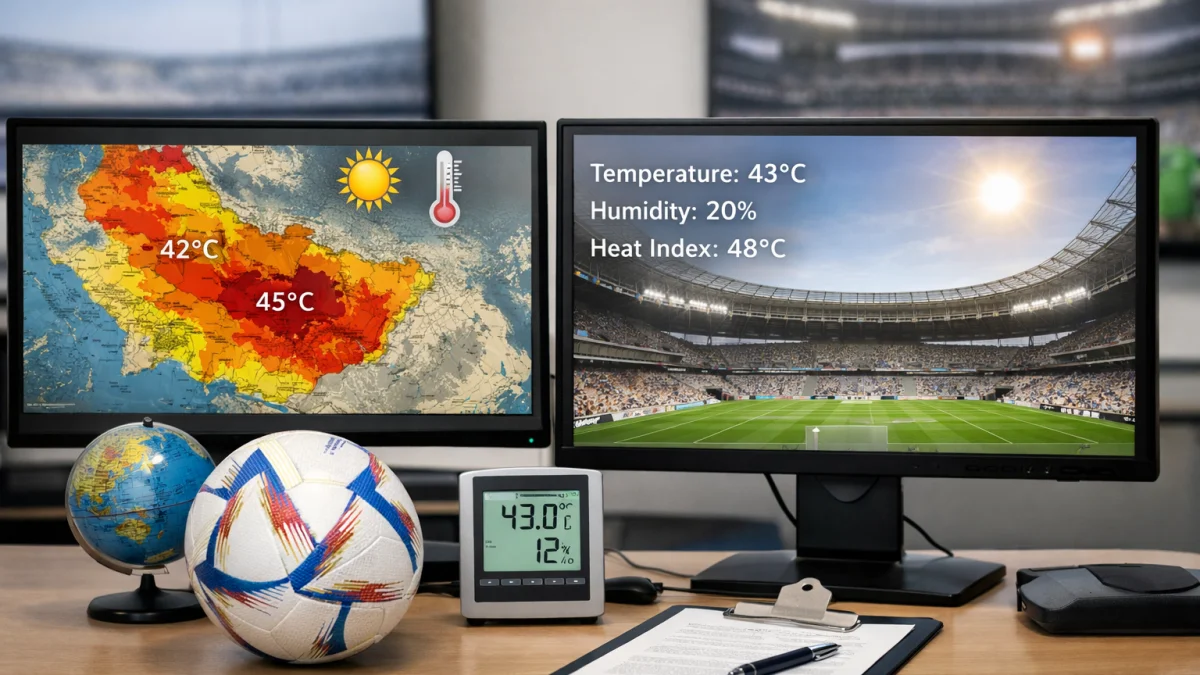


MIAMI — World Cup organizers are actively monitoring potential climate and weather impacts on the 2026 FIFA tournament schedule as matches begin across North America, with adjustments already made to kickoff times and player welfare protocols in response to heat risks.
FIFA has implemented mandatory three-minute hydration breaks in each half of all 104 matches and strategically scheduled more evening kickoffs in hotter host cities to mitigate extreme temperatures during the June 11 to July 19 event.


The co-hosted tournament in the United States, Canada and Mexico features venues where climate change has increased the frequency of extremely hot days in June and July, according to analyses by Climate Central and World Weather Attribution. Organizers have conducted heat risk assessments and established a Heat Illness Mitigation and Management Task Force.
“Outdoor matches during the hottest parts of the day have been strategically limited, kick-off times adjusted in certain markets, and matches expected in warmer windows prioritized for covered stadiums where possible,” FIFA said in a statement.
Three stadiums — in Atlanta, Dallas and Houston — are fully climate-controlled with roofs, and FIFA has indicated these will be utilized during daytime slots when needed. Only a limited number of venues offer such protection, leaving most open-air.
Analyses indicate that conditions at many host cities are warmer than during the 1994 tournament in the United States, with increased risks of high Wet Bulb Globe Temperature readings that can affect player performance and spectator safety. Cities such as Miami, Houston, Dallas and Guadalajara are among those facing higher heat stress.
Teams have begun preparations, including acclimatization camps in warmer locations. Local authorities and FIFA are coordinating on additional measures such as enhanced medical presence, cooling zones and shade at venues and fan areas.
FIFA President Gianni Infantino has emphasized the use of covered stadiums to address weather concerns following observations from prior events. Details on any last-minute schedule changes due to specific forecasts remain subject to ongoing monitoring.
As the tournament opens with the first match in Mexico City on June 11, organizers said real-time weather tracking and contingency plans are in place. Updates on any adjustments to the schedule or operations will continue to be issued as conditions develop.