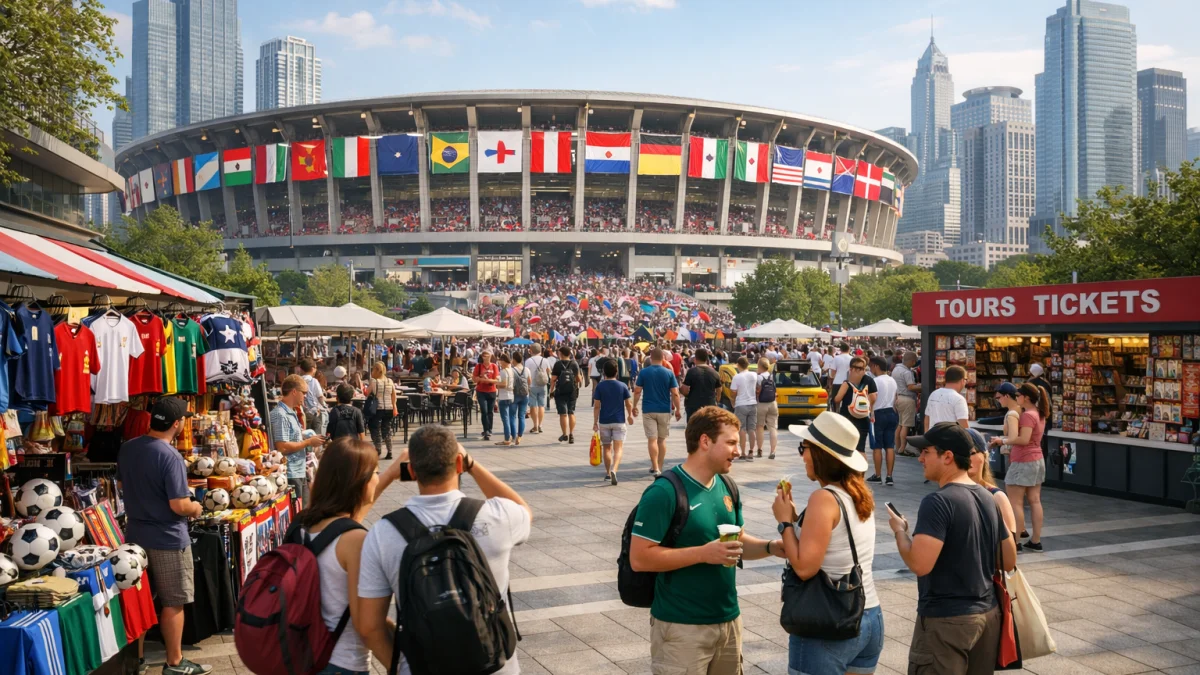


NEW YORK — Tourism linked to the 2026 FIFA World Cup is providing a boost to hotels, restaurants and other visitor-focused businesses in several host cities across the United States, Canada and Mexico, according to tourism officials and industry groups, although the scale of the economic impact varies by location.
As the tournament continued on Sunday, host-city authorities reported increased visitor activity around match venues, fan festivals and entertainment districts. Tourism agencies in several cities said international visitors were contributing to higher spending in hospitality and retail sectors during the competition.


The 2026 World Cup, co-hosted by the United States, Canada and Mexico, is the largest edition of the tournament to date, with matches spread across 16 cities. FIFA has said the event is expected to generate significant economic activity through tourism, transportation, accommodation and consumer spending. According to a FIFA socioeconomic impact assessment cited by industry reports, the tournament could contribute billions of dollars in economic output globally.
Tourism officials in New York and New Jersey, which will host several matches including the final, have promoted cultural events and visitor attractions alongside the competition. “Come for the matches, stay for the culture,” Julie Coker, president and chief executive of New York City Tourism + Conventions, said in a statement issued ahead of the tournament.
Industry analysts said the strongest benefits have generally been concentrated in the leisure and hospitality sector. Research by Oxford Economics found that host cities are likely to experience above-average growth in hospitality-related activity during the tournament period, although broader economic gains may be more limited.
In cities such as Kansas City, local organizers have encouraged businesses and residents to participate in fan events designed to attract visitors beyond match days. Tourism officials there have projected substantial visitor traffic during the tournament, though final attendance and spending figures remain unavailable.
At the same time, some sectors have reported mixed results. Hotel operators in several host cities have said bookings have not met earlier expectations, citing high travel costs, expensive match tickets and uncertainty among international travelers. Industry data reviewed by Reuters and other media organizations showed that some accommodations remained below projected occupancy levels even as the tournament got underway.
Economists have cautioned that while visitor spending can provide a short-term lift to local businesses, long-term economic effects may be modest in many cities because little new infrastructure was built specifically for the tournament.
As matches continue across North America, tourism agencies and local officials are monitoring visitor numbers, hotel occupancy and spending patterns. Final assessments of the tournament’s economic impact are expected after the competition concludes in July, officials said.