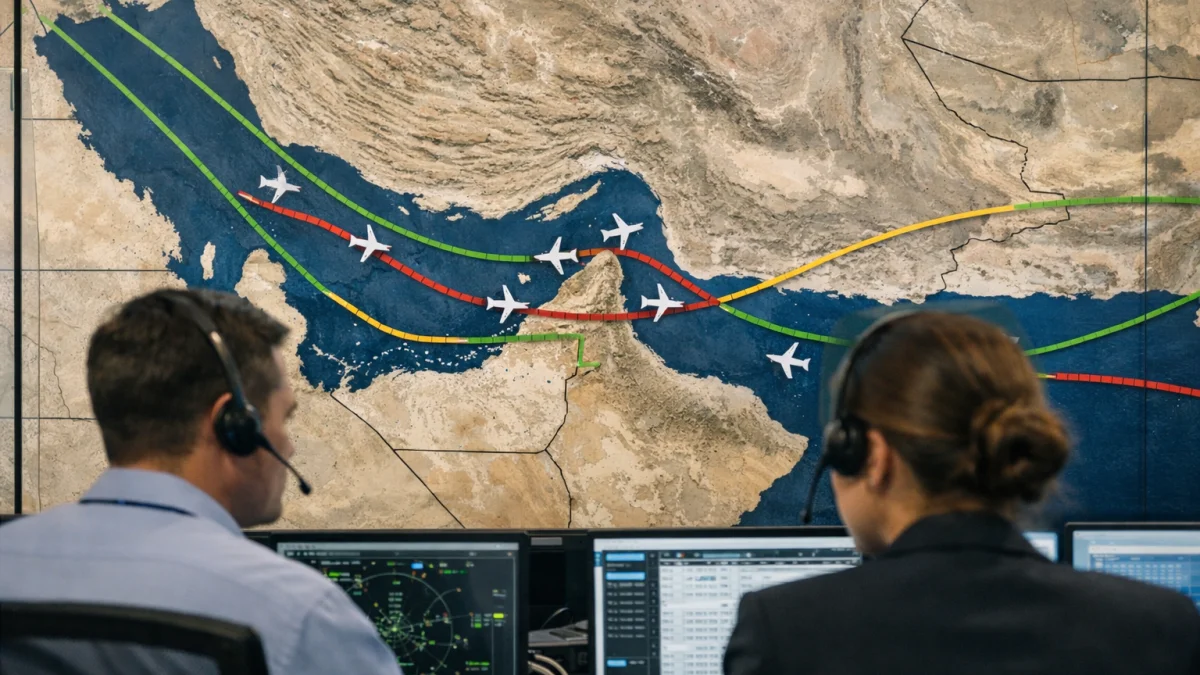


LONDON — Airlines are adjusting flight routes and contingency plans as concerns over potential disruptions linked to the Strait of Hormuz continue to affect aviation operations, industry officials and carriers said on Monday.
Several airlines have maintained rerouted services between Europe and Asia, avoiding parts of the Middle East despite signs of improving regional conditions following recent diplomatic efforts involving Iran and the United States. Aviation safety advisories and operational risk assessments remain key factors in route planning, according to airline statements and industry data.


The Strait of Hormuz is a critical maritime corridor for global energy shipments, and concerns about possible disruptions have had broader effects on transportation markets, including aviation. Airlines have cited both airspace security considerations and uncertainty in fuel markets when reviewing schedules and flight paths.
Middle Eastern carriers have restored much of their flight activity after earlier disruptions, while a number of airlines outside the Gulf continue to divert flights away from the region, according to industry tracking data and carrier updates. Reuters reported on June 19 that major Gulf airlines were operating near pre-conflict levels, although some European and Asian carriers remained cautious and continued to follow existing safety guidance.
The European Union Aviation Safety Agency has maintained warnings related to parts of the region, and airlines have continued to monitor government advisories and intelligence assessments. Earlier this year, carriers including Lufthansa, British Airways and other international airlines adjusted routes to avoid Iranian and Iraqi airspace during periods of heightened tension, according to Reuters reporting.
Airline representatives have stressed that safety remains the primary consideration. “We continuously monitor the security situation and adjust operations as necessary,” several carriers have said in public advisories issued during recent regional disruptions. Specific routing decisions vary by airline and destination.
Industry groups said longer flight paths can increase operating costs and flight times, although the extent of the impact differs across networks. Airlines have also reviewed fuel procurement strategies as energy markets respond to developments affecting the Gulf region.
Travel agencies and aviation analysts reported that passenger demand has remained resilient on many international routes despite periodic schedule changes. Some governments, including Australia, have recently eased travel advisories for parts of the Middle East following diplomatic progress, providing support for regional carriers seeking to rebuild traffic.
As of Monday, airlines continued to operate flights through and around the Middle East while monitoring developments related to regional security and shipping routes. No industry-wide suspension of Gulf air traffic had been announced, and carriers said they would continue to adjust routes if operational conditions require further changes.