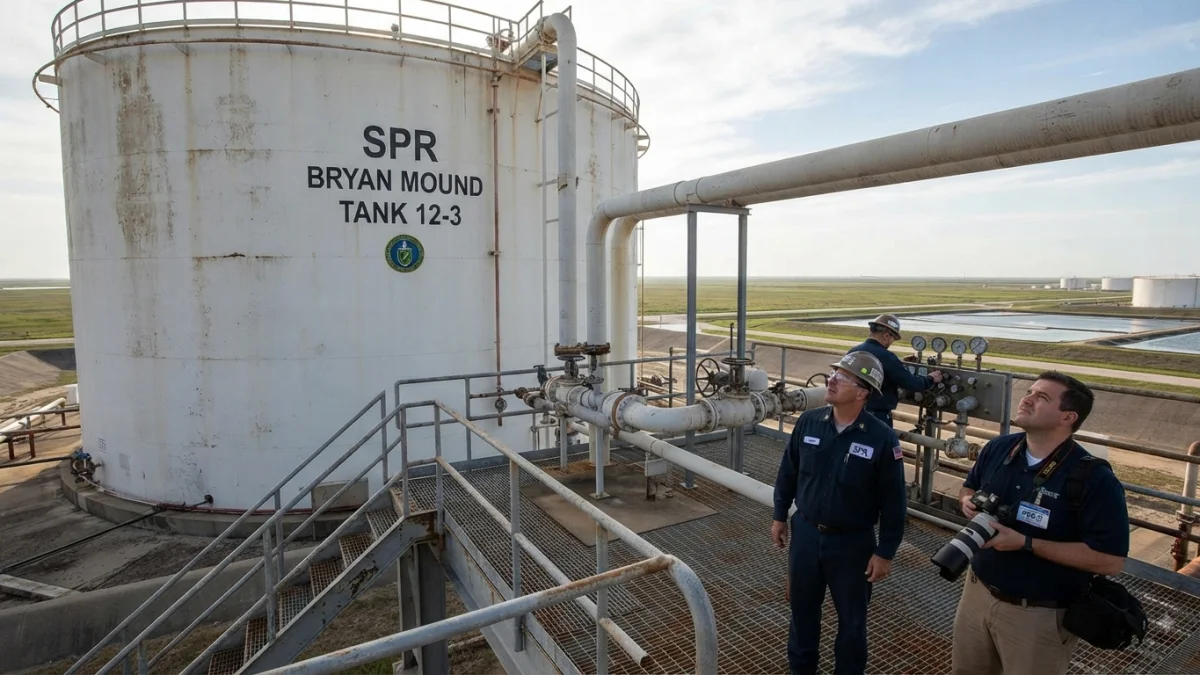


WASHINGTON — The U.S. Strategic Petroleum Reserve (SPR) fell below 300 million barrels for the first time in more than four decades, underscoring the scale of the emergency oil drawdown launched earlier this year as global energy markets faced disruptions linked to the conflict with Iran.
The reserve held about 298.7 million barrels as of Aug. 7, down roughly 6.1 million barrels from the previous week, according to U.S. Department of Energy data released Monday. The level was the lowest since January 1983.


The decline follows a decision by President Donald Trump in March to release 172 million barrels from the SPR as part of a coordinated effort by members of the International Energy Agency to cushion global oil markets against supply disruptions. The United States' contribution was part of a planned 400-million-barrel release from strategic reserves held by IEA member countries.
The Energy Department said in March that the U.S. release would take about 120 days to deliver and that the administration had arrangements to replace approximately 200 million barrels over the following year. Energy Secretary Chris Wright said at the time that the replacement program would increase the reserve by about 20% more barrels than were being drawn down.
The SPR held about 415.4 million barrels at the end of February, according to Energy Department budget documents, meaning its inventory has fallen by roughly 117 million barrels since then.
The drawdown has occurred through emergency exchanges in which crude is delivered to companies and barrels are scheduled to be returned to the reserve, rather than representing only permanent sales. The Energy Department has said some completed exchanges are structured to return additional barrels as a premium, potentially rebuilding inventories over time.
The reserve's decline comes as oil markets remain sensitive to developments involving Iran and the Strait of Hormuz, a major route for global petroleum shipments. Oil prices rose sharply on Monday amid renewed uncertainty over efforts to stabilize traffic through the waterway, while the SPR data added to concerns about the U.S. government's remaining emergency supply buffer.
The Energy Information Administration's latest published historical data had put SPR stocks at 413.5 million barrels at the end of 2025, highlighting the unusually rapid reduction during 2026.