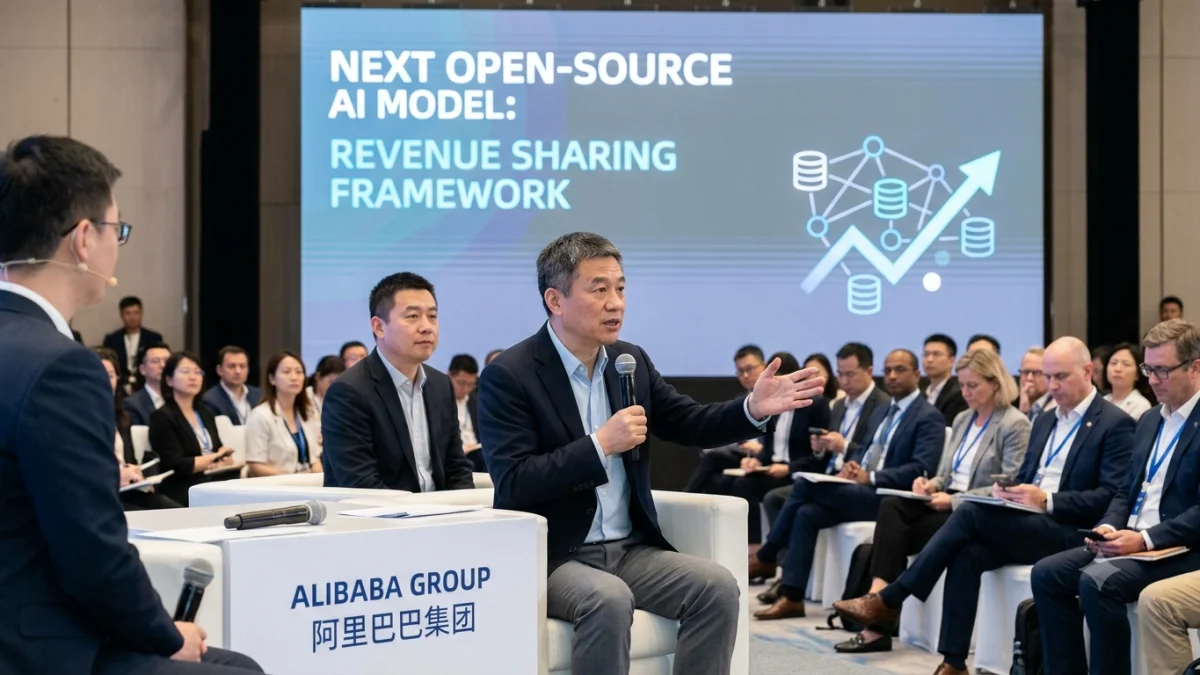


HANGZHOU — Alibaba Group plans to introduce a revenue-sharing requirement for major commercial users of its next open-source artificial intelligence model, marking a significant shift in how the Chinese technology company seeks to monetize its widely adopted AI software, according to people familiar with the matter.
The policy is expected to accompany the release of Alibaba's forthcoming open-source Qwen3.8-Max model, with large companies generating substantial revenue from services built on the model required to share part of that income with Alibaba under commercial licensing terms, the sources said. The change is expected to be announced within days.


The move would represent a departure from Alibaba's previous approach, under which customers deploying its open-source models in their own data centers generally did not pay licensing fees to the company. Instead, Alibaba primarily generated revenue when customers used its cloud infrastructure and AI services.
The sources said the proposed licensing framework would target only larger commercial users rather than individual developers or smaller businesses. Details of the revenue-sharing threshold and financial terms have not been publicly disclosed, and Alibaba has not announced the policy officially.
The planned changes come as Chinese AI developers seek sustainable business models while continuing to distribute increasingly capable open-source systems. Competition has intensified with U.S. companies such as OpenAI and Anthropic, while domestic rivals including Moonshot AI, MiniMax and ByteDance have accelerated development of advanced foundation models.
Moonshot AI has already adopted a similar approach for its Kimi K3 model, requiring commercial users above a specified revenue threshold to negotiate revenue-sharing agreements, reflecting a broader trend toward balancing open model availability with commercial returns.
Alibaba has invested heavily in AI as it seeks new growth through its cloud computing business. Chief Executive Eddie Wu said earlier this year that the company's investments in models, cloud infrastructure and AI applications had entered a phase of commercialization, with cloud revenue benefiting from growing enterprise demand for AI services.
Alibaba unveiled Qwen3.8-Max this week, describing it as its most advanced AI model to date and saying it would make the model's weights publicly available, continuing its commitment to open-weight AI development while pursuing new avenues to generate revenue from commercial adoption.
The company has not publicly commented on the reported licensing changes. The timing and final terms of the revenue-sharing model could still change before the official release, according to the people familiar with the matter.