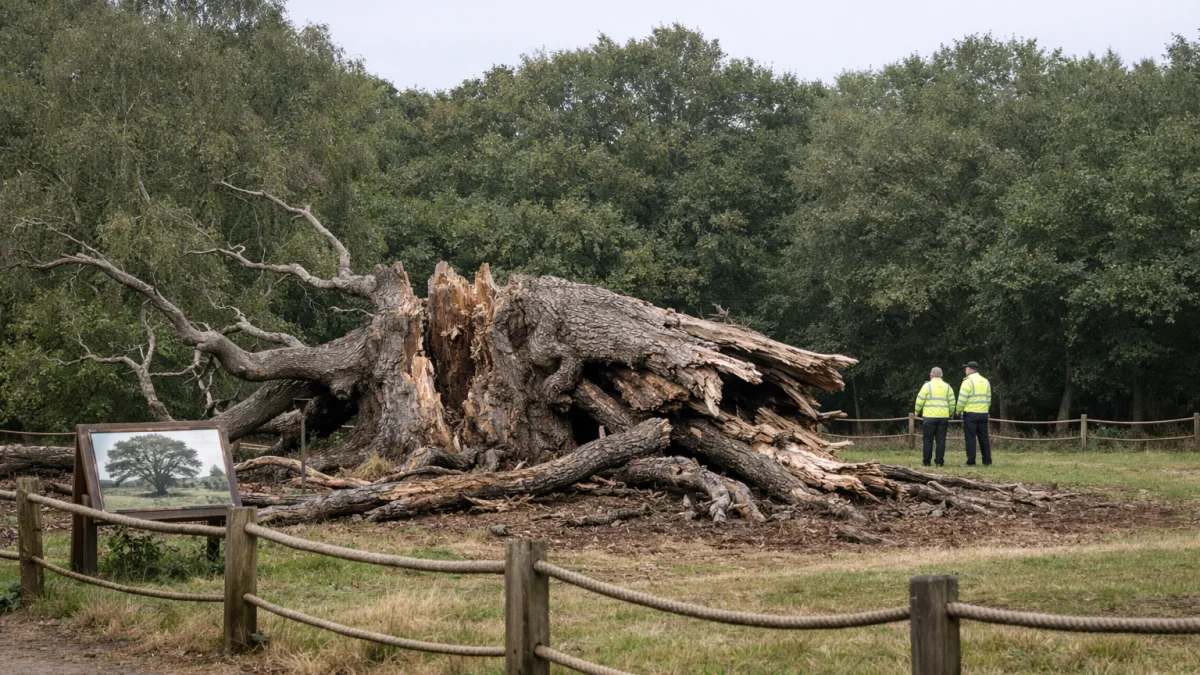


LONDON — The Major Oak, an ancient tree in England’s Sherwood Forest long associated with the legend of Robin Hood, has died after failing to produce leaves this spring, conservation officials said this week, marking the end of one of Britain’s most recognizable natural landmarks.
The Royal Society for the Protection of Birds (RSPB), which manages Sherwood Forest in Nottinghamshire, announced on Thursday that the oak had shown no signs of new growth during the 2026 growing season. The tree, estimated by experts to be between 1,000 and 1,200 years old, had been in visible decline for several years despite extensive conservation efforts.


The Major Oak is widely linked to folklore surrounding Robin Hood, the legendary outlaw said to have hidden in Sherwood Forest while evading the Sheriff of Nottingham. Although historians have not established a direct connection between the tree and any historical figure, the oak became a symbol of the legend and one of England’s most visited natural attractions.
According to the RSPB, a combination of factors contributed to the tree’s decline. Conservationists cited repeated heatwaves and droughts, damage to the root system, and soil compaction caused by centuries of visitor traffic around the tree. The organization also said some historic preservation measures, including structural supports and other interventions intended to extend the tree’s life, may have affected its long-term health.
“The tree’s failure to produce leaves this year is heart-breaking for everyone,” Sherwood Forest site manager Hollie Drake said in a statement released by the RSPB. She added that the tree would continue to play an important role in the forest ecosystem even after its death.
The oak, with a trunk circumference of about 11 meters, attracted hundreds of thousands of visitors annually and was named the Woodland Trust’s Tree of the Year in 2014. The tree’s prominence helped make Sherwood Forest one of the United Kingdom’s best-known woodland destinations.
Environmental groups said the loss highlights broader concerns about the condition of ancient trees across Britain. The Woodland Trust called for stronger protections and increased investment in preserving historic trees, warning that many face pressures from climate change, development and heavy public use.
Although the Major Oak is no longer alive, conservationists said it will remain standing for the foreseeable future. Officials said the tree and the surrounding soil will continue to provide habitat for insects, birds, fungi and other wildlife. Acorns and cuttings collected over previous years have already produced saplings planted in Britain and elsewhere, ensuring that descendants of the tree will continue to grow.