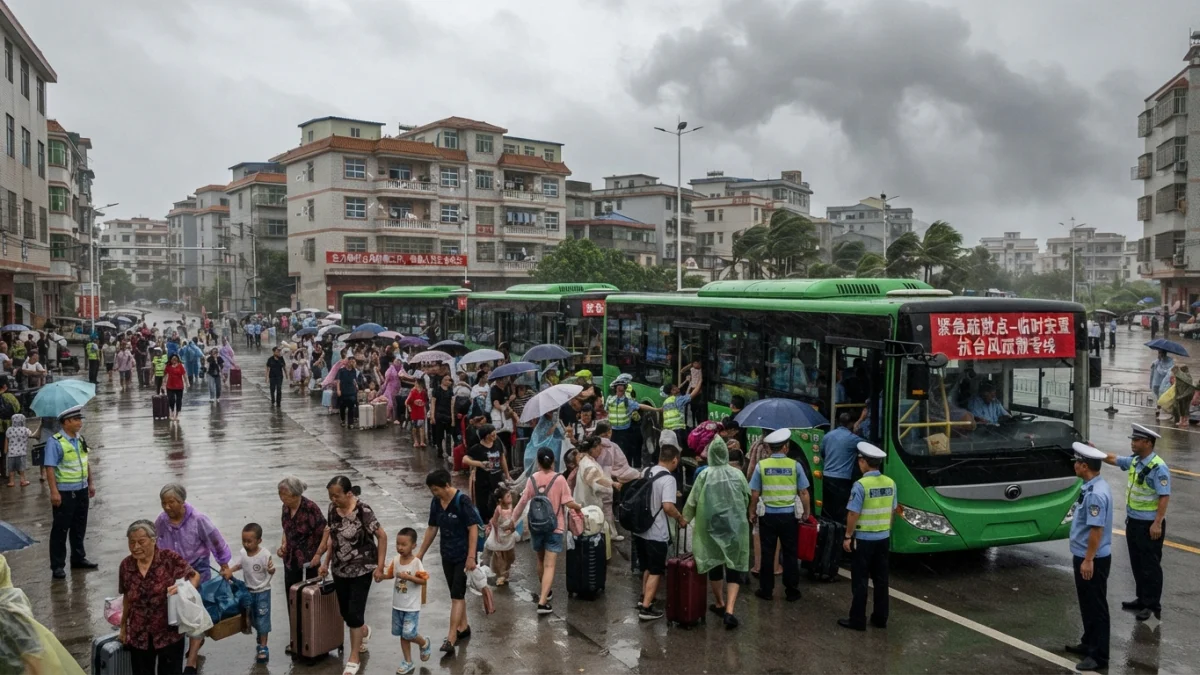


SHANGHAI — More than one million people were evacuated across eastern China as Typhoon Dolphin brought torrential rain, strong winds and widespread disruption after making landfall in Zhejiang province, authorities and state media said.
Dolphin, the strongest tropical cyclone to hit China so far this year, made landfall in Zhejiang with sustained winds of about 151 kph, according to Reuters. The storm subsequently weakened but continued to produce heavy rainfall across eastern and central parts of the country.


Wenzhou, a coastal city in Zhejiang, relocated more than 900,000 residents and opened more than 1,500 emergency shelters, while nearly 99,000 people were moved from high-risk areas in neighbouring Fujian province, according to local authorities cited by the Guardian. Shanghai authorities said more than 215,000 people had also been evacuated from areas considered at risk.
The storm disrupted transportation across the region. Shanghai canceled 943 flights on Monday, roughly 40% of scheduled services, after more than 1,300 cancellations the previous day, Reuters reported. Metro and rail services were also disrupted as heavy rain caused flooding in parts of the city.
Shanghai recorded exceptionally heavy rainfall. The Guardian reported that some weather stations recorded nearly 400 millimetres of rain, while flooding affected roads and residential areas in parts of the city.
Authorities continued to warn of flooding and landslides as Dolphin moved inland. Reuters reported that warnings were in place for dozens of rivers in the Taihu Lake basin and eastern Zhejiang because of rising water levels. Further heavy rain was expected in parts of central China as the weakened system moved northward.
The typhoon's arrival followed a series of severe weather events across parts of East Asia. In the Philippines, Dolphin intensified seasonal monsoon rainfall, contributing to flooding and landslides, while Taiwan also experienced transport disruptions.
By Monday, Dolphin had weakened from typhoon strength, but authorities continued to monitor flooding and rainfall risks as the system moved inland. Further disruption was expected in affected areas while emergency agencies assessed conditions and responded to rising water levels.