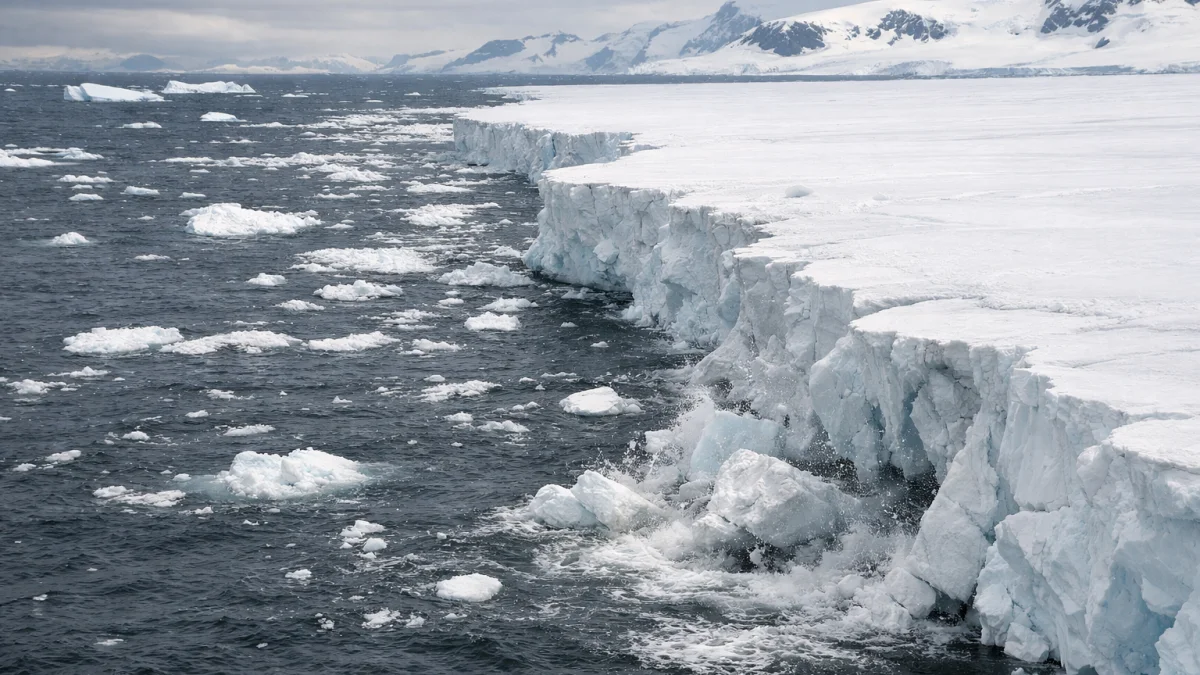


WASHINGTON — Antarctica’s west coast is missing an area of winter sea ice roughly the size of France, scientists said on Saturday, as temperatures in parts of the region peaked more than 20 degrees Celsius above average.
Satellite observations show that a vast stretch of the Bellingshausen Sea, along the western Antarctic Peninsula, should be covered by sea ice at this time of year but remains largely open water. Researchers reported a deficit of about 650,000 square kilometers (250,000 square miles) compared with the 1991-2020 average.


The data comes from monitoring by the British Antarctic Survey, NASA and other institutions tracking seasonal sea ice extent. The loss has raised concerns among scientists about impacts on marine ecosystems, including penguin populations and other wildlife that rely on sea ice for breeding and foraging.
“I’m concerned,” said one expert familiar with the data, according to The Guardian. Details of the precise causes of this year’s anomaly remain under study, with scientists pointing to unusually warm atmospheric conditions.
Sea ice around Antarctica forms and melts seasonally, and the continent has experienced significant variability in recent years. This year’s deficit in the Bellingshausen Sea region stands out amid broader patterns of fluctuating ice coverage. The National Snow and Ice Data Center and Copernicus Climate Change Service have documented ongoing year-to-year changes in Antarctic sea ice extent.
The missing ice area is nearly 10 times the size of Tasmania, according to reports. Warmer ocean waters and atmospheric rivers have been linked in studies to variations in sea ice and regional climate patterns.
Environmental groups have highlighted potential long-term implications for global sea levels and biodiversity, while noting that sea ice itself does not directly contribute to sea level rise when it melts, unlike land-based ice sheets. Supporters of continued research emphasize the need for sustained monitoring to separate natural variability from longer-term trends.
As of Saturday, satellite imagery continued to show reduced ice cover in the affected region. Scientists said further analysis is required to determine how this year’s conditions compare historically and what role specific weather events played.
The World Meteorological Organization and polar research bodies are expected to release updated assessments in the coming weeks as the Southern Hemisphere winter progresses.