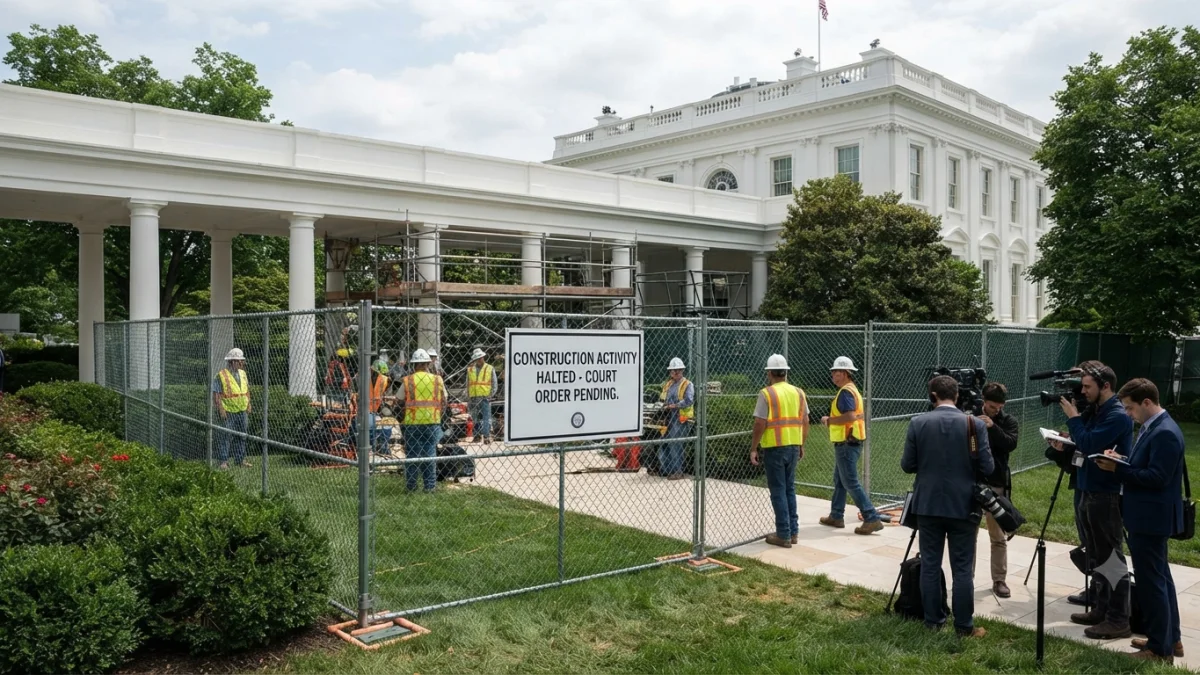


WASHINGTON — A U.S. federal appeals court has ordered the Trump administration to halt construction of a planned $400 million ballroom at the White House, ruling that the president cannot proceed with the project without authorization from Congress.
The 2-1 decision by the U.S. Court of Appeals for the District of Columbia Circuit on Friday upheld a preliminary injunction sought by the National Trust for Historic Preservation, which challenged the administration’s authority to demolish the White House East Wing and build a roughly 90,000-square-foot ballroom on the site.


Judges Patricia Millett and Bradley Garcia formed the majority, while Judge Neomi Rao dissented. The majority said the president is not the owner of the White House and lacks constitutional authority to undertake such a major alteration of the federal property without congressional authorization.
The court’s ruling is subject to a 14-day hold, giving the administration time to seek review by the U.S. Supreme Court. The White House has said it intends to appeal.
The legal dispute began after the administration demolished the East Wing in 2025 and proceeded with plans for the ballroom without obtaining congressional approval. The National Trust argued that Trump had exceeded his authority and that required legal and historic-preservation procedures had not been followed.
A federal district judge, Richard Leon, previously blocked above-ground construction while allowing certain underground work tied to White House security to continue. His ruling concluded that existing federal law did not give the president authority to construct the ballroom without congressional action.
The administration has argued that the project is needed to improve White House security and that much of the ballroom itself would be financed through private donations rather than appropriated taxpayer funds. Trump has also defended the project as a major addition to the White House complex.
The National Trust welcomed the appeals court decision, while the administration has criticized the ruling and indicated it will pursue further legal review. The appellate court’s order currently prevents the disputed construction from proceeding without congressional authorization while the litigation continues.