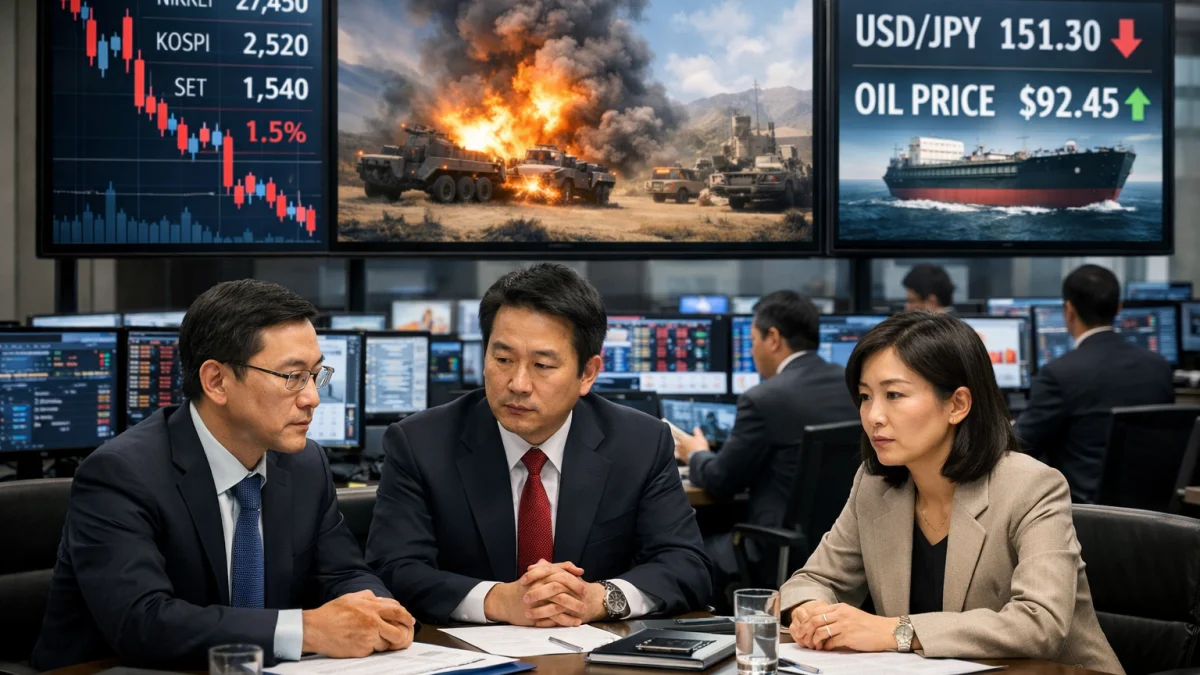


SINGAPORE — Governments and businesses across Asia are assessing the lasting economic effects of disruptions linked to the recent Iran conflict, even as energy markets show signs of stabilization following a preliminary U.S.-Iran agreement aimed at reopening key shipping routes, officials and analysts said this week.
The conflict, which disrupted traffic through the Strait of Hormuz, a critical corridor for global oil and liquefied natural gas shipments, exposed vulnerabilities among Asian economies that depend heavily on imported energy. The International Energy Agency (IEA) said this week that disruptions to oil and gas flows through the strait highlighted structural energy-security risks across Southeast Asia.


Energy markets reacted positively after the announcement of a framework agreement between Washington and Tehran. Reuters reported on Wednesday that Middle East crude benchmarks fell sharply as expectations grew that oil exports from the Gulf region and Iran would gradually recover.
However, officials and economists cautioned that economic effects from the months-long disruption could persist. The IEA said in a report released on Tuesday that governments in Southeast Asia may need stronger cooperation and investment to address long-term energy security concerns exposed by the crisis.
Asian economies were among the most affected because many rely on crude oil and liquefied natural gas shipped from the Middle East. During the height of the disruption, governments introduced emergency measures to secure supplies, contain inflation and protect industrial production, according to regional officials and previous assessments by international organizations.
The reopening of shipping lanes is expected to improve supply conditions, but industry participants say recovery may take time. According to Reuters, oil inventories were drawn down during the disruption, and supply chains continue to adjust as tankers return to normal routes. The IEA said oil supply remains below pre-conflict levels despite expectations of a gradual recovery.
“The crisis has reinforced the importance of energy security,” the IEA said in its latest Southeast Asia Energy Outlook, noting that governments are already taking steps to strengthen resilience but that further action may be needed.
Business groups in several Asian countries have also cited higher transportation, insurance and fuel costs as challenges that emerged during the disruption. Details on the full economic impact remain unclear, as governments continue reviewing data on trade flows, inflation and industrial output.
As of Wednesday, energy prices had eased from levels seen during the height of the conflict, and oil shipments through the Strait of Hormuz were gradually resuming, according to Reuters and shipping data providers. Authorities across Asia said they would continue monitoring markets and maintaining contingency measures while supply conditions normalize.